*Meetings listed in UK Time
Header image with thanks to zhendong-wang unsplash.com
 Co-Dependents Anonymous UK
To add a new meeting to the meetings list on the CoDA UK website, fill in this word form and email to meetings@codauk.org.
Test form starts – – – – – –
Please follow the form below, and hit submit
Should you be unable to find a face to face meeting
– virtual CoDA meetings run 24/7 ,
– and focussed CoDA meetings run daily

Service Concept 1
The members of the Fellowship of Co-Dependents Anonymous, in carrying out the will of a loving Higher Power, advance their individual recoveries, work to insure the continuance of their groups and their program, and carry the message to codependents who still suffer. They may also collectively authorize and establish service boards or committees and empower trusted servants to perform service work.
Service Concept 2
The Fellowship of CoDA has the responsibility of determining, through its group conscience, the service work to be performed, and the best manner to perform such work. This authority is expressed through our group conscience. Authority carries responsibility; thus, CoDA groups conscientiously provide adequate funding and support for the service work they authorize.
Service Concept 3
Decisions about service work in the Fellowship and all CoDA affairs are made through the group conscience decision making process. For this spiritual democratic process to work, every member of the group is encouraged to participate, consider all the facts and options concerning the issue, listen respectfully to all opinions expressed, then reflect and meditate to find a loving Higher Power’s will. Finally, we deliberate honestly and respectfully to determine the proper course of action. Unanimity in the group is the desired outcome; a majority vote is a group conscience.
Service Concept 4
All those who volunteer to do service work for CoDA by serving on committees, boards, or corporations are trusted servants, not authority figures. Ideally, trusted servants volunteer out of a desire to follow their Higher Power’s will, out of gratitude for the gifts they have received from CoDA, out of a desire to grow in their ability to create and keep healthy relationships, and to contribute what they can of themselves to CoDA. The Fellowship recognizes the need to select the most qualified people willing to serve as trusted servants. At times, trusted servants may hire individuals outside of the Fellowship for commercial services.
Service Concept 5
Trusted servants are directly responsible to those they serve and are bound to honor the group conscience decision making process and uphold those decisions concerning their service work. The Fellowship also recognizes the need and right for members to honor their own experience, strength, and hope and their Higher Power’s will as expressed to them. When the group conscience violates an individual’s own truth and makes participation impossible, the individual may relinquish the service position.
Service Concept 6
The Fellowship guarantees trusted servants the right and authority to freely make decisions commensurate with their responsibilities and the right to participate in group conscience decisions affecting their responsibilities. Each CoDA member is also guaranteed the right to respectfully dissent during the group conscience decision making process. A member may freely and safely express any personal grievances as long as no particular person or group is unexpectedly singled out as the subject of the grievance. Members are encouraged to honor their own integrity as well as the integrity of others.
Service Concept 7
Trusted servants do practice the Twelve Steps and Twelve Traditions in their service work and in all of their affairs. Trusted servants do not seek power, prestige, wealth, status, or acclaim; do not govern, coerce, or attempt to control others; and do not push a personal agenda, promote controversy, or advance outside issues at CoDA’s expense. Since issues over authority, will, money, property, and prestige can and do arise in service work, trusted servants need to practice emotional sobriety, including anonymity, humility, tolerance, gratitude, making amends, and forgiveness.
Service Concept 8
The CoDA Service Conference (Conference), through its group conscience decision making process, guides the Fellowship in making policy decisions and in following the Twelve Steps and Twelve Traditions. The Conference, though providing guidelines, holds no authority over the decision making process of individual groups. The group conscience process is our decision making process. Failure to honor this process may violate Traditions One and Four and a sanction may be imposed. The harshest sanction Conference can impose on an individual or group is to no longer recognize it as belonging to CoDA; this sanction may only be imposed on those who consistently violate the Twelve Steps and Twelve Traditions, as determined by guidelines accepted by Conference.
Service Concept 9
By tradition, the CoDA Service Conference gives responsibilities to working committees composed of Conference Delegates and other CoDA volunteers or to separate service boards or corporations. All are directly responsible to the Conference. The scope of the work a committee does is determined by the Conference group conscience. The chairperson of each committee assumes the responsibility to ensure the work assigned to the committee is completed in a timely manner.
Service Concept 10
When the CoDA Service Conference is in session, the CoDA Board of Trustees is directly responsible to the Conference. When not in session, the Conference assigns its decision-making authority on material matters to the Trustees. The Board of Trustees is authorized to monitor the work of Conference-appointed service committees and may provide assistance or guidelines when necessary. The Trustees serve as the board of directors of CoDA, Inc., the non-profit corporation, are assigned custodial control of all money and property held in trust for the Fellowship, and are responsible for prudent management of its finances.
Service Concept 11
The powers of the CoDA Service Conference derive from the pre-eminent authority of the group conscience decision-making process. Arizona State law gives the Board of Trustees legal rights and responsibilities to act for the Fellowship in certain situations. CoDA, Inc.’s Articles of Incorporation and Bylaws are legal documents enumerating these Board rights and responsibilities.
Service Concept 12
The Fellowship strives to practice and encourage spiritual principles in all its material, financial, and business affairs, including fairness, equality, and respect for individual rights. Every member within CoDA has a voice and is encouraged to use it. Every member has the right to know what is happening within our organization. To honor this right, and in the spirit of CoDA unity, our CoDA, Inc. organization publishes and distributes group conscience decisions, such as minutes of our service boards and motions from our CoDA Service Conferences, in the most inclusive and timely manner possible.
12 Service Concepts
[ All languages ]
EN | DE | ES | FR | PT | RU
12 Steps: [ All languages ]
EN | CZ | DE | ES | FR | HE | IS | IT | LV | PT | RU | SE
Member Shares – by Tradition
Member Shares – by Step
Member Shares
12 Traditions: [ All languages ]
EN | CZ | DE | FR | ES | HE | IS | IT | LV | RU | SE
Using the Twelve Traditions
[ All languages ]
EN | ES | RU
I can expect a miraculous change in my life by working the programme of Co-Dependents Anonymous. As I make an honest effort to work the Twelve Steps and follow the Twelve Traditions:
12 Promises:
[ All Languages ]
EN | CZ | DE | ES | FR | HE | IS | IT | LV | PT | RU
Service Concept 1
The members of the Fellowship of Co-Dependents Anonymous, in carrying out the will of a loving Higher Power, advance their individual recoveries, work to insure the continuance of their groups and their program, and carry the message to codependents who still suffer. They may also collectively authorize and establish service boards or committees and empower trusted servants to perform service work.
Service Concept 2
The Fellowship of CoDA has the responsibility of determining, through its group conscience, the service work to be performed, and the best manner to perform such work. This authority is expressed through our group conscience. Authority carries responsibility; thus, CoDA groups conscientiously provide adequate funding and support for the service work they authorize.
Service Concept 3
Decisions about service work in the Fellowship and all CoDA affairs are made through the group conscience decision making process. For this spiritual democratic process to work, every member of the group is encouraged to participate, consider all the facts and options concerning the issue, listen respectfully to all opinions expressed, then reflect and meditate to find a loving Higher Power’s will. Finally, we deliberate honestly and respectfully to determine the proper course of action. Unanimity in the group is the desired outcome; a majority vote is a group conscience.
Service Concept 4
All those who volunteer to do service work for CoDA by serving on committees, boards, or corporations are trusted servants, not authority figures. Ideally, trusted servants volunteer out of a desire to follow their Higher Power’s will, out of gratitude for the gifts they have received from CoDA, out of a desire to grow in their ability to create and keep healthy relationships, and to contribute what they can of themselves to CoDA. The Fellowship recognizes the need to select the most qualified people willing to serve as trusted servants. At times, trusted servants may hire individuals outside of the Fellowship for commercial services.
Service Concept 5
Trusted servants are directly responsible to those they serve and are bound to honor the group conscience decision making process and uphold those decisions concerning their service work. The Fellowship also recognizes the need and right for members to honor their own experience, strength, and hope and their Higher Power’s will as expressed to them. When the group conscience violates an individual’s own truth and makes participation impossible, the individual may relinquish the service position.
Service Concept 6
The Fellowship guarantees trusted servants the right and authority to freely make decisions commensurate with their responsibilities and the right to participate in group conscience decisions affecting their responsibilities. Each CoDA member is also guaranteed the right to respectfully dissent during the group conscience decision making process. A member may freely and safely express any personal grievances as long as no particular person or group is unexpectedly singled out as the subject of the grievance. Members are encouraged to honor their own integrity as well as the integrity of others.
Service Concept 7
Trusted servants do practice the Twelve Steps and Twelve Traditions in their service work and in all of their affairs. Trusted servants do not seek power, prestige, wealth, status, or acclaim; do not govern, coerce, or attempt to control others; and do not push a personal agenda, promote controversy, or advance outside issues at CoDA’s expense. Since issues over authority, will, money, property, and prestige can and do arise in service work, trusted servants need to practice emotional sobriety, including anonymity, humility, tolerance, gratitude, making amends, and forgiveness.
Service Concept 8
The CoDA Service Conference (Conference), through its group conscience decision making process, guides the Fellowship in making policy decisions and in following the Twelve Steps and Twelve Traditions. The Conference, though providing guidelines, holds no authority over the decision making process of individual groups. The group conscience process is our decision making process. Failure to honor this process may violate Traditions One and Four and a sanction may be imposed. The harshest sanction Conference can impose on an individual or group is to no longer recognize it as belonging to CoDA; this sanction may only be imposed on those who consistently violate the Twelve Steps and Twelve Traditions, as determined by guidelines accepted by Conference.
Service Concept 9
By tradition, the CoDA Service Conference gives responsibilities to working committees composed of Conference Delegates and other CoDA volunteers or to separate service boards or corporations. All are directly responsible to the Conference. The scope of the work a committee does is determined by the Conference group conscience. The chairperson of each committee assumes the responsibility to ensure the work assigned to the committee is completed in a timely manner.
Service Concept 10
When the CoDA Service Conference is in session, the CoDA Board of Trustees is directly responsible to the Conference. When not in session, the Conference assigns its decision-making authority on material matters to the Trustees. The Board of Trustees is authorized to monitor the work of Conference-appointed service committees and may provide assistance or guidelines when necessary. The Trustees serve as the board of directors of CoDA, Inc., the non-profit corporation, are assigned custodial control of all money and property held in trust for the Fellowship, and are responsible for prudent management of its finances.
Service Concept 11
The powers of the CoDA Service Conference derive from the pre-eminent authority of the group conscience decision-making process. Arizona State law gives the Board of Trustees legal rights and responsibilities to act for the Fellowship in certain situations. CoDA, Inc.’s Articles of Incorporation and Bylaws are legal documents enumerating these Board rights and responsibilities.
Service Concept 12
The Fellowship strives to practice and encourage spiritual principles in all its material, financial, and business affairs, including fairness, equality, and respect for individual rights. Every member within CoDA has a voice and is encouraged to use it. Every member has the right to know what is happening within our organization. To honor this right, and in the spirit of CoDA unity, our CoDA, Inc. organization publishes and distributes group conscience decisions, such as minutes of our service boards and motions from our CoDA Service Conferences, in the most inclusive and timely manner possible.
12 Service Concepts
[ All languages ]
EN | DE | ES | FR | PT | RU

To translate to your preferred language
In the spirit of love and truth,we ask our Higher Power to guide us as we share our experience, strength, and hope.
We open our hearts to the light of wisdom,
the warmth of love, and the joy of acceptance.
Higher Power, Thank you for showing me this memory. It is a painful one. Thank you for starting to uncover this part of me.
Higher Power, I welcome your healing light to shine on all corners of this memory so that I can love this part of me, too.
Higher Power, please help us stay mindful in our service work,
reminding us that we do not seek personal power, nor do we govern
or control others to advance our personal agendas. Instead, we practice:
* Anonymity
* Humility
* Tolerance
* Gratitude
* Amends, and
* Forgiveness
God* help me to:
Accept other people as they are,
Recognize my own feelings,
Meet my own needs, and
Love myself just as I am.
We thank our Higher Power,
for all that we have received from this meeting.
As we close, may we take with us
the wisdom, love, acceptance, and hope of recovery.
The CoDA Prayers may not be reprinted or republished without the express written consent of Co-Dependents Anonymous, Inc. This document may be reprinted from the website www.coda.org (CoDA) for use by members of the CoDA Fellowship.
Copyright © 2022 Co-Dependents Anonymous, Inc. and its licensors -All Rights Reserved.
Note:
*CoDA has no affiliation with any outside organisation, religious or otherwise
CoDA Canada – Newcomers Package
EN | CN | JP
Patterns of Recovery
EN | DE | ES | FR | IL | IS | LV | NL | PT | RU
Recovery Progress Scale (CoDA Canada) *NEW*
EN
Feature image with thanks to Yanin Diaz from Unsplash.

To translate to your preferred language
Tradition One Prayer
Higher Power, deepen my awareness to include the welfare of the whole, setting aside my discomfort and personal agenda. Help me speak my truth and allow others the same privilege, trusting that the spirit of unity supports my own recovery.
Tradition Two Prayer
Higher Power, grant me the humility to be a trusted servant, remembering that no one person governs. Together we seek the guidance and loving expression of Your will through our informed group conscience process.
Tradition Three Prayer
Higher Power, help me let go of my fear and expectations in my desire for healthy and loving relationships. Grant me courage to be honest, open-minded, and willing to acknowledge healthy boundaries as I accept myself and others.
Tradition Four Prayer
Higher Power, let me embrace the spiritual principles of autonomy and unity. Help me become aware of how my decisions affect other people and the community as a whole. May I honor You, using the gifts I have received to give service as I recover.
Tradition Five Prayer
Higher Power, help me carry the CoDA message of hope, sharing my struggles as well as my triumphs with other codependents who still suffer. May I listen with an open heart and an open mind. Help me accept responsibility for my part in creating more loving relationships and healthier CoDA meetings.
Tradition Six Prayer
Higher Power, help me keep my focus on the primary spiritual aim and the power of the CoDA principles. Show me how to build equal relationships with others, releasing control, the misuse of power, and overconcern with material possessions.
Tradition Seven Prayer
Higher Power, help me become self-supporting; financially, emotionally, physically, and spiritually. Carry me through my discomfort as I become accountable for my behavior. Guide me to give service and financial support humbly, wholeheartedly, and enthusiastically to ensure the health and growth of our CoDA community. May I cooperate as an equal partner in all my relationships so all may benefit, including me.
Tradition Eight Prayer
Higher Power, may I appreciate that each of us is a precious creation with unique and valuable abilities and talents. May we contribute as equals to seek shared solutions for the benefit of all. Give me courage to say yes to service requests that will help me grow.
Tradition Nine Prayer
Higher Power, support me as I do my part, humbly sharing in the rotation of service, remembering that no individual is in charge. May I loosen my control and accept the informed group conscience as an expression of Your loving spiritual guidance.
Tradition Ten Prayer
Higher Power, encourage me to contribute to a safe environment by keeping our meetings focused on CoDA recovery. Help me stay away from hurtful controversy and outside issues, creating space for healthy relationships to grow.
Tradition Eleven Prayer
Higher Power, may I be mindful of remaining anonymous in all forms of public communication. May my life reflect the CoDA principles, attracting new faces to our Fellowship. Help me remember to speak for myself, not for others, or for CoDA as a whole.
Tradition Twelve Prayer
Higher Power, thank you for the principle of anonymity as the spiritual foundation of CoDA’s Twelve Traditions. Help me let go of expectations and my need for recognition. May I remember to base my decisions on principles rather than personalities.
The CoDA Tradition Prayers may not be reprinted or republished without the express written consent of Co-Dependents Anonymous, Inc. This document may be reprinted from the website www.coda.org (CoDA) for use by members of the CoDA Fellowship.
Copyright © 2022 Co-Dependents Anonymous, Inc. and its licensors -All Rights Reserved.
Newcomer Package
(CoDA Canada)
EN | CN | JP
Patterns of Recovery
[ All languages ]
EN | DE | ES | FR | IL | IS | LV | NL | PT | RU
Progress Scale – (CoDA Canada)
[ All languages ]
EN | FR
Feature image with thanks to Daniel Schludi from Unsplash.

To translate to your preferred language
Step One Prayer
In this moment, I do not have to control anyone, including me. And if I feel uncomfortable with what another person is doing or not doing, I can remind myself that I am powerless over this person and I am powerless over my compulsion to act in inappropriate ways.
Step Two Prayer
In this moment, I can believe that I am never alone; I can experience the sense of freedom that having a Higher Power offers me. I can remind myself that believing is also an action, and if I am willing to practice it, one moment at a time, I will develop faith.
Step Three Prayer
In this moment, I can choose my own Higher Power. I can set aside all the old beliefs about who I am not and be who I am—a child of God. I can remind myself that a faith in a Higher Power becomes a faith in me, and that my recovery lies in being true to myself and to my Higher Power
Step Four Prayer
In this moment, I am willing to see myself as I truly am: a growing, unfolding spiritual being resting in the hands of a loving God. I can separate who I am from what I’ve done knowing that the real me is emerging—loving, joyful, and whole
Step Five Prayer
In this moment, I will acknowledge myself for doing what was most difficult for me. I will rest in the accepting presence of my Higher Power. I know I have deepened my commitment to the journey of recovery by opening my self and my heart to a fellow human being.
Step Six Prayer
In this moment, I am entirely ready to be freed of all my shortcomings. In this moment, I am ready to surrender these defects of character to God, knowing that the power of willingness to heal is great. Each new Step I take in my recovery, no matter how small it may appear, is an affirmation of my wholeness.
In this moment, I ask my Higher Power to, remove all of my shortcomings,
relieving me of the burden of my past.
In this moment, I place my hand in God’s,
trusting that the void I experience is being filled with my Higher Power’s unconditional love
for me and those in my life.
In this moment, I see the impossible become not only possible, but real.
As I forgive myself for my shortcomings, I am able to forgive others, opening the way for a true and lasting change in my behavior.
Thank you, God.
In this moment, I trust my Higher Power to guide me in making sincere and honest amends.
In this moment, I experience my gratitude for Co-Dependents Anonymous and the Twelve Steps of recovery, knowing that as I am willing to live this
program, share the fellowship, and walk with God, I am free.
Step Ten Prayer
In this moment, I live my life in a new way.
As I continue to open my heart and mind,
little by little,
one day at a time,
I reveal my true self,
mend my relationships,
and touch God
Step Eleven Prayer
In this moment, I quiet my thoughts and open my mind and heart to God’s guidance for me.
In this moment, I feel the gentle peace that conscious contact with God allows. If I am troubled and in doubt or joyful and serene, I turn to God. I know my path will be revealed and the way to my highest good will be made known.
Step Twelve Prayer
In this moment, I thank God for my spiritual awakening.
In this moment, I choose to live all the principles of this simple program. I know the wisdom working through me will touch all I meet with God’s love and understanding.
I am at peace.
The CoDA Step Prayers may not be reprinted or republished without the express written consent of Co-Dependents Anonymous, Inc. This document may be reprinted from the website www.coda.org (CoDA) for use by members of the CoDA Fellowship.
Copyright © 2010 Co-Dependents Anonymous, Inc. and its licensors – All Rights Reserved.
CoDA Canada – Newcomers Package
EN | CN | JP
Patterns of Recovery
EN | DE | ES | FR | IL | IS | LV | NL | PT | RU
Recovery Progress Scale (CoDA Canada) *NEW*
EN
Feature image with thanks to J Huang from Unsplash.

To translate to your preferred language
“Disagreements in CoDA are opportunities for
growth since healthy resolution requires us to
act with courage, humility and honesty.
Winning should not be the goal.”
CoDA’s Issues Mediation Committee (IMC)
CoDA’s Process for Dealing with Disagreements
From the Local Level, To World Service Level
Fellowship Service Manual (FSM), Section 2
FSM Section Two provides guidance that can be used for the resolution of disagreements at all levels of our fellowship. The following summarizes and supplements it.
Resolve the issue between the individuals involved. If one party refuses to address the issue or the other party feels unsafe, GO TO…
Recruit a neutral third party trusted by both to witness and support resolution. If resolution does not result from this and the issue is a personal one, limiting contact with that person may be best. If the issue involves CoDA principles in a CoDA group, GO TO…
Go to a local meeting group; present the issue focusing on CoDA principles.
Ask for a Group Conscience, (see FSM Sec. 2). If group does not seem to be acting according to CoDA principles GO TO….
Present the issue to the local Intergroup (if you have one) for a Group Conscience decision (see FSM Sec. 2). If the Intergroup does not seem to be acting according to CoDA principles, GO TO…
Seek additional support from your Regional group (if you have one); continue to present the issue(s). If this group does not seem to be acting
according to CoDA principles, GO TO…
Seek help from Issues Mediation Committee of CoDA World Service (imc@coda.org)
IMC will begin their process by asking if these 6 steps have been taken.
☐ Take responsibility for one’s own words and actions
☐ Keep the focus on CoDA principles rather than on beliefs about personalities
☐ Respect boundaries – CoDA unity is violated when third parties take sides in personal disagreements
☐ Use behavioral rules such as:
☑ Agree to study FSM Sec. 2 before
meeting together
☑ State issues in writing
☑ Start by agreeing on the goal being
sought from the discussion
☑ Provide equal opportunities to speak,
using timer if needed
☑ Agree on thirty second rule in groups
(see FSM, Sec 2)
The stages and principles expressed in this pamphlet will also work when dealing with a disagreement in your life.
Take a personal inventory
Try to Solve with the person directly
If no resolution, ask a person you both trust
to assist
The use of the behavioral rules found in this
pamphlet will be helpful as you work to resolve disagreements.
The IMC facilitates dispute mediation for Voting Entities, Intergroups, and other CoDA entities as needed.
Decisions at all levels of CoDA are made with the guidance of our Higher Power as expressed through the group conscience. As stated in
Tradition One:
“Our common welfare should come first. Personal recovery depends upon CoDA Unity.”
And Tradition Two:
“For our group purpose there is but one ultimate
authority—a loving Higher Power as expressed to our group conscience. Our leaders are but trusted servants; they do not govern.”
Thus as with all our recovery, group conscience is
about putting aside the “self” and
looking to Higher Power for guidance.
Dealing with Disagreements
[ All languages ]
EN | RU
Your First Meeting:
[ All languages ]
EN | DE | ES | FR | RU
Communication & Recovery
[ All languages ]
EN | ES | PT | RU
For Safety Sake / No Crosstalk
[ All languages ]
EN | ES | FR | IT | RU
Newcomer Package
(CoDA Canada)
EN | CN | JP
Patterns of Recovery
[ All languages ]
EN | DE | ES | FR | IL | IS | LV | NL | PT | RU
Progress Scale – (CoDA Canada)
[ All languages ]
EN | FR
Recovery Progress Scale (CoDA Canada) *NEW*
EN
Feature image with thanks to Volodymyr Hryshchenko from Unsplash.
Across Borders
These recordings are made freely available for use by all CoDA groups and members and may be used and redistributed for free maintaining attribution to the speaker event organisers.
May you find what you need from the recordings.
To turn on subtitles, to read in your preferred language – on a PC(Windows+Ctrl+L), on Apple , on iOS , on Android



To translate to your preferred language
The CoDA Recovery “I” Patterns may not be reprinted or republished without the express written consent of Co-Dependents Anonymous, Inc. This document may be reprinted from the website www.coda.org (CoDA) for use by members of the CoDA Fellowship.
Patterns and Characteristics
[ All languages ]
EN | DE | ES | FR | IS | IL | IT | LV | NL | PT | RU | SE
Image from Envato, with thanks to Anto Fredric

To translate to your preferred language
CoDA Service Conference, CSC, endorsed literature is written anonymously, by CoDA members, for the CoDA Fellowship. Members share their first-hand experience, strength, and hope about working CoDA’s Twelve Steps, and living The Twelve Traditions, describing how their lives have improved because of CoDA.
New CoDA literature is published after it has been endorsed by a group of international delegates at the annual CoDA Service Conference.
When Co-Dependents Anonymous (CoDA) was founded in 1986, we did not have our own literature. We relied on outside professional authors and materials from older Fellowships. Our first literature project, produced in 1989, was a set of pamphlets, one for each of the Twelve Steps. In 1999, the pamphlets were combined to create the Twelve Steps Handbook. Our basic CoDA text, Co-Dependents Anonymous, was first published in 1995. It continues to be a major source of guidance and inspiration for working the CoDA program.
As the Fellowship has grown in recovery, learning to rely on our Higher Power, The Twelve Steps, and The Twelve Traditions, the depth of our literature has evolved. Today, CoDA literature includes thousands of pages, taking many forms: books, booklets, pamphlets, and audio recordings.
Much of our literature has been created using the informed group conscience process by trusted servants in the CoDA Literature Committee. This process includes seeking guidance from our Higher Power, listening to all viewpoints, and then voting for the writing that best reflects our program. Patience and acceptance are integral to the group conscience process.
When choosing literature for a meeting, it is vital to support CoDA’s primary purpose: to carry the message of recovery to codependents who still suffer.
As we read in our meetings, “CoDA’s Twelve Traditions are the guiding spiritual principles of our meetings.” Our Twelve Traditions are deeply woven into the fabric of all CoDA literature. They can guide our choice of literature within our meetings.
“Our common welfare should come first; personal recovery depends upon CoDA unity.”
– Tradition One
Hearing the consistent CoDA message contained in our literature, affirms our connection to CoDA recovery, to each other, and to the foundational principle of unity.
“Each group should remain autonomous except in matters affecting other groups or CoDA as a whole.”
– Tradition Four
Reading and selling CoDA literature in our meetings supports the growth of the Fellowship. It ensures safety, encouragement, consistency of message, and unity across CoDA meetings world-wide, and CoDA as a whole.
“Each group has but one primary purpose — to carry its message to other codependents who still suffer.”
– Tradition Five
Reading outside literature in meetings confuses and dilutes the CoDA recovery message. Whereas reading CoDA literature supports the essence of Tradition Five by carrying the CoDA message of hope to the still suffering codependent.
“A CoDA group ought never endorse,
finance, or lend the CoDA name to any related facility or outside enterprise, lest problems of money, property and prestige divert us from our primary spiritual aim.”
– Tradition Six
The use of outside literature endorses its author, makes their work the focus of the meeting, and raises the question, “Is this a CoDA meeting or a book study session?”
“Every CoDA group ought to be fully self-supporting, declining outside contributions.”
– Tradition Seven
The sale of CoDA literature supports CoDA financially. Using or selling outside literature deprives CoDA as a whole, including individual meetings, of financial support and autonomy.
“Co-Dependents Anonymous should remain forever nonprofessional, but our service centers may employ special workers.”
– Tradition Eight
As stated in Building CoDA Community: Healthy Meetings Matter, page 17,
“In CoDA, no one is paid to share experience, strength, and hope, whether at meetings, as sponsors, or in any other Twelve Step related activity.”
“CoDA has no opinion on outside issues; hence the CoDA name ought never be drawn into public controversy.”
– Tradition Ten
“Our public relations policy is based on attraction rather than promotion; we need always maintain personal anonymity at the level of press, radio, films, television, and all other public forms of communication.”
– Tradition Eleven
CoDA is a spiritual program of attraction, with a unique, collective voice. Literature written outside of CoDA, promotes the author or entity, their opinions, and gives them income.
“Anonymity is the spiritual foundation of all our Traditions, ever reminding us to place principles before personalities.”
– Tradition Twelve
Our literature is written anonymously, to avoid personal quests for power, prestige, or monetary gain. CoDA Literature evolves as CoDA grows.
“Having had a spiritual awakening as the result of these Steps, we tried to carry this message to other codependents, and to practice these principles in all our affairs.”
– Step Twelve
CoDA is a spiritual program, inspiring many to serve the Fellowship through writing and editing. Our literature is a living, breathing expression of the knowledge and wisdom gained within our Fellowship.
CoDA welcomes the creation of new pieces of literature as well as revisions of existing literature, which we consider works in progress.

We have lots of useful info about how to start a new meeting on our website. The only thing we can’t supply is people to join you! So if you’d like to start a new meeting but would first like to appeal for fellow members to come forward to help, we can list your request on this page.
Please email meetings@codauk.org with your first name, the area where you’d like to start a meeting and your contact number and/or email address so that members can get in touch with you. Please bear in mind that your email address will be displayed on this page so a generic one to preserve your anonymity is recommended. Please include the statement “I consent for my name, phone number and/or email address to be used on the CoDA website for this purpose” with your email or we will not be able to list the information.
If you no longer wish your details to appear, please email meetings@codauk.org to request that they are removed, and this will be done within a fortnight. If you do not see the requested change appear on the site within a fortnight, please email again.
Catherine would like to start a meeting in the London Borough of Havering. If you’d like to help please contact her at Pelicanweather@gmail.com *NEW*
Alison is looking for people to help start a meeting in Richmond-upon-Thames. Please contact her on alisoncoda@gmail.com or text 07766 202536 *NEW*
Dan is hoping to start a meeting in mid Essex and is looking for others to help. Contact him on dwtramsey@outlook.com *NEW*
Nicola is looking to start an in person meeting in West Lothian. If you’d like to help, please text her on 07835 289721 *NEW
Samantha is looking for people to help start a face to face meeting in Swindon, Wiltshire. Contact Samantha on samannpiper@gmail.com or 07852840117. Please call or text and leave a message on voicemail if no answer.
Katie is planning to start a meeting in East Northamptonshire and would welcome other local people interested in helping her to set this up. Please text her on 07751 304406.
Claudia would like to start a women’s meeting in Farnham or Haslemere in Surrey. Please contact her on 07908 757976.
David is looking for experienced members to help set up a face to face meeting in Portsmouth, Hampshire. His contact details are David W 07449 549592.
Loretta would like to open a new meeting in the Chorley or Wigan area. It will be a step meeting using the CoDA Green Step Workbook. If you’d like to help, please contact her 07395 202947 or lorettabarone69@hotmail.com
Kieran is looking for others to help start an LGBTQ+ meeting in Birmingham. His contact details are 07804 297801
Helen is looking for people to start a CoDA meeting on Norwich. If you would like to help, please contact her on 07717214256 or email at helenofnorwich@hotmail.com
Gary is looking for people to start a new meeting in the Hull/East Yorkshire area. Contact him on byassgary4@gmail.com
Beverley is wanting to start a meeting in Huddersfield or Halifax. If you would like to help, please contact her on Beverleybrook36@gmail.com 07946 071268
There is fellowship space on WhatsApp designed to connect member across regions in the UK, with a particular focus on areas with few or no face to face meetings.
On joining you won’t be a member of any channel other than ‘announcements’. You are free to join and engage however works for you:
– the region you live in
– general shares
– recovery meme
The choice is yours on whether you Join CoDA UK Regions
Note: Many virtual meetings in the UK have taken the decision to not align to a physical location.
Virtual CoDA meetings run 24/7
Virtual CoDA meeting in my first language*
Focussed CoDA meetings*
Includes virtual meetings for BIPOC, LGBTQ+, Men, Neurodiverse, Parents, Women, and Younger members
* Meetings list provided with thanks to CoDA UK meetings team, CoDA Canada, CoDA Inc, CoDA Australasia, and meetings.love team
Image licensed from Envato – seleznev_photos

How much of what I think I know is a fact, and how much is crap?
Fact : A truth known by actual experience or personal observation.
Crap: A falsehood or an exaggeration.
“…the sum of all our childhood experiences, memories, perceptions, beliefs, and emotions…the child-within, or inner-child is that part of us that carries the innocence of life, curiosity of nature, and the spirit of who we are.”
Excerpt from page 105 Codependents Anonymous Big Blue Book – third edition
What our parents say to us as children (good or bad) becomes our inner voice as adults.
…as babies, we don’t have any history to draw on.
…as children, we don’t have any information we can use to judge anything outside of our own environment.
For example
I was raised in a very quiet house, so if I am around loud people I make the judgement that they are too loud. I don’t consider that they might have been raised in a house where the only time you were noticed was by out-shouting someone else.
I don’t have any facts about their history, so I
…use my history.
The shame messages we learned about ourselves are not true.
Often, it’s not what we are actually told, but a perception of what was said or who said it that we use as facts.
In order to survive, we adopt a set of skills that help us feel safe, and these are called:
Control, Low Self-Esteem, Avoidance, Denial, Compliance.
Create a 4 column table
1). In the first column write down:
One thing “I think I know”
E.g. I have to work hard at maintaining a relationship
2). In the second column write down:
How I came to “know this”
E.g. Music, romance novels and movies taught me
that suffering means I’m in love.
Think about who or what gave you that idea. Remembering that we are born without any
judgments of ourselves, so how did you come to
this conclusion?
Hint:
In order for someone to hurt you, you must
first value their opinion. It’s only true if you’ve come to believe its true.
3). In the third column “Crap” – enter whether this is true, or false?
E.g. From our example, relationships aren’t always hard, that’s false; it’s a myth that only unhealthy people think is real.
4). Use the fourth column “Fact:” to enter the truth
E.g. From our example, if I have to work hard at upholding a relationship, I’m the only one in it.
Try for yourself:
Starting with the first column, List some things you know under: ‘What I think I know about myself’.
Set aside everything you think you know, and start over. If you have been afraid to try something because you might fail try it anyway.
For example, if you were never good at math, take a free online course, just for yourself.
Think of something you’ve said you can’t do and do it
anyway.
Remember- it doesn’t matter if you’re not the best or the worst.
This is strictly for you- nobody else needs to know how you did.
Don’t compare your results to anyone else, just compare yourself to yourself.
Go slow when getting out of your comfort zone.
If you don’t get an “A” that doesn’t mean you got an “F”
Pick your ‘go to’ pattern (mine was avoidance) and do the opposite for 90 days.
Practice telling the absolute truth to yourself, and
Cut the Crap!
Workshop originally presented by Karen D, 2017
Header image with thanks to Samuel Regan @ Unsplash.com

A selection of shares from across CoDA, and CoDAteen members.



If you’ve worked any 12 Step program, you have taken an inventory of your history and how it relates to your present.
Denial…
– everything is fine here.
Compliance…
– You’re the adult, so you must be right.
Avoidance…
– I won’t get hurt if they don’t notice me.
Low Self-Esteem…
– I must be a really bad person, I deserve this.
Control…
– I can make this feel normal or okay.
Excerpt from Page 4
Third edition Co-Dependents Anonymous Big Blue Book
…living will bring you opportunities to become an adult. When faced with a problem or dilemma in your adult life, ask yourself how it compares to a problem or dilemma from your child life.
Does this current circumstance remind you of an interaction with another person or situation from your past?
There is a tendency to “fill in the blanks” with things we historically know.
Examples:
“Going to _____ has always been torture”.“She always gets mad at me when I_____”
Is not a basis for actual fact.“My friend was there and she told me what she heard”…. is the least factual fact.
1). Write down your “Thing” (what is upsetting you)
2). Subtract all assumptions
3). Subtract any additions to the original grievance
4). Write down what’s left.
This will be the actual facts you have.
Workshop originally presented by Karen D, 2015

Where : In Person (this year)
When: Saturday 7th October (TBC) UK BST
Registration: < To come >
Shares donated by CoDA Australasia
CoDA Australasia – Sponsorship – Sponsee
CoDA Australasia – virtual meetings
Copyright image from wing-wing on Envato.com

“Through service inside and outside of CoDA I am growing”
CoDA Affirmations
There is no registration fee to attend. Registration is via the CoDA Eventbrite page as an observer.
Closer to the event you will be given a private YouTube Live Stream address to follow proceedings.
Note: Do not share the YouTube Live Stream address.
The CoDA Service Conference (CSC) is CoDA World’s annual business meeting. It is where Delegates from Voting Entities around the world come together to transact CoDA World business through the group conscience process. The format of CSC may vary from year to year. In 2026, the Conference will be held virtually.
Everyone can attend the CSC. Those in attendance are usually elected Delegates, Alternate Delegates, Board of Trustees, Committee Chairs, Committee members and other CoDA members who wish to observe the proceedings.
A Voting Entity (VE) is a recognised CoDA service body, usually representing a country, state, province, or region within one of these, through which groups are represented at the world service level. A Voting Entity may elect up to two Delegates to attend the annual CoDA Service Conference (CSC), carrying its group conscience to Conference and bringing information and decisions back to the Fellowship.
The CoDA UK National Service Committee (NSC) is one Voting Entity serving CoDA groups in the UK.
The CoDA UK Intergroup North & Regions (IN&R) is another Voting Entity serving CoDA groups in the UK.
In addition, online and other alternative-format meetings may be represented through the Alternative Format Meetings (AFM) Voting Entity, which is not geographically limited to the UK.
Motions agreed through a Voting Entity’s group conscience and submitted to CSC are called Voting Entity Motions.
Application CoDA Board of Trustees
Application for CoRe Board
CoDA Bylaws
Proposed New CoDA Literature and Resources
AFM VE – Endorse “Parenting with CoDA” handbook
AFM Motion 1
Parenting with CoDA Draft handbook
*****password: afmNFFP2026!
CoDA Canada VE – Endorse a new Service Item – “The Twelve Promises of Co-Dependents Anonymous: Recognizing (and Using!) the Gifts of CoDA Recovery” (that it be endorsed as a new CoDA publication)
CoDA Canada Motion 1 (revised)
The Twelve Promises of CoDA – ‘Recognizing (and Using!) the Gifts of CoDA Recovery‘ Draft booklet
CoDA Literature Committee (CLC) Motion 1 – endorse “Story Gatherers”, a new book
CLC Motion 1 – Endorse new book ‘Story Gatherers’
Story Gatherers Draft book
CLC Motion 2 – endorse a new pamphlet: ‘Working Through an Issue Using CoDA’s Twelve Steps’ made available for printing and downloading.
CLC Motion 2 – Twelve Steps
Working Through an Issue using CoDA’s Twelve Steps Draft leaflet – CLC
CLC Motion 3 – that The First 14 Days be endorsed in 2026 to be posted on the coda.org website under Member Resources
CLC Motion 3 – First 14 Days
The First 14 Days – Sponsor Workbook Draft
The First 14 Days – Sponsee Workbook Draft
CLC Motion 5 – Twelve-Piece Relationship Toolkit
Motion Form missing from the delegate package
Twelve Piece Relationship Toolkit Edits 2026 Draft edit schedule
CLC Motion 6 – Rearranging and adding more CoDA prayers to the CoDA Prayers booklet
CLC Motion 6
CoDA Prayers – booklet edits 2026 Draft
CLC Motion 7 – Sponsorship in CoDA Pamphlet update 2026
CLC Motion 7
Sponsorship in CoDA (2026) Draft 2026
Sponsorship in CoDA (2007)
CLC Motion 8 – Correction of the official written record and implementation text for the CoDA Literature Committee 2025 Motion 25041 re The CoDA Recovery Patterns Check-in Tool
CLC Motion 8
CLC Motion 25041 (2025 motion to endorse CoDA Recovery Patterns Check-in Tool)
Other CLC Motions
CLC Motion 4 – More Time for Business at CSC
CLC Motion 4
Part 1 – Structure and General Info
Part 2 – Meeting Handbook
Part 3 – Intermediate service levels
Part 4 – Service Conference (CSC) Procedures
Part 5 – World Level Service Details
Glossary
FSM Combined File
CSC Conference Motions and Reports
CSC – Summaries (1987 to date)
CSC Motions and Reports (1987 to date)
Past Convention and Retreat Recordings
CSC – Audio Index

*NEW* Forum: 12:30 – 13:00
Quarterly Meeting: 13:00 – 17:00, with fellowship time afterwards
CoDA UK is holding its next business meeting which is open to members from all the national meetings and representatives of regional groups.
Join us online/by phone to discuss national CoDA business. National Service Committee (NSC) Members and Group Service Representatives (GSRs) are able to vote on any motions proposed.
During this session, questions can be put to members for Higher Power to answer in the form of experience, strength and hope.
As one NSC trusted servant said: often the best way to ask a question in CoDA is simply to state it as an issue. But please feel free to ask anything.
You can also head over to CoDA UK Regions space, we’re keen to borrow experience, strength and hope from across the regions.
Agenda items and reports will be circulated by 5th August
NSC Agenda *ADDED*
NSC Agenda Items *ADDED*
It’s important once motions, reports are available to discuss them at your home group. Queries can be sent in advance to communications@codauk.org
Please join the zoom call just before 1pm
(or 12:30 if joining for forum)Join Zoom meeting
Meeting ID: 857 1637 8916
Passcode: 874688
Or dial on one of the numbers below
+44 330 088 5830, +44 131 460 1196 , +44 20 3481 5237, +44 20 3481 5240, +44 20 8080 6591, +44 20 8080 6592
Everyone is welcome to attend, so please share this communication at your groups.
If you have any further questions please feel free to contact us at communications@codauk.org.
We look forward to seeing you on Saturday 5th September.

Where: Conwy Old Road, Penmaenmawr, LL34 6YF
When: Friday 4th – Sunday 6th September 2026
Registration: on Friday from 4pm; dinner at 6:30pm
The Codependents Anonymous Approved Women’s Retreat will adhere to the 12 Steps and 12 Traditions of Codependents Anonymous, adapted from Alcoholics Anonymous. Codependents Anonymous is a spiritual programme. 12 Step Meetings will be held throughout the weekend and CODA approved literature will also be available.
NODDFA is home to a small spiritual group of friendly religious Sisters and is a venue used by 12 Steps and other groups throughout the year. It is a lovely old house and has views of the sea and hills.
There will be:
There will also be a social gathering on the Saturday evening, which is an opportunity to have some fun.
Please share your talents with us, but be mindful of Tradition 6 i.e. no outside enterprises.
All activities are optional.
Most of the bedrooms are for single occupancy and each floor has ample washing facilities and plenty of tea-making areas. Please bring what you need with you for your own comfort, be it a hot water bottle, your own towel or a special herbal tea. The food at NODDFA is wholesome and plentiful.
Note: Breakfast, Lunch and Dinner will be provided.
NOTE: Please inform us when you book if you need a special diet i.e. vegetarian, vegan, gluten-free, dairy-free etc, and this will be catered for.
The rooms will be allocated on a first come first served basis, so inform us when you book of any special room accessibility requests.
Unfortunately, there is no camping at this venue.
The cost is £180 for accommodation and food to be paid directly to us by bank transfer or cheque, plus £10 admin/registration fee to be paid in full (total cost £190).
To Book a place: email Judith on jabrookfield@gmail.com stating
Pay by either:
Payment : To ensure financial manageability the final cut-off for booking and full £190 payment received by us is Friday 7th August 2026. Refunds are at the discretion of the venue.
IMPORTANT:
Do not book directly with the Sisters at Noddfa!
Travel: for travel details please see the Noddfa website. www.noddfa.org.uk
For general Coda queries about the Retreat: phone Sarah on 07906439898
(NB. please text Sarah first)
Image with thanks to Lidiya Pavlikova on unsplash.com

National Service Committee (NSC) is meeting to consider and vote on proposed UK motions for the 2026 CoDA Service Conference (CSC) on:
Saturday 8th August 2026
2:00 pm – 4:00 pm (UK)
GSRs (or designated meeting reps) and NSC officers have a vote. All CoDA members are encouraged to attend and share views.
This will be the final scheduled opportunity for the NSC to consider motion proposals from the UK Fellowship for submission to the 2026 CoDA Service Conference (CSC) in October. Ideas that are not ready this year can continue to be developed for CSC 2027.
💡 Do you have an idea that could benefit CoDA as a whole? NSC would love to hear it.
Please continue to send your proposal/s or idea/s for next year’s Conference 2027 so it/they may be included on the agenda for next year. Your wording doesn’t need to be perfect, but there needs to be a clear intent.
The wording may be sent in the body of an email or attached as a Word doc or embedded in the email as a Google doc. You may also use an NSC Agenda Request Form. The official CSC 2026 Motion Submission Form may be used for guidance only.
Email: secretary@codauk.org
NSC Votes on four Motions *UPDATE*
All CoDA members are welcome to attend and share their views. NSC officers, GSRs or substitute GSRs may vote.
Join Zoom meeting
Meeting ID: 857 1637 8916
Password: 874688
Or dial on one of the numbers below
+44 330 088 5830, +44 131 460 1196 ,
+44 20 3481 5237,+44 20 3481 5240,
+44 20 8080 6591, +44 20 8080 6592
CSC 2026 Motion Submission Form (for guidance only)
Members may refer to the official CSC 2026 motion submission form to help organise ideas. However, please send the wording to:
secretary@codauk.org, and not to the addresses shown on the form. If approved by the UK NSC, the wording (and any agreed changes) will be submitted through the official CSC process via the form.
Online Motions Database: Lists the actions, motions and information recorded at each year’s CSC. Please use username: motions@coda.org and password: coda1234

CoDA UK is holding the fourth and final part of this cycle of group inventory which is open to members from all the national meetings and representatives of regional groups.
Similar to a group inventory, this will be the National Service Committee examining whether it is functioning healthily or otherwise, guided by CoDA’s Twelve Traditions and spiritual principles. All members are welcome to have their voices heard about how the NSC is running.
The current format was decided at the start of the last NSC inventory cycle (June 2024 to Feb 2025), and is CoDA Guidelines for following 12 Traditions.
There is no requirement to attend the whole meeting – feel free to drop in at any time during the inventory. We ask that you put your name and home group (if you have one) in the chat so we can keep track of how many members attended.
Meeting Agenda / Format *ADDED*
Please join the zoom call just before the meeting starts.
Join Zoom meeting
Meeting ID: 857 1637 8916
Password: 874688
Or dial on one of the numbers below
+44 330 088 5830, +44 131 460 1196 ,
+44 20 3481 5237,+44 20 3481 5240,
+44 20 8080 6591, +44 20 8080 6592
Everyone is welcome to attend, so please share this communication at your groups.
If you have any further questions please feel free to contact us at communications@codauk.org.
We look forward to seeing you on 1st August.
Previous NSC meeting notes & actions, reports

2pm – 4:30pm
On Zoom below:
Meeting ID: 868 6169 7857
Passcode: 394838NB. New Website: codaukintergroupnorth.org
IN&R (Intergroup North & Regions) Workshops & Retreats Committee.
IN&R (Intergroup North & Regions) Workshops & Retreats Committee.
We present our Quarterly CoDA LITERATURE WORKSHOP.
Come and join us looking over our new CoDA Booklets
“Issues With the God Word” as well as discussing the new work-booklet “Living In Recovery Through Service” and other new CoDA Literature recently published or coming up for publishing with CoDA, which help us in our recovery journey from codependency.
Looking forward to welcoming you to our Literature Workshop. All are welcome.
This will also be a safe space to share.
Date: Saturday 18th Jul 2026
Quarterly meeting running: 10.15am for 10:30am until 12.30pm-13:00pm (with short break)
On Zoom below:
Meeting ID: 868 6169 7857
Passcode: 394838NB. New Website: codaukintergroupnorth.org
IN&R (Intergroup North & Regions) Workshops & Retreats Committee.
We welcome all CoDA Members and newcomers in our region – from Birmingham & Midlands, right up to and including North West England, North East England, all of Scotland, North and South Wales and Northern Ireland.
All General Service Representatives (GSRs) and members, as well as GSRs and members from meetings not aligned with any current intergroup or region are also welcome to join and represent their group members at the meeting.
All CoDA members are welcome to attend to raise business items, questions, concerns, issues, or as interested observers. Do come and join us.
An AGENDA is being drawn up for business discussion. If you have any items you wish adding to the AGENDA, kindly please email: northregion@codauk.org
We also have our own NEW WEBSITE dedicated to our INTERGROUP NORTH & REGIONS below:
codaukintergroupnorth.org
Items to be added to the AGENDA for this business meeting will hopefully be received before 18th April, 2026 if possible.
The Intergroup North and Regions committee will always welcome and represent the voice of group members from across our Regions.
This is a safe space to bring concerns about CoDA – your meeting – or group – and our CoDA Fellowship.
Time will also be allocated for AOB (Any Other Business) – for extra items brought to the meeting. This time will be limited so please submit items for inclusion on the Agenda, if possible.
Again – we look forward to welcoming you on Zoom on SATURDAY, 18TH JULY 2026 – even if you can only attend part of the meeting.
We are a very friendly, welcoming group. Your views matter to us – Carrying the Message of CoDA Recovery to the codependent who still suffers.
We look forward to welcoming you on Zoom. Details below:
Intergroup North & Regions Quarterly Meeting
10.15am for 10:30am until 12.30pm-13:00pm (with short break)
Meeting ID: 868 6169 7857
Contact for any further information northregion@codauk.org
Passcode: 394838

Where: Pasadena / Online
When: Friday 17th – Sunday 19th July 2026
Registration: register via Eventbrite
The SoCal CoDA team have hosted CoDA conferences yearly for many years.
More info due very soon
See the SoCal CoDA conference shares
Header image with thanks to John D @ Wikimedia
The CoDA UK NSC Sponsorship Committee is sorry to let you know that the workshop planned for:
Date: Sunday, 5th July 2026,
When: 6 pm – 8 pm (UK Time)
*will not be going ahead as planned*.
This is due to a shortage of service needed to run the workshop safely and well.
The workshop materials are in development, and we hope to offer this event at a later date when enough service support is available.
If you may be interested in giving service towards a future sponsorship workshop, please contact:
Thank you for your understanding and support.
Image with thanks to TBC on unsplash.com

5pm UK BST / 9am PDT / 12pm EDT / 6pm CEST
The Alternative Format Meetings (AFM VE) Group Outreach Committee in association with New Freedom for Parents Group is hosting their next Tools for Recovery Workshop: Parenting with CoDA, focusing on parenting and the effects on codependency. In the workshop, they will share various recovery tools that have helped CoDA members respond to challenges with parenting and codependency
*The Zoom link will be provided 24 hours before the event. The workshop will last approximately 2 hours.*
You can sign up using the following link on Eventbrite: Sign up today
The AFM VE supports many online, telephone, hybrid and other alternative format meetings.
For more information, please send us an email or visit our website https://coda-afmve.org
Suggested donation is $5. Donations can be made via PayPal or Zelle by using the official email coda.afmve@gmail.com

10.30am to 6.30pm UK time BST
9:30pm to 5:30am AEDT
5:30am to 1:30pm EST
No pre-registration necessary. Capacity 100. Doors open 10.15am.
All meetings are closed, meaning attendance is limited to people who are codependent or think they may be codependent.
Newcomers are welcome to attend this event.
Zoom Meeting ID: 310 059 9324
Passcode: 917411
All meetings are based on readings from ‘Peeling the Onion’
The schedule for the day is as follows (all times GMT):
10.30am to 12.00: Mtg 1 – ‘Relationship Addiction’
12.00 to 1.00pm: lunch break*
1.00 to 2.30pm: Mtg 2 – ‘Stages of Recovery’
2.30 to 3.00pm: break*
3.00 to 4.30pm: Mtg 3 – ‘Relationship Avoidance‘
4.30 to 5.00pm: break*
5.00 to 6.15pm: Open get-together
6.15 to 6.30pm – Closing.
*We remain online during all the breaks, please feel free to stay and chat
‘Our programme of recovery is meant to be taken seriously, but we find balancing our recovery work with play, laughter and fun is also important…..These are some of God’s most healing medicines.’
From Co-Dependents Anonymous (Blue Book)
You are invited to share or perform songs, poems, jokes, talents, magic tricks etc, or to just be there and enjoy the fellowship.
This convention complies with CoDA UK approval guidelines: CoDA Traditions are observed and only CoDA approved literature is read or available for sale.
Please share widely

CoDA UK is holding its next business meeting which is open to members from all the national meetings and representatives of regional groups.
Join us online/by phone to discuss national CoDA business. National Service Committee (NSC) Members and Group Service Representatives (GSRs) are able to vote on any motions proposed.
The meeting will follow the successful recent format, with 30 second shares from each member before a vote is taken, if one is required. Please note that there may not be enough time in the meeting to go through any written reports in detail so we ask all members to come prepared, having read the reports and agenda items in advance, so that we have time for questions, and sharing and reflection during each agenda item. Papers will be circulated four weeks in advance so that groups have time to consider and discuss at group conscience. Please bring along the views of your group to add to the sharing. If your group doesn’t have a GSR, your group conscience can vote for someone to represent your group as a one-off.
Please note, the minute taker will record any votes and actions, which we will review at the end of the meeting. Any references to individuals are on a first name basis only. If you do not wish to be mentioned by name in the minutes, please make this clear to the minute taker.
There is no requirement to attend the whole meeting – feel free to drop in at any time during the day. We ask that you put your name and home group (if you have one) in the chat, and please mention if you’re a GSR so we can keep track of the voting entity for any items which require a vote.
Fill out this form, and send to chair@codauk.org
You can also head over to CoDA UK Regions space, we’re keen to borrow experience, strength and hope from across the regions.
NSC Agenda – 6th Jun
NSC Agenda items
NSC Web, Public Info Reports
< IN&R Minutes not received >
NSC Agenda & Minutes
It’s important once motions, reports are available to discuss them at your home group. Queries can be sent in advance to communications@codauk.org
Please join the zoom call just before 1pm.
Join Zoom meeting
Meeting ID: 857 1637 8916
Passcode: 874688
Or dial on one of the numbers below
+44 330 088 5830, +44 131 460 1196 , +44 20 3481 5237, +44 20 3481 5240, +44 20 8080 6591, +44 20 8080 6592
Everyone is welcome to attend, so please share this communication at your groups.
If you have any further questions please feel free to contact us at communications@codauk.org.
We look forward to seeing you on Saturday 6th June.
CoDA UK is holding the third part of an inventory which is open to members from all the national meetings and representatives of regional groups.
Similar to a group inventory, this will be the National Service Committee examining whether it is functioning healthily or otherwise, guided by CoDA’s Twelve Traditions and spiritual principles. All members are welcome to have their voices heard about how the NSC is running.
The current format was decided at the start of the last NSC inventory cycle (June 2024 to Feb 2025), and is CoDA Guidelines for following 12 Traditions.
There is no requirement to attend the whole meeting – feel free to drop in at any time during the inventory. We ask that you put your name and home group (if you have one) in the chat so we can keep track of how many members attended.
Meeting Agenda / Format *UPDATED*
Please join the zoom call just before the meeting starts.
Join Zoom meeting
Meeting ID: 857 1637 8916
Password: 874688
Or dial on one of the numbers below
+44 330 088 5830, +44 131 460 1196 , +44 20 3481 5237,
+44 20 3481 5240, +44 20 8080 6591, +44 20 8080 6592
Everyone is welcome to attend, so please share this communication at your groups.
If you have any further questions please feel free to contact us at communications@codauk.org.
We look forward to seeing you on 9th May.
Previous NSC meeting notes & actions, reports

Where: Online
Getting here: Just register
When: Saturday (evening) 18th
What: 4 workshops, and panels
Join us online for a day of recovery, connection, and fellowship — Texas style 🤠💛
The TXVCC is a one-day online event designed to bring CoDA members across Texas (and beyond!)
together for workshops, panels, and shared experience, strength, and hope.
Attend from the comfort of your own home while deepening your recovery journey.
Whether you’re brand new to CoDA or have years of service,
Texas CoDA workshops offer a meaningful connection and practical tools for recovery.
We can’t wait to see you there!
All times below are UK Time (BST) / Central Time
Session 1 – 3:15pm / 9:15am:
“Journalling for Self-Care“
Explore Your Own Style – Liza D
Session 2 – 5pm / 11am:
“CoDA Tools of Recovery” Panel
Moderated by Carol L
Guests Kevin B, Evie S, Michael M, Jordan B
Session 3 – 7pm / 1pm
“Feelings Evolution“
Amy C
Session 4 – 7:45pm / 2:45pm
“Steps Six & Seven – The Easy Ones?“
Karen D
How to attend:
Just register online for 16 dollars
Once registered:
You will receive
Please check your spam or promotions folder if you do not see the email.
To ensure access, we recommend saving the Zoom link once received and logging in 10–15 minutes early on the day of the event.
Image with thanks to Loik Marras on Unsplash
2pm – 4:30pm
On Zoom below:
Meeting ID: 868 6169 7857
Passcode: 394838NB. New Website: codaukintergroupnorth.org
IN&R (Intergroup North & Regions) Workshops & Retreats Committee.
IN&R (Intergroup North & Regions) Workshops & Retreats Committee.
We present our Quarterly CoDA LITERATURE WORKSHOP.
Come and join us looking over our new CoDA Booklets
“Issues With the God Word” as well as discussing the new work-booklet “Living In Recovery Through Service” and other new CoDA Literature recently published or coming up for publishing with CoDA, which help us in our recovery journey from codependency.
Looking forward to welcoming you to our Literature Workshop. All are welcome.
This will also be a safe space to share.
Date: Saturday 18th Apr 2026
Quarterly meeting running: 10.15am for 10:30am until 12.30pm-13:00pm (with short break)
On Zoom below:
Meeting ID: 868 6169 7857
Passcode: 394838NB. New Website: codaukintergroupnorth.org
IN&R (Intergroup North & Regions) Workshops & Retreats Committee.
We welcome all CoDA Members and newcomers in our region – from Birmingham & Midlands, right up to and including North West England, North East England, all of Scotland, North and South Wales and Northern Ireland.
All General Service Representatives (GSRs) and members, as well as GSRs and members from meetings not aligned with any current intergroup or region are also welcome to join and represent their group members at the meeting.
All CoDA members are welcome to attend to raise business items, questions, concerns, issues, or as interested observers. Do come and join us.
An AGENDA is being drawn up for business discussion. If you have any items you wish adding to the AGENDA, kindly please email: northregion@codauk.org
We also have our own NEW WEBSITE dedicated to our INTERGROUP NORTH & REGIONS below:
codaukintergroupnorth.org
Items to be added to the AGENDA for this business meeting will hopefully be received before 18th April, 2026 if possible.
The Intergroup North and Regions committee will always welcome and represent the voice of group members from across our Regions.
This is a safe space to bring concerns about CoDA – your meeting – or group – and our CoDA Fellowship.
Time will also be allocated for AOB (Any Other Business) – for extra items brought to the meeting. This time will be limited so please submit items for inclusion on the Agenda, if possible.
Again – we look forward to welcoming you on Zoom on SATURDAY, 18TH APRIL 2026 – even if you can only attend part of the meeting.
We are a very friendly, welcoming group. Your views matter to us – Carrying the Message of CoDA Recovery to the codependent who still suffers.
We look forward to welcoming you on Zoom. Details below:
Intergroup North & Regions Quarterly Meeting
10.15am for 10:30am until 12.30pm-13:00pm (with short break)
Meeting ID: 868 6169 7857
Contact for any further information northregion@codauk.org
Passcode: 394838
Sunday 29th Mar 2026
[ 7:30PM UK TIME / 8:30PM CET / 11:30AM PDT / 2:30PM EDT ]
Join us for ‘Learning to Love the Self’ workshop, covering recovery tools that have helped CoDA members find healthy relationships.
The Alternative Format Meetings Voting Entity (AFM VE) Group Outreach Committee is hosting a workshop focusing on learning to love the self; and recovery tools that enhance healthy relationships with others and ourselves.
Join us as we gather to share experience, strength and hope in our efforts to help other codependents who still suffer.
What is the AFM VE?
The AFM VE supports many online, telephone, hybrid and other alternative format meetings. For more information, please send us an email or visit our website https://coda-afmve.org/
Donations
Your contributions help us to continue our future workshops. Our annual workshop expenses are approximately 500 USD.
Donations can be made via PayPal or Zelle by using our official email coda.afmve@gmail.com
See also
Member shares
A selection of shares from across CoDA, and CoDAteen members.

Twelve steps [tips] for sponsors may not be reprinted or republished without the express permission of Co-Dependents Anonymous, Inc. This document may be reprinted from the coda.org website (CoDA) for use by members of the CoDA Fellowship. Copyright 2019 Co-Dependents Anonymous, Inc. All rights reserved.
12 Tips for Sponsors
[ All languages ]
EN | ES | RU

Highlights from archives of [CoDA.org, CoDA Australasia, CoDA Fellowship Forum, CoDA Arizona,
CoDA Canada, CoDA PAUSE, CoDA Tucson, CoDA Portland Oregon & Metro, CoDA San Diego, CoDA Texas
Codependence Matters, Desert CoDA, LACoDA, Recoveryspeakers.com, ]
To turn on subtitles, to read in your preferred language – on a PC(Windows+Ctrl+L), on Apple, on iOS, on Android
CoDA 101
Anonymity

Darlene L
CoDA Tucson
CoDA Australasia –
Shirley S
(CoDA Australia – founding member)
Desert CoDA –
Abbie and Mary-Beth
CoDA Fellowship Forum – Rosa
CoDA Tucson


SoCalCoDA Conference – 2010 – Melody B
CoDA Fellowship Forum – David A

Desert CoDA – Tee S
Recoveryspeakers.com – Chuck
CoDA San Diego – Sharleen L

Desert CoDA – Bea S

Desert CoDA – David M
CoDA Fellowship Forum

Codependence Matters – Frank C
CoDA Arizona –
Heidi
CoDA Tucson – Sherri
CoDA Fellowship Forum – James K
CoDA Portland –
Mary R – CoDA Founder
Founder shares
Transatlantic CoDA Royale –
Andy B & Annie W
CoDA Tucson – Karen
Desert CoDA – Chase

Codependence Matters – Richard & Karen
Codependence Matters – Richard & Karen
Affirmation Writing Workshop
NYC CoDA – May 2000 Bob


Codependence Matters – J.W – USA CA


CoDA Canada – Liz

CoDA.org – James K
CoDA Canada
Fellowship Forum – Gail S (Nevada Board Member)
CoDA Arizona – Danae B

Desert CoDA – Tara C


CoDA Workshop –
Donald B


Desert CoDA –
Heidi
Winter Retreat 2021 –
Leslie P
Transatlantic CoDA Royal – CoDA Kenya – Alice
CoDA Conference – Dr Bevan L
CoDA Fellowship Forum – David A
Desert CoDA – Richard W
CoDA ICC – 2023 – Frankie R

CoDA Conference – Ken R (CoDA Founder)
CoDA CSC 2018 – Rebecca K (SoCal)
CoDA Australasia – National Conference
Desert CoDA – Ken & Mary (CoDA Founders)


Understanding Ourselves
Desert CoDA –
Susan C.
Desert CoDA – Heidi A

CoDA UK – CoDA Founders Workshop

CoDA Arizona – Jon N


Desert CoDA –
Kimberley E
Desert CoDA –
Abbie & Mary-Beth

CoDA Portland –
Dr Bevan L

CoDA Portland –
Jack L

SoCAL CoDA Conference 2015 –
Scott P
CoDA Portland –
Dr Bevan L
CoDA Portland –
Dr Bevan L
CoDA Portland –
Dr Bevan L
CoDA Conference 22 –
Evelyn I
Recovery Speakers – Steve S
CoDA San Diego – Darcie D
2021 CoDA Winter Conference – Dakota


2023 CoDA ICC – Alisha R
Desert CoDA Panel
Transatlantic CoDA Royale – Gillian A – CoDA UK
Transatlantic CoDA Royale – Rosa – CoDA Mexico
International CoDA Conv 2023 – Rosa (Mexico), Gillian (UK), Kelly (SoCal) CoDAteen


Desert CoDA – Joel S, John O, Jay A
Desert CoDA – Michael R, Ben L, Marty F
Desert CoDA –
John


CoDA Fellowship Forum –
March 2026 *NEW*
CoDA North Texas – Will

Desert CoDA –
Erika B
CoDA Tucson
CoDA Tucson
Desert CoDA


CoDA Fellowship Forum
Desert CoDA – David M
CoDA.org – Jay G


CoDA UK – CoDA Founders Workshop
CoDA Fellowship Forum
Read article
Print CoDA Meeting – Guneet
Desert CoDA – Nancy
Desert CoDA – Heidi A
CoDA San Diego – Darcie D
Desert CoDA – Heidi A
Codependence Matters – Lisa J
CoDA San Diego – Bill S

Desert CoDA – David M
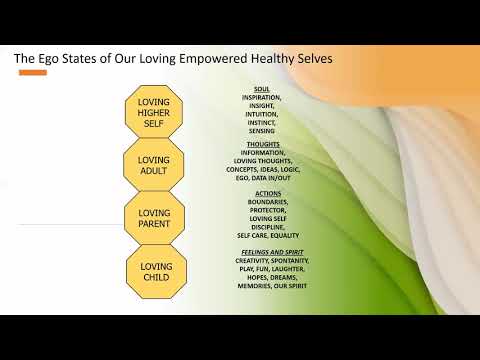
CoDA UK – CoDA Founders Workshop
CoDA 2022 Service Conference – J.W
Powerpoint Presentation
RecoverySpeakers.com –
Phyllis
Codependence Matters –
CoDA Founders
Transatlantic CoDA Royale –
CoDA Founders
Codependence Matters –
Lisa J
CoDA Fellowship Forum –
Evie
Codependence Matters –
Heidi
Codependence Matters –
Heidi
Codependence Matters –
Heidi


Desert CoDA –
David M
CoDA Arizona –
Heidi
Desert CoDA –
Cindy S

Desert CoDA –
David M

Desert CoDA – Tom G

Recoveryspeakers.com – Carmen N
CoDA Winter Retreat – Dakota

Desert CoDA – Robert J
Desert CoDA – Daphne
Desert CoDA
Desert CoDA –
Susan C
Desert CoDA –
Judy & Scott
Codependence Matters –
Heidi
Recovery Speakers
Desert CoDA –
Heidi
Desert CoDA –
Robert J
Desert CoDA – Panel Discussion
Desert CoDA – Marty F, Mary-Beth K, Craig B, Abbie P, Robert J
CoDA Australasia – 2014 Convention

Compliance, Control, Avoidance Patterns


Desert CoDA –
Panel Discussion




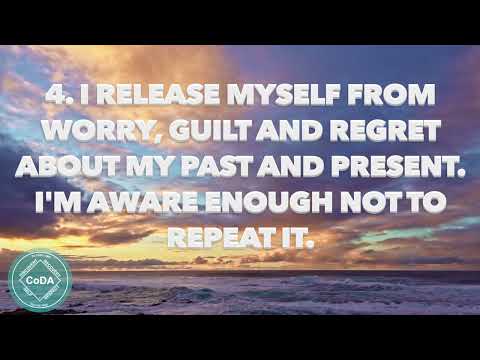
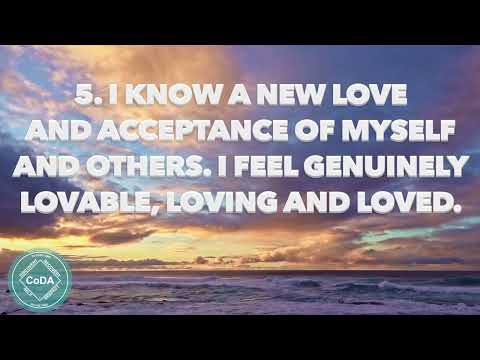
A guided meditation




Desert CoDA
Desert CoDA –
David M
CoDA Arizona – Ken R (CoDA Founder)
Desert CoDA – Judy & Scott
Desert CoDA –
Jeannie L & Mary-Beth L

Self Love – A Spiritual Practice
Sydney CoDA Focus Group 2007
Desert CoDA – Mary Beth K
Read article
CoDA Connections – Pamela W
CoDA UK – CoDA Founders Workshop
Codependence Matters –
Heidi
CoDA Tucson

CoDA UK – CoDA Founders Workshop
CoDA Fellowship Forum – Terry D


CoDA Sponsorship Workshop – Debbie
CoDA UK- Sponsorship Workshop – Carol
Being a Sponsor
CoDA Fellowship Forum
CoDA Canada
Sponsorship Bootcamp – handout
Sponsorship – Meet & Greet
Healthy CoDA Step Workshops
CoDA Tucson
CoDA Tucson
CoDA Fellowship Forum
CoDA Fellowship Forum
CoDA Portland –
Michelle E
CoDA Tucson
Recoveryspeakers.com

CoDA Fellowship Forum
Codependence Matters –
Frank C

Desert CoDA –
Pat M
CoDA Australasia –
National Convention 2022

To translate to your preferred language
Being simple and verbal are two basic communication skills that we need to develop in recovery. We seldom think about it, but what we say to others and ourselves — and how we say it — has profound impact on our lives. Our internal and external communication habits shape our thoughts, feelings, actions, and relationships — literally everything we experience in life. Indeed, poor communication makes our lives needlessly complicated. Not speaking up for ourselves and expressing our feelings in an open, honest, and healthy manner keeps us trapped in our codependency, a disease that for many members, is a disease of silence.
This pamphlet suggests some ways that we can free ourselves from our codependent communication patterns. We can develop a new awareness of our verbal habits and learn to make healthier choices about how we communicate with others and ourselves.
Healthy communication is clear, concise, and honest. To improve our communication, we first need to know our hearts and minds clearly. Codependents continually need to ask:
“What do I think, feel, and need?”
Once we answer these crucial questions, we can empower ourselves to express our feelings openly and honestly without being controlled by our fear of the reactions of others.
Codependent communication is caused by one primary force: fear and the need to control it. Fear is the great repressor of the human spirit and the hidden culprit behind many of our damaging beliefs about others and ourselves. Fear masquerades as truth and holds us in a false belief that we are unworthy, and others’ reactions will destroy us.
Our communication patterns often reflect our fear. For example, when we are with angry people, we may “walk on eggshells.” If this approach is a conscious choice to take care of ourselves, then that’s OK. However, in some situations with angry people, we may discover that we have been habitually irresponsible or dishonest with ourselves and others, using manipulative “weasel” words when we communicate. These are expressions such as “I’m not sure,” (when we are) or “maybe” (when we know it’s “definitely”) or “I’m sorry,” (when we’re really not), or “I guess,” (when we’re not guessing at all). With any of the above expressions, we may or may not be aware of our true feelings. If we are aware but are not being verbal and honest, then we are being controlled by our fear. If we are not aware of our true feelings, then such expressions may allow us to continue to stay out of touch with those feelings.
Weasel words soften the blow of our feelings and opinions and allow us to hedge our bets, and thereby, control other people’s reactions. In some cases, such expressions also allow us to avoid facing our own wants and desires and never know our true feelings. It’s incredible to think about, but it is possible to spend one’s whole life saying, “I’m not sure,” “I don’t know what to do,” or “I’ve got mixed feelings.” Sometimes, we may really not know what to do or really have mixed feelings and that’s OK. However, we must be careful that we are being honest with ourselves.
If we look closely at the feelings and attitudes behind most codependent communication, we discover a host of fears, fears of commitment, shame, a core belief in our own lack of worth, or others’ anger and abandonment.
The major problem with this unhealthy communication is that we dishonor ourselves. Every time we fail to honor our precious thoughts and feelings for the sake of pleasing others, we sell ourselves out as well. Our true selves may be in pain, or furious, but we walk around with plastic smiles on our faces.
Developing healthier communication habits is a process. One excellent way to begin working on this aspect of our recovery is by doing a written Fourth Step inventory of our communication history. If we do this, we may discover that many of our codependent verbal habits were learned from our families or in relationships with damaging, significant others. This inventory process may be painful, but it is also exciting, empowering, and has helped many recovering codependents make great strides in developing healthier, more loving relationships.
Many codependents from dysfunctional families have experienced overt or covert verbal abuse. Some useful questions to consider as we review our personal history include the following: Did our parents practice unhealthy communication? Were they dishonest with one another or their children? Did they lie to themselves or others on a regular basis? Did they rage or swear or tell us that “you’ll never amount to anything?” Or was the verbal abuse more covert and subtle? Did we see verbal people-pleasing going on to control or take care of people’s feelings? Were things kept hidden? Were there family secrets? Did seemingly harmless, but subtly stabbing, sarcasm rule the day? Did people often say, “I’m sorry” or “I was only joking” as justifications after the barbs had been flung? Are we using any of these verbal tactics today in our own lives or allowing others to use them with us?
If we review the communication habits that once protected us, we might find that many of them still haunt us today. Once we have identified the internal and external voices that are still damaging us, we can stop empowering them and start replacing them with healthier choices. As we continue our Fourth Step, we may find that other adolescent and adult experiences have influenced our communication patterns. After looking at our entire history through a Fourth Step inventory, it is useful to share our insights in a Fifth Step with a sponsor or other trusted friend. This helps improve our awareness of the ways in which our current communication patterns still affect our lives today. Also, this sharing gives us practice communicating in a healthier manner with a safe person.
As the Steps teach us, learning to change our codependent habits begins with acceptance, a willingness to change, and then action. We can’t change what we don’t know. Furthermore, all the insights in the world won’t help unless we want to change and actually do it. As noted earlier, we can begin this process by working the Steps, but this time focusing specifically on our communication patterns. If we work all Twelve Steps in light of our verbal habits, we discover how well each Step can be applied to our communication history and patterns. The most important point to remember is that these patterns have been learned, and they can be unlearned. Our verbal habits may have run our lives for years and protected us around unsafe people, but today we can let go of them and walk through the discomfort that comes with changing old behaviours.
When we are able to say “no” without feeling guilty, we have taken a major step forward in our recovery. When we inventory our own weasel words and stop ourselves in mid-sentence from using them, we have taken a major step forward in our recovery. When we catch ourselves before we habitually apologize for something, we have taken a major step forward in our recovery. When the day comes and we say, “No, I’m clear about my feelings, and I won’t be going,” and we don’t feel a pressing need to justify ourselves, we have taken a major step forward in our recovery. When we speak clearly and honestly as we set a boundary and don’t allow another’s anger to control us, we have taken a major step forward in our recovery.
With time and practice, we will know. We will know when we have verbally owned our power. When our hearts and minds are clear, our speech can be simple and direct.
Communication & Recovery
[ All languages ]
EN | ES | PT | RU

To translate to your preferred language
The Recovery Patterns of Codependence – Progress Scale may not be reprinted or republished without the express written consent of Co-Dependents Anonymous, Inc. This document may be reprinted
from the website http://www.coda.org (CoDA) for use by members of the CoDA Fellowship. Copyright © 2017 Co-Dependents Anonymous, Inc. All rights reserved.
Progress Scale – (CoDA Canada)
[ All languages ]
EN | FR
Image from Envato, with thanks to amenic181

Often regular, listed CoDA meetings call themselves a Step Study when the focus of the meeting is CoDA literature about the Steps, and sometimes the Traditions. These meetings are open and rotate through the literature again and again. New people join the meeting wherever the group is and get a taste of CoDA’s Steps, Traditions, and the experience of the members of the meeting.
When you are ready to WORK the Steps, you might find or start a small group of likeminded members who want to take their recovery to the next level. Members create small groups to support each other by working through all the Steps together. We strongly suggest working the Traditions simultaneously. This is also called a Step Study Group. This kind of group will be the major focus of this document.
CoDA has published three in-depth tools regarding the Steps as they pertain to recovery from codependency:
This document will focus primarily on the 12 Steps and 12 Traditions Workbook, which these small, committed groups most often use.
An open Step meeting and a Step Study group offer very different experiences. Many of us choose to participate in both at the same time. We find it important to continue with our regular meetings while taking part in these smaller Step groups.
It provides:
Here are some comments from CoDA members about the rewards they received participating in a dedicated Step study group:
There are several ways that Step Studies are announced; newly forming Step Studies are sometimes announced at regular CODA meetings. If this is not the case, you could do the following:
If none of these have worked, you could start your own… see below.
Ask your sponsor
Ask other members at your meeting and/or during fellowship
Check your intergroup or regional / Voting Entity’s website
Show up at the right place and time with curiosity and a desire to work the Steps and Traditions.
Anyone can start a Step Study. There are no special skills or requirements needed beyond a willingness to serve (and perhaps step out of your comfort zone).
Here’s a comment from one participant who started such a group:
“When I wanted to work the Steps, I mentioned it at fellowship after the meeting. Another person responded that she was interested too. The two of us decided the best day and time for us, where we could meet, and when we could begin. If no one else wanted to work Steps and Traditions, we were a group. For a few weeks, we announced our new Step group at all the CoDA meetings we attended.
We created flyers announcing starting date, time, location. and contact
information. We handed them out in meetings and posted them on bulletin boards at meeting sites. We also made an electronic copy of our flyer to post on our intergroup’s website.
At the first meeting, those who attended began planning the meeting format using the group conscience process. We went from there.”
Sample formats and a sample flyer are provided in the appendix to this document.
Excerpted from the booklet Healthy Meetings Matter pages 7-8:
Decisions are made in CoDA through a process of thoughtful discussion called Group Conscience. In this process, every member present has voice and vote. With the help of a loving Higher Power, members open their minds to all viewpoints presented and then cast a vote for the one seen as best for CoDA.
A Group Conscience decision grows out of the combined wisdom of the whole group. While every person has the right to express opinions, the Group Conscience determines the particular course of action. A Group Conscience discussion may be over quickly if everyone agrees. In other cases, sharing may continue for an extended time as people discuss the issue in terms of several different Traditions. For some questions, group members may want to announce in advance that a specific issue will be addressed at the next business meeting.
Ideally, during the group Conscience discussion, members reach a consensus. If they do not, then a vote is taken and the majority reflects the Group Conscience.
Group conscience is about putting aside the “self” and looking to a loving
Higher Power for guidance. We demonstrate our openness to the will of our Higher Power by accepting the outcome, even when we disagree. This is a humbling process- one that is new for many of us.
“For our group purpose, there is but one ultimate authority – a loving Higher Power as expressed to our Group Conscience. Our leaders are but trusted servants, they do not govern”
(Tradition 2).
Through the Group Conscience, we establish healthier ways of relating to one another: we create boundaries for the group, learn to compromise, and resolve conflicts. Learn more about the Group Conscience process in the Fellowship Service Manual (FSM) on the CoDA website (www.coda.org).
CoDA is structured according to the Twelve Traditions. The Fourth Tradition gives each group the freedom to choose its own structure, which is determined by Group Conscience at the Group’s business meetings. Some structural decisions to be made include:
Do I still need a sponsor if I am in a Step Study?
No, you don’t need to have a sponsor to be a part of a Step Study. However, having one while working in the group can be very beneficial. A Step study group is not intended to take the place of the sponsoring relationship.
It is our experience that, as in any relationship, there are times we become triggered by other members of our Step Study group. The work we are doing promises to churn up our painful histories, and the actions of other members will likely trigger us at times.
Therefore, our ongoing communication with a sponsor outside the group is a healthier choice than reacting in familiar, codependent ways within the group.
For more information on Sponsorship, consider reading part one of the CoDA Booklet, Sponsorship: What’s in it for me? and CoDependents Anonymous, Chapter 5, “What are Sponsors?”
Does the group need a leader or teacher?
While a Step Study group can have one, our 8th Tradition reminds us that we do not use professionals, and our Second Tradition reminds us of the spirit of equality. All members participate in CoDA meetings as individual recovering codependents, not as leaders or teachers. Each meeting has a facilitator who reads the script, and this responsibility can be rotated equally amongst the members.
Building CoDA Community: Healthy Meetings Matter page 17 states: “In CoDA, no one is paid to share experience, strength, and hope, whether at meetings, as sponsors, or in any other Twelve Step related activity. Professionals attending CoDA meetings do so as members only, and do not use the Fellowship to further their business interests.”
At times, a sponsor may be willing to take on several new sponsees and lead several sponsees through the Steps together at one time. By necessity, this is efficiency in sponsoring, not leading or teaching. Here are comments from one sponsor who leads groups of her sponsees through the Steps together:
“ I used to get irritated when the people at my home group shared about their codependency issues without ever mentioning how they were working the Steps to solve their problems. So I decided to take a group through the Steps using the CoDA Twelve Steps and Twelve Traditions Workbook over a period of several months. I discovered that the ideal schedule was to meet once a week for 90 minutes and spend two weeks on each Step with two extra weeks for the participants to work on their 4th Step inventories for a total of 26 weeks. At each meeting we would also spend some time discussing some topic related to recovery such as boundaries, communication skills, how to find a sponsor, etc.
Before we started, I needed to be very clear about my expectations: that everyone would stick it out to the end, that they would keep up with the homework, and that they would all be ready to sponsor others when we finished. As it turned out, all of these expectations went unmet: half the people who started were gone by the last workshop, only one or two kept up with the assignments, and only one started sponsoring at the end. I got to practice that part of my recovery where I do the footwork and let go of the results.
I’m happy to report that I recently finished my fourth series of workshops. Each time I’ve done this, the shares at my meeting have moved toward carrying the message, not the mess, if only for a while.”
Do we share our Fourth / Fifth Step with the whole group?
This is a question best answered in a group conscience. Below are some personal experiences of working Steps Four and Five for consideration:
“All of the members of my Step Study had sponsors. Each of us shared with our sponsor. With the group, we shared about the feelings that came up when doing the Fourth and Fifth Steps and summarized what we found out about ourselves.”
“In my most recent small group experience, we each shared our answers to the questions and prompts from the Twelve Steps and Twelve Traditions Workbook with each other. My compassion for others grew and our intimacy with each other did too.”
“Hearing others in our small group share openly and from the heart
modeled that new behavior for me. I found that others’ courage gave me courage, and that I felt more equality with others knowing that we dealt with similar codependency issues.”
“In our most recent Step Study group experience we studied the workbook material for both Steps Four and Five before beginning our personal work on the Fourth and sharing our Fifth Steps. We became familiar with the purposes and gifts of the writing, the giving, and the receiving of the Fourth and Fifth Steps. We then made our group conscience decision regarding how we would proceed. Which Fourth Step formats would we use and in what order?”
This format can be modified and/or adapted by your meeting. Electronic copies are available at http://www.coda.org
A: Sample Format Step Study Meeting Format
New Step and Tradition Study group forming!
“A Group Title”
We will be using CoDA’s The Twelve Steps and Twelve Traditions
Workbook, available at most meetings’ literature tables,
via the [intergroup] literature person (literature@intergroup.org), and via CoRE.
Please bring your copy to each meeting.
First meeting: Febtober the 41st, 1989\
Meets: Every Tuesday, 7:00-8:30pm
Location: Public Recreation Hall. First Floor Study Room.
123 State Street, Anytown, Anyplace
(123 State Street is in the downtown center just north of the State and
Main intersection)
(To get to the first floor study room, enter from the main entrance on State street, proceed down the left-hand hallway.
First Floor Study Room is just after the service elevator on the right.)
For More information, contact:
Abraham L: newequality@email.com or 1 (234) 567-8910 9a-9p, please.
Mahatma G: craftmyself@email.com or 1 (098) 765-4321 7a-10p, please, no text messages.
In addition to the text, consider images, clipart, etc.
This can be straightforward, for example, a picture of CoDA’s green Twelve Steps and Twelve Traditions Workbook, to metaphorical, such as a photo of some kind indicating getting from one place to another by committing to working through the Steps and Traditions with others.
Below is a combined list of possible inventory approaches that I and others have found useful, based on page 49 of CoDA’s Twelve Steps and Twelve Traditions Workbook, 2007 Edition. This is your Fourth Step; you get to decide, with guidance, which approaches you wish to use and in which order.
The pamphlet Sponsorship: What’s in it for me? in the section “What do I look for in sponsors?” which can help us inventory what we are looking for Codependents Anonymous includes the suggestion of a chart format in Chapter 3, Step 4. Chapter 3, Step One provides an additional list of questions that are useful in a Fourth Step inventory.
In the pamphlet Communication and Recovery, the section “How do we assess our codependent communication patterns?”, paragraph two
includes several questions to consider. in a sponsorship relationship. When we are ready to sponsor others, the section “How do we set initial boundaries with our sponsees?” has a short list of questions to consider. Once we are sponsoring, the section “What if we hate sponsoring?” has an excellent list of questions to consider before ending the relationship.

To translate to your preferred language

Our common welfare should come first; personal recovery depends
upon CoDA unity.
Our First Tradition reminds us that without the strength of our CoDA Fellowship, we do not recover on our own; CoDA’s existence depends on CoDA unity. We need the continuity of our common bonds, such as literature, meeting format, the Steps, the Traditions and recovery tools and concepts. We come together, in unity, to help
each other recognize that we are not alone in our recovery. Each member is a unique part of a greater whole. We value every individual’s experience, strength and hope.
For our group purpose there is but one ultimate authority—a loving
Higher Power as expressed to our group conscience. Our leaders are
but trusted servants; they do not govern.
In CoDA, our ultimate authority comes from a power greater than ourselves. We call this power our “group conscience.” A group conscience is the collective expression of every member’s loving Higher Power. The group conscience provides guidance for all CoDA
groups in an atmosphere of safety, respect and acceptance. No individual is an authority in a CoDA group. At all levels of service, members are responsible to carry out the decisions made through the group conscience process.
The only requirement for membership in CoDA is a desire for healthy and loving relationships.
This Tradition gives hope to all who suffer from codependency. We are members of this organization when we say we are. Membership in CoDA is self-determined by a personal desire to experience loving
and healthy relationships.
Each group should remain autonomous except in matters
affecting other groups or CoDA as a whole.
As long as a group follows the Twelve Steps and Twelve Traditions, and reads the preamble and welcome as written, it may be recognized as a part of CoDependents Anonymous. After meeting these requirements, each group is responsible to its membership through the group conscience process. Each group has the obligation to make responsible decisions regarding its own affairs. In the spirit of unity, each CoDA group needs to be accountable for its decisions and
actions which affect CoDA as a whole.
Each group has but one primary purpose—to carry its message to other codependents who still suffer.
We carry the message of recovery from codependence to those of us who still suffer, sharing our experience, strength, and hope. We are diligent in keeping this as our primary spiritual aim.
A CoDA group ought never endorse, finance or lend the CoDA name to any related facility or outside enterprise, lest problems of money, property and prestige divert us from our primary spiritual aim.
CoDA groups do not use the CoDA name to promote or support any outside author or written material, organization, therapy, religion, political group, charity, business or financial enterprise. When we use any facility for meetings or events, we pay for its use, implying no
affiliation. We actively protect ourselves from matters that might otherwise divert us from our main spiritual goal: recovery
from code-pendency.
Every CoDA group ought to be fully self-supporting, declining outside contributions.
CoDA groups encourage responsibility in financial matters, such as paying for meeting room space, literature and refreshments. We maintain treasuries through voluntary contributions from members only. After the group meets its own needs and obligation, it is suggested that excess funds over and above a prudent reserve be distributed to the larger communities of CoDA: local, state,
regional, provincial, national or international. Co-Dependents Anonymous does not accept large contributions from any individual, nor do we accept money, space or services from non-CoDA sources. Thus, we maintain accountability and independence.
Co-Dependents Anonymous should remain forever nonprofessional,
but our service centers may employ special workers.
In CoDA, no one is paid to share experience, strength and hope, whether at meetings, as sponsors, or in any other Twelve Step related activity. Professionals attending CoDA meetings do so as members only, and do not use the Fellowship to further their business interests. Our service centers may hire member or non-member employees
for business needs. We may reimburse service related expenses, when financially possible, to those who serve the Fellowship.
CoDA, as such, ought never be organized; but we may create
service boards or committees directly responsible to those they
serve.
CoDA groups need the least possible organization that can accomplish our service responsibilities. We are organized through our service structure. We rely upon the spiritual leadership of a loving Higher Power as expressed through the group conscience at all service levels, as opposed to rigid organization. Positions of leadership need to be regularly rotated. By doing so, we welcome the active flow of new ideas and energy to service. Our service structure consists of volunteers from the Fellowship who act in CoDA’s
best interests by reflecting the group conscience of CoDA as a whole. All CoDA members have an opportunity to offer service as a vital part of their recovery.
CoDA has no opinion on outside issues; hence, the CoDA name
ought never be drawn into public controversy.
Our sole purpose is recovery from codependency through working the Twelve Steps and Twelve Traditions. CoDA groups and members refrain from linking the CoDA name to our personal opinions on any outside issue or organization, including politics, religion, other self-help groups, therapeutic concepts, recovery centers, businesses, literature or causes. If we identify ourselves as members of the
Fellowship, then we remain neutral on all public matters. We have no authority to speak for CoDA as a whole, and we disengage from controversial issues.
Our public relations policy is based on attraction rather than promotion; we need always maintain personal anonymity at the level of press, radio and films.
CoDA groups and members do not advertise or promote the Fellowship; the experience, strength and hope of members speaks for itself. Our announcements to the public supply necessary meeting information, such as time, day and location. Relations with the media
are handled through appropriate service entities, such as public information committees or Fellowship Services. In meetings, we identify ourselves by first names only. However, members may choose to shed their anonymity at a personal level. We make our meeting information and literature available to the community
Anonymity is the spiritual foundation of all our Traditions; ever reminding us to place principles before personalities.
Anonymity has profound spiritual value. Since we focus on building self-worth, we cannot afford personal quests for power or prestige. We are constantly reminded to look beyond our egos and personalities toward the higher issues of recovery. Anonymity challenges us to practice true humility and reminds us that the principles of the CoDA program transcend any individual.
CoDA’s Twelve Traditions see the following literature:
This is CoDA Conference endorsed literature Copyright © 2019
All rights reserved This publication may not be reproduced or photocopied without written permission of Co-Dependents Anonymous Inc.
Using the Twelve Traditions
[ All languages ]
EN | ES | RU
Image from Envato, with thanks to jpozzi

To translate to your preferred language
Healthy meetings are an integral part of the CoDA Fellowship, providing us with a safe space to learn about recovery. Recovery does not happen in isolation. CoDA’s Tradition One states, “Our common welfare should come first; personal recovery depends upon CoDA unity.”
A CoDA meeting is comprised of a group of people who come together around their shared desire for healthy and loving relationships. The group uses the Twelve Steps and Twelve Traditions of Co-Dependents Anonymous as the basis for working toward recovery. It is a place to find sponsorship and fellowship as well as the sharing of experience, strength, and hope. A
strong sense of acceptance and community makes a meeting attractive to both the newcomer and old-timer.
The sense of community and belonging, a gift of our program, begins at the group meeting level. A CoDA meeting is more than a place to tell our troubles. It is a place to identify with people like ourselves and to interact with people focused on similar goals—to develop and maintain healthy and loving relationships. Meetings also provide an opportunity to learn about ourselves by interacting with those who are different from us.
A CoDA meeting depends on all who attend. It does not belong to any one person or small group. Because working the CoDA program is a spiritual practice, we learn to rely on a loving Higher Power to guide our group. We come to this understanding by attending meetings regularly, asking our Higher Power for guidance, and engaging with our CoDA peers as equals. Attending meetings, listening to others, and speaking our truth are important aspects of our spiritual journey. When members truly share this journey, it
creates healthy CoDA meetings.
CoDA meetings remain strong when they have the ongoing participation of longterm members who demonstrate the qualities of acceptance and community. Members are encouraged to create fellowship outside of the meeting by going for coffee or attending CoDA events such as picnics, potlucks, or camp outs.
In Building CoDA Community: Healthy Meetings Matter, we discuss the characteristics of healthy CoDA meetings, the obstacles meetings may face, ways to address them, and the vital need for a service structure.
There are many components that contribute to safe, strong, and healthy meetings. The following recommendations are based on the experience of long-standing meetings. Each is simple by itself. Together, they help create a space where codependents practice spiritual recovery.
Recommendations
Register the meeting with CoDA, Inc. at http://www.coda.org.* The CoDA
meeting will then be listed on the worldwide meeting list at coda.
org. So that meeting information remains current, update yearly.
*items define official CoDA meetings
**CoDA Resource Publishing, Inc. (CoRe) is the publishing arm of CoDA
The following are requirements for recognized CoDA meetings:
Register the meeting with (Codauk.org in the UK)
Read, as written, the four foundational documents.
CoDA Conference endorsed literature is written by CoDA members for CoDA members. It includes any written or audio material created by members of Co-Dependents Anonymous that is approved by the CoDA Service Conference (CSC) using the group conscience process. Since “Anonymity is the spiritual foundation of all our Traditions” (Tradition Twelve), all CoDA literature is published anonymously. The use of CoDA literature supports Tradition One by uniting the Fellowship and Tradition Five by carrying a consistent message of hope to still suffering codependents.
Sharing focused on the Steps, Traditions, and topics found in CoDA literature helps members grow together in the program. Many CoDA groups use our basic text, Co-Dependents Anonymous, informally known as “The CoDA Book,” and/or the In This Moment Daily Meditation Book during meetings. Other popular titles are The CoDA Twelve Steps & Twelve Traditions Workbook, Twelve Steps Handbook, Newcomers Handbook, and Experiences in Crosstalk.
By making our collective experience, strength, and hope available to all members, Conference endorsed literature benefits the Fellowship. Reading CoDA literature between meetings helps build a sense of connection to the program. A well-stocked literature table creates a sense of CoDA’s history and provides a wealth of recovery materials on a wide range of CoDA topics.
The sale of CoDA literature helps CoDA remain “fully self-supporting,” as stated in Tradition Seven. The CoDA Literature Committee (CLC) encourages new projects that fill a need in CoDA’s inventory of literature. Ideas for new topics are passed along from individual meetings to the CoDA Service Conference (CSC)
through their Voting Entity, or by direct submission to lit@coda.org.
Sponsorship provides a relationship within which codependents learn to integrate the CoDA Steps and Traditions into their lives. Healthy sponsorship in CoDA is the antithesis of a codependent relationship. It is an equal partnership in which sponsor and sponsee can explore and practice recovery behaviors. Sponsorship provides a rich arena for both parties to learn to share without becoming enmeshed, without dictating, and without taking things personally. Sponsors impart the experience, strength, and hope they have garnered in working and studying the Steps and Traditions. A sponsor listens
intently and patiently. A healthy sponsorship relationship helps build trust.
An important aspect of sponsoring is passing on the institutional memory of our Fellowship. A sponsor may share information about the structures of the local, regional, and worldwide communities of the CoDA Fellowship. A sponsor also plays an important role in sharing about the culture of CoDA—for instance, how meetings are conducted, the protocol of behavior in a sharing group, and the harmfulness of crosstalk.
Sponsoring relationships benefit the group as well as the individuals
involved. Sponsees who spend time with their sponsors between CoDA meetings benefit from this relationship. The benefits extend into the group. Having one-on-one time with a sponsor outside of the meeting gives sponsees the opportunity to do Step work and to share feelings in greater depth than is possible during the meeting. This experience helps sponsees to share more succinctly during the meeting. Sponsorship relationships promote growth for both partners and help to improve the overall health of the group. Members who have sponsors are more likely to become sponsors, thus increasing sponsorship within CoDA.
The focus in sponsorship is working the CoDA program, which includes doing service. The CoDA group benefits when members participate in service work and become sponsors themselves. A key ingredient to being a good sponsor is having a sponsor. Participating in sponsorship builds CoDA community and promotes unity. Healthy sponsorship builds healthy meetings.
For more in-depth information, please refer to CoDA’s current literature on sponsorship.
Healthy sharing creates healthy meetings; healthy meetings encourage
healthy sharing. Sharing is an integral part of meetings. Sharing gives CoDA members the time and space to be heard and to hear others speak their truth.
Sharing is not meant to educate, impress, or influence others. The aim of sharing is for individuals to look within and say what is in their hearts, and then to sit quietly, listening as others do the same.
Group conscience determines the order of sharing in the meeting. For example, in some groups members sit in a circle and share in order around the circle; in some groups members speak as they are ready in no particular order. Large meetings may choose to break up into smaller sharing groups. Regardless of the chosen style, there is no requirement that a member share. Simply saying, “I pass,” is enough. This safeguards the member and allows others in the group to move forward with their sharing. The self-discipline of each member taking only a fair share of the time available contributes to the health of a meeting.
Here are some strategies groups have found helpful in promoting healthy sharing:
Explain and observe the no-crosstalk rule. Crosstalk is giving
advice, interrupting, responding to or directly commenting on
another’s share, touching, and other types of behaviors as determined by the group conscience. Crosstalk can be effectively handled
during meetings with the help of the chairperson or experienced
members. However, anyone in a CoDA meeting can address crosstalk, using “I” statements. For example, “I feel uncomfortable when
side conversations are going on while someone is sharing.” For
more information, see the CoDA handbook, Experiences with
Crosstalk.
I use “I” statements when sharing. (I feel; I believe.)
I share my own experience, strength, and hope—no one else’s.
I refrain from commenting on what others share.
I share for three to five minutes, keeping the focus on myself.
I help myself and others by being emotionally present and honest.
I let others experience their own feelings; I keep my advice to myself.
CoDA is structured according to the Twelve Traditions. The Fourth Tradition gives each group the freedom to choose its own structure, which is determined by group conscience at the group’s business meetings. Some structural decisions to be made include: What guidelines will be used for sharing? How might the meeting deal with crosstalk? How will newcomers be greeted and integrated? How will collecting Seventh Tradition donations, ordering literature, and other pertinent issues be handled? When will regular business meetings take place? What are the group’s financial needs? How will those needs be met? The CoDA Meeting Starter Packet provides a wealth of information and guidelines on meeting structure.
Decisions are made in CoDA through a process of thoughtful discussion called group conscience. In this process, every member present has voice and vote. With the help of a loving Higher Power, members open their minds to all viewpoints presented and then cast a vote for the one seen as best for CoDA.
A group conscience decision grows out of the combined wisdom of the whole group. While every person has the right to express opinions, the group conscience determines the particular course of action. A group conscience discussion may be over quickly if everyone agrees. In other cases, sharing may continue for an extended time, as people discuss the issue in terms of several different Traditions. For some questions, group members may want to announce in advance that a specific issue will be addressed atthe next business meeting. Ideally, during the group conscience discussion,
members reach a consensus. If they do not, then a vote is taken and the majority reflects the group conscience.
Group conscience is about putting aside the “self” and looking to a loving Higher Power for guidance. We demonstrate our openness to the will of our Higher Power by accepting the outcome even when we disagree. This is a humbling process—one that is new for many of us. “For our group purpose there is but one ultimate authority—a loving Higher Power as expressed to our group conscience. Our leaders are but trusted servants; they do not govern” (Tradition Two).
Through the group conscience, we establish healthier ways of relating to one another: we create boundaries for the group, learn to compromise, and resolve conflicts. Learn more about the group conscience process in the Fellowship Service Manual (FSM) on the CoDA website (www.coda.org).
Healthy CoDA meetings hold regular business meetings. Many groups find it convenient to schedule their business meeting monthly, before or after the regular meeting. The dates and times of business meetings are announced ahead of time so that members can plan to attend. Business meetings are open to all CoDA members, and any CoDA member who is present may participate in the group conscience. The greater the input, the more the decisions made will reflect the needs of the group.
Business meetings have a facilitator, or chairperson. This is usually a member who has some time in the CoDA program and who is familiar with the CoDA Traditions. Generally, there is a treasurer’s report and a secretary’s report, a review of decisions made at the last meeting, and discussion of any new issues or concerns.
A wide range of issues may be addressed. Anything that affects the functioning of the CoDA meeting is appropriate. A group may need to elect a trusted servant, such as a new treasurer or a group service representative (GSR) to the local intergroup or voting entity. A group might discuss and decide which literature to buy. There may be questions about the meeting format: “Will we set time limits on sharing?” “Will we give welcome chips to newcomers?” Questions about the no-crosstalk guidelines or other ideas may be fully explored at a business meeting, rather than taking time during the regular meeting.
Business meetings provide a forum for concerns to be aired and resolved. Sometimes it is best to have an initial discussion the month an issue is raised and wait until the next business meeting to arrive at a group conscience. Group issues are decided by members within the framework of our Fourth Tradition: “Each group should remain autonomous except in matters affecting other groups or CoDA as a whole.”
Our Seventh Tradition requires that CoDA meetings and service groups be fully self-supporting. One way a meeting or group supports itself is financially. Another way is through service work. Both are crucial to the survival and growth of CoDA. To be financially self-supporting, CoDA groups look only to members for funding. Accepting contributions from individuals or organizations outside of CoDA violates Tradition Seven.
Groups are financially self-supporting when they:
Groups are self-supporting in regards to members’ time and energy when:
If a CoDA group struggles because of non-support, due either to lack of funds or lack of service by its members, a group inventory can be done to explore possible solutions. See The Twelve Steps & Twelve Traditions Workbook for a suggested Traditions-based group inventory format.
Fellowship is a cornerstone of CoDA recovery. Many newcomers arrive at their first meeting feeling alone and isolated. They may be recently out of a relationship or in a relationship in which their emotional needs are not being met. They come, eager to find answers to their questions, but the no crosstalk rule discourages that. However, if they stick around, they learn about fellowship and how it helps build CoDA community. Socializing after the meeting provides an opportunity for conversations in which newcomers can ask questions, talk in more detail, and get to know other members better. To present a welcoming atmosphere, it is important to announce social activities taking place after the meeting and invite everyone to attend.
Other ways meetings can promote CoDA fellowship are by encouraging attendance at conventions, conferences, workshops, and increasing participation at intergroup and voting entity functions.
Some reasons for starting a new meeting:
Although some CoDA meetings are started by people new to the program, it is best to involve experienced members who are familiar with the Twelve Steps and Twelve Traditions. Ideally, three or four people are willing to share the commitment of starting a new meeting. Meetings can be held almost anywhere. Try area churches, synagogues, counseling centers, hospitals, or places where other group meetings are held. Though each group is autonomous, for reasons of safety and anonymity, CoDA cautions about holding meetings in individual homes. When choosing a meeting place,
please keep personal safety in mind.
CoDA recommends that every meeting obtain a Meeting Starter Packet (MSP) from coda.org. It contains all the basic documents needed to hold a CoDA meeting and information on registering the meeting. The MSP contains guidelines for getting the word out about the new meeting, remembering our Eleventh Tradition: “Our public relations policy is based on attraction rather than promotion.” Some methods of attracting interest include distributing fliers at other meetings, at intergroup offices, and CoDA events. Listing the
meeting under the self-help or community calendar section in the local paper is helpful. Contacting local mental health, alcohol and substance abuse agencies, and community referral service organizations may also be helpful. It is important to contact community organizations and media outlets regularly so that they continue to publish meeting information.
It may take six months to one year for a new meeting to become established. Maintaining consistency in the day, time, and location of the meeting is vital.
Setting up the meeting room before start time and having someone to greet members, especially newcomers, creates a welcoming atmosphere. Starting and stopping on time respects the boundaries of members.
New meetings need to develop familiarity with the Twelve Traditions as their guiding principles. See the section at the end of this booklet, “The Twelve Traditions.”
All meetings have problems from time to time, especially in the beginning. Healthy meetings address difficulties through the group conscience process, relying upon the wisdom of our Traditions. Tradition One, “Our common welfare should come first; personal recovery depends upon CoDA unity” and Tradition Twelve, “Anonymity is the spiritual foundation of all our traditions, ever reminding us to place principles before personalities” are
particularly useful.
Thirteenth Stepping
In recovery, manipulating another into a relationship, be it emotional,
financial, or sexual, violates the core values and Twelve Traditions of
our program. “Thirteenth stepping” is a term used to describe this kind of unhealthy relationship. Thirteenth stepping is harmful to both people involved and to the overall health of a meeting. Newcomers may be especially vulnerable.
Although the primary responsibility for addressing this issue lies with the individuals involved and their sponsors, any member who is aware of thirteenth stepping may speak privately with the person perceived to be engaging in this behavior. Another option is to call for a group conscience at the next business meeting. People may express their discomfort using “I” statements and without naming individuals or pointing a finger. One possible action a group might take is to amend the meeting format to include a definition of thirteenth stepping, perhaps using wording from the preceding paragraph.
Disruptive Behavior
On rare occasions, a person may cause disruption in the group. It may
manifest as yelling, judging another’s sharing, monopolizing sharing time, or gossiping. Healthy CoDA meetings address disruptiveness by calling for a group conscience where issues can be explored in non-shaming and nonpersonal ways. We place principles before personalities. Tackling issues together leads to group unity.
It is preferable for groups to solve their own problems. When this is not possible, there are other resources in our Fellowship that can help. For further information, refer to the Fellowship Service Manual’s section on Disagreement, Mediation, and Resolution in Our Group Conscience Process.
Recovery depends on CoDA meetings being viable. From the time we
were led to our first Co-Dependents Anonymous group and realized the wealth of help obtainable, we have depended on CoDA being available on a consistent basis. What would happen to Co-Dependents Anonymous if no one volunteered for service? Or, what would happen if only a few CoDA members did all the work? The answer is obvious. CoDA would either cease to exist or a handful of people with their own agendas would be in charge. Regular rotation of service positions gives every member the chance to participate, ensuring that recovery continues to serve the worldwide Fellowship and be available for us and for those who follow. Please consider this as an invitation to serve your CoDA group.
Service work is a win-win situation because it benefits the Fellowship as well as the individuals who serve. Through service work, recovering codependents learn many lessons: to work as part of a team, accept group conscience decisions gracefully, be more direct in communicating their needs, to negotiate and compromise, be more comfortable taking on leadership roles, set healthy boundaries, and learn more about who we are. Service work provides a natural way for individuals to use their talents and creativity to meet and get to know other codependents in more depth.
CoDA has survived because it is more than a group of people coming together toward a common goal: a desire for healthy and loving relationships. CoDA is a spiritual program that follows a well mapped out series of Steps and Traditions and is guided by a loving Higher Power. Through service, our groups and committees continue to carry the message of recovery to codependents who still suffer.
Healthy meetings connect with the CoDA Fellowship beyond the meeting room walls. Groups join together to form intergroups or community service groups to accomplish things that a single group cannot, such as maintaining up-to-date meeting lists, returning informational phone calls, or sponsoring events.
A Voting Entity (VE) is an affiliation of CoDA groups within a state, region, or country. Voting Entities hold regular meetings, comprised of group service representatives (GSRs) who have been elected by their individual CoDA group. Voting Entities are eligible to have voting representatives, called delegates, attend the Annual CoDA Service Conference (CSC). Delegates bring VE concerns to the CSC and, in turn, bring CSC Fellowship information back to their VE. GSRs then bring VE and CSC information back to their individual CoDA meetings. This two-way flow of information benefits the entire CoDA community, and specifically enhances meetings by making members aware of new literature, website enhancement, CoDA
events, or changes that affect CoDA as a whole. Healthy meetings carry the message.
The Twelve Traditions are the guiding spiritual principles of our meetings.
They provide a framework for interacting with others, resolving issues, and maintaining healthy groups.
Tradition One
Our common welfare should come first; personal recovery depends upon CoDA unity.
Our First Tradition reminds us that we do not recover on our own. We depend on CoDA; CoDA’s existence depends upon CoDA unity. We need the continuity of our common bonds, such as literature, meeting format, the Steps, the Traditions, and recovery tools and concepts. We come together, in unity, to help each other recognize that we are not alone in recovery. We value every individual’s experience, strength, and hope.
Tradition Two
For our group purpose there is but one ultimate authority—a loving Higher Power as expressed to our group conscience. Our leaders are but trusted servants; they do not govern.
In CoDA, our ultimate authority comes from a power greater than ourselves. On the group level, we call this power our “group conscience.” A group conscience is the collective expression of every member’s loving Higher Power. The group conscience provides guidance for all CoDA groups in an atmosphere of safety, respect, and acceptance. No individual is an authority in a CoDA group. At all levels of service, members are responsible to carry out the decisions made through the group conscience process.
Tradition Three
The only requirement for membership in CoDA is a desire for healthy and loving relationships.
This Tradition gives hope to all who suffer from codependency. We are members of this organization when we say we are. Membership in CoDA is self-determined, driven by a personal desire to experience loving and healthy relationships.
Tradition Four
Each group should remain autonomous, except in matters affecting other groups or CoDA as a whole.
As long as a group reads, as written, the Twelve Steps, Twelve Traditions, Preamble, and Welcome at every meeting, it may be recognized as part of the Co-Dependents Anonymous Fellowship. After meeting this requirement, each group is responsible to its membership through the group conscience
process. Each group has the obligation to make responsible decisions regarding its own affairs. In the spirit of unity, each CoDA group needs to be accountable for decisions and actions which affect CoDA as a whole.
Tradition Five
Each group has but one primary purpose—to carry its message to other codependents who still suffer.
We carry the message of recovery from codependence to those who still suffer, sharing our experience, strength, and hope. We are diligent about keeping this as our primary spiritual aim.
Tradition Six
A CoDA group ought never endorse, finance, or lend the CoDA name to any related facility or outside enterprise, lest problems of money, property, and prestige divert us from our primary spiritual aim.
CoDA groups do not use the CoDA name to promote or support any outside author or written material, organization, therapy, religion, political group, charity, business, or financial enterprise. We actively protect ourselves from matters that might otherwise divert us from our main spiritual goal: recovery from codependency.
Tradition Seven
Every CoDA group ought to be fully self-supporting, declining outside contributions.
CoDA groups encourage responsibility in financial matters, such as paying for meeting room space, literature, and refreshments. Treasuries are maintained through voluntary contributions from members only. After the group meets its own needs and obligations, it is suggested that excess funds over and above a prudent reserve be distributed to the larger communities of CoDA: local, state, regional, national, or international levels. Co-Dependents Anonymous does not accept large contributions from any individual, nor from any outside group, agency, or organization. Groups are discouraged
from accepting money, space, or services from non-CoDA sources. Thus, accountability and independence are maintained.
Tradition Eight
Co-Dependents Anonymous should remain forever nonprofessional, but our service centers may employ special workers.
In CoDA, no one is paid to share experience, strength, and hope, whether at meetings, as sponsors, or in any other Twelve Step related activity. Professionals attending CoDA meetings do so as members only, and do not use the Fellowship to further their business interests. Our service centers may hire member or non-member employees for business needs. We may reimburse service-related expenses, when financially possible, to those who serve the Fellowship.
Tradition Nine
CoDA, as such, ought never be organized; but we may create service boards or committees directly responsible to those they serve.
CoDA groups are encouraged to use the least possible organization to accomplish service responsibilities. We are organized through our service structure. At all service levels, we rely upon the spiritual leadership of a loving Higher Power as expressed through the group conscience. Positions of leadership need to be regularly rotated to perpetuate the active flow of new ideas and creative energy. Volunteers from the Fellowship act in CoDA’s best interests by reflecting the group conscience of CoDA as a whole. All CoDA members are encouraged to take advantage of the opportunity to
offer service as a vital part of their recovery.
Tradition Ten
CoDA has no opinion on outside issues; hence the CoDA name ought never be drawn into public controversy.
Our sole purpose is recovery from codependency through working the Twelve Steps and Twelve Traditions. CoDA groups and members refrain from linking the CoDA name to their personal opinions on any outside issue or organization, including politics, religion, other self-help groups, therapeutic concepts, recovery centers, businesses, literature, or causes. We have no authority to speak for CoDA as a whole.
Tradition Eleven
Our public relations policy is based on attraction rather than promotion; we need always maintain personal anonymity at the level of press, radio, and films.
CoDA groups and members do not advertise or promote the Fellowship; the experience, strength, and hope of members speaks for itself. Our public service announcements supply necessary meeting information, such as time, day, and location. Relations with the media are handled through appropriate service entities, such as public information committees or Fellowship Services.
Tradition Twelve
Anonymity is the spiritual foundation of all our Traditions, ever reminding us to place principles before personalities.
In meetings, we identify ourselves by first name only. If speaking about another member, we may use first name and last initial. We protect others’ identities and refrain from gossiping about their sharing. Anonymity has profound spiritual value in our recovery, teaching us humility, powerlessness, tolerance, patience, and acceptance. We are constantly challenged to look beyond our egos and personalities toward the higher issues of recovery. The practice of anonymity reminds us that the principles of the CoDA program
transcend those of any individual.
When there are questions or problems in CoDA, using a checklist of the Twelve Traditions may help provide answers. For example, group members often ask, “Why should we use CoDA Conference endorsed literature?” The answer lies in the Traditions.
Life is full of mystery. Perhaps the same can be said of our Fellowship. Some meetings expand and continue over the years, while others do not. Meetings must grow and flourish if this spiritual practice called recovery is to remain available to codependents already in our Fellowship and to those who have not yet found CoDA. With guidance from our Higher Power, we integrate the Steps and Traditions into our meetings and our lives. Attending meetings, volunteering for service, and walking the path of recovery with fellow travellers strengthens our understanding of recovery. Sharing our pain and our triumphs helps us realize we are not alone and demonstrates that recovery works. Healthy meetings support individual recovery and CoDA as a whole. Healthy meetings help CoDA thrive. Healthy meetings matter.
GOD Grand me the SERENITY to accept the things I cannot change,
COURAGE to change the things I can,
and WISDOM to know the difference.
CoDA, a twelve-step fellowship of people who desire healthy and loving relationships.
The five building blocks of recovery in the CoDA program are:
(1) attending meetings;
(2) sharing and fellowship;
(3) working The Twelve Steps of Co-Dependents Anonymous; (4) sponsorship; and
(5) service, following The Twelve Traditions of Co-Dependents Anonymous.
Because many of us come to CoDA in great pain, impatience, and confusion, it may take time to hear the CoDA message. Newcomers
often struggle with believing they are in the right place.
A CoDA meeting may feel strange to a newcomer, even if they feel drawn to the hopeful message about healthy and loving relationships. CoDA’s introductory readings may not make sense or may appear to be overly long. Sharing may stir up strong, unwelcome, or uncomfortable emotions.
Attending regularly, at least twice per week, for a minimum of six weeks, gives newcomers a clearer understanding of the CoDA message. We begin to calm down and become able to absorb the message of hope and healing. Time and repetition help. Our experience has shown us that the program works if we work it.
Listening to others share in a CoDA meeting is how we begin to understand the program. Learning to listen deeply is a skill that takes
practice. Many find learning to listen, to be one of the best gifts of recovery
Newcomers are encouraged to share as they feel able. It is recommended to begin slowly. Passing is fine. In CoDA, we learn to talk about ourselves and our lives in a new, honest, and open way.
Many CoDA groups, both in person and on electronic platforms, gather after meetings for informal socializing called “fellowship.” This is a time to get to know people in the program.
Working The Twelve Steps of Co-Dependents Anonymous means to study and use the steps in a personal program of recovery. Reading
CoDA Service Conference endorsed literature, writing, and sharing are the tools needed to begin to work the Steps. Members typically use Co-Dependents Anonymous and The Twelve Steps & Twelve Traditions Workbook of Co-Dependents Anonymous (the “green book”).
One approach is to work individually with a sponsor. Another approach is to meet with a group of two or more CoDA members in a step study group. The group will decide on the pace
of study.
Newcomers often wonder if it is necessary to “believe in God” in order to work the steps. The short answer is no. In CoDA, we learn to rely on a power of our own understanding that is greater than ourselves. This power can be anything we define it to be for our recovery.
Sponsorship is the heart of the CoDA program, offering members a unique opportunity to develop and maintain a healthy one-to-one
relationship.
A sponsor is:
The Twelve Traditions of Co-Dependents Anonymous are the guiding spiritual principles of our meetings, service within the CoDA service structure, and all our relationships. Some of the principles found in the Traditions are: unity of purpose, self-support, and anonymity.
CoDA meetings rely on members to keep the meeting viable. Support can be as simple as regular attendance, setting up chairs, putting out literature, contributing to the Seventh Tradition basket, or reading during a meeting. Examples of taking on increased service are: opening up the room, chairing a meeting, becoming the meeting secretary or treasurer, or acting as a Group Service Representative (GSR) to represent the meeting at intergroup or Voting Entity meetings.
Healthy meetings rotate service positions and hold regular business meetings where all members are welcome to participate in the decision-making process, called a group conscience. They maintain current information
about the location, time, and contact person
for the meeting at coda.org and local intergroup
meeting lists.
.
CoDA meetings are connected to the wider Fellowship through our service structure. In many geographic areas, meetings band together to create an intergroup or regional group for mutual support. The next level of service is the voting entity (VE). A VE can be a country, or a division within a country such as a state. VEs send delegates to the CoDA World Service Conference.
Co-Dependents Anonymous has created many pieces of literature to reach the codependent who still suffers and expand our understanding
of recovery.
Building CoDA Community: Healthy Meetings Matter
Newcomer Handbook (Sample)
Co-Dependents Anonymous (CoDA’s basic text)
Experiences With Crosstalk (Sample)
The CoDA Twelve Step Handbook (Sample)
The Twelve Steps & Twelve Traditions Workbook of Co-Dependents Anonymous
Sponsorship: What’s in It For Me? (Sample)
Welcome to
Co-Dependents Anonymous
[ All languages ]
EN | ES

To translate to your preferred language
Many arrive at Co-Dependents Anonymous, CoDA, unsure if we belong. Recovery begins with an honest self assessment. For self evaluation, we offer a list of common attitudes and behavior patterns that CoDA members have observed in our own lives.
Personal crises or unbearable, chronic, emotional pain brought many of us to CoDA. We came to our first meeting feeling hopeless and helpless. We wondered why our efforts to fix ourselves and others were not working, no matter how hard we tried. We had come to a crossroad: continue our old ways of coping or look for a new way out of our pain.
At the beginning, most of us found that we identified with several characteristics in each category. Some of us identified most strongly with one or two categories. As we attended meetings, read CoDA literature, and worked with our sponsors, we were surprised to see other characteristics show up in our lives. As we shared our stories, and listened to others share, we began to recognize that the causes of our pain were due to longstanding, unhealthy patterns of living. Patterns which began as a way to cope with overwhelming childhood stress, abuse, and neglect. In CoDA, we learn we are not alone. We come to accept that our pain is a wakeup call. A call to learn a new way to live and thrive. We discover we are ready to change and grow as we work the program of Co-Dependents Anonymous.
Am I Codependent?
[ All languages ]
EN | ES | LV
Image licensed from Envato (iLixe48)

To translate to your preferred language
Whether we are aware of them or not, we all have boundaries. This pamphlet explores what boundaries are and how they support us in developing healthy and loving relationships with others and ourselves.
Boundaries are limits. Boundaries separate one person, place, or thing from another. Boundaries are verbal or physical divisions that separate our identities, responsibilities, feelings, needs, and issues from those belonging to others.
Throughout the recovery process, we constantly rediscover that our first responsibility is always to ourselves. Boundaries help us to clarify where our responsibilities end and where other people’s begin. By establishing healthy boundaries, we slowly learn to take care of our issues and recognize that others have the same privilege. Boundaries fall in several categories that include different aspects of our lives:
A good example of a healthy boundary is CoDA’s “no crosstalk” guideline. This essential boundary helps us to focus on ourselves
at meetings, instead of trying to fix others. Learning to establish and maintain healthy boundaries is one of our greatest recovery tools.
After we develop an intellectual and emotional understanding of what boundaries are and why we need them, we often discover that a good starting place is getting in touch with ourselves. As part of this process, we find that we want to establish new boundaries with our inner selves. The lack of these internal boundaries can be subtle and may result in abandoning our feelings, losing touch with ourselves, wanting to be intimate to please someone else, not ourselves, and thinking obsessively. As one member shared,
“I used to get insomnia because I couldn’t shut down my ‘worrier’. Now I listen closely to that part of me and let it have its say, but I also draw a boundary with it. I’ll tell myself ‘OK, you can have 15 more minutes, but then I need to get some sleep.’ This has worked well for me.”
By establishing healthy internal boundaries, we gradually relieve ourselves of our compulsions. We are then able to work on feeling our feelings and move forward with our recovery. Establishing healthier internal boundaries allows us to get in touch with aspects of ourselves that we’ve kept hidden for most of our lives. As we develop a heightened awareness of our inner world, we learn to listen to ourselves and trust our intuitions and feelings.
Apart from establishing healthier internal boundaries, we may also discover that we want to establish new boundaries in our existing relationships. These relationships may be with spouses, children, parents, siblings, in-laws, friends, colleagues – even passing strangers. In examining our boundaries, we can ask ourselves, “Am I trying to control this person?” Asking ourselves this question helps us to create a healthier middle ground between the extremes of either controlling others or allowing others to control us.
We need to set healthier boundaries to avoid abandoning ourselves, caretaking, fixing, or otherwise trying to control other people. We must set boundaries with others who attempt to control us by telling us how to think, feel, or behave. Setting boundaries supports us in our program of learning to care for the self. As one member shared,
“I spend a lot of time on the phone. I have found that setting a time limit for my calls helps me stick to my daily schedule. Without this boundary, I would feel angry about the amount of time that I spend on the phone, and my schedule would feel unmanageable.”
Determining the appropriateness of our current boundaries is a vital step in the recovery process. Good questions to ask ourselves include:
If our boundaries are too rigid, we might be unable to form intimate relationships with others. In redefining boundaries that have grown too rigid, we may discover that we need to examine core issues such as trust and vulnerability. While these rigid boundaries may have protected us in the past, today they may be preventing us from achieving fulfilling levels of intimacy. We can learn to relax overly rigid boundaries when we feel that we can trust ourselves to practice self-care.
In assessing our current boundaries, we may also discover that our boundaries are not firm enough or are nonexistent. Again, we can trust our feelings to guide us when we feel taken advantage of or when our lives may become unmanageable. We learn to recognise and trust these feelings and then set healthier boundaries, if necessary. If we are unsure about our feelings, we can call our sponsor or others in recovery. We can take a minute to ask ourselves, “What do I need right now?” If our boundaries have been inappropriate, we can redefine them. We do not need to feel guilty or afraid, but if we do, we are still entitled to set a new boundary. Recovery teaches us that we are capable of change. Setting a boundary or changing an existing boundary to make it more effective is healthy and sometimes necessary.
For many of us, setting boundaries can be a new and sometimes frightening experience. However, developing healthy boundaries is crucial to our recovery. When we are ready to set a boundary, we may want to consider the following:
The following list provides examples of some typical challenges that recovering codependents may encounter when establishing boundaries:
The most important point to remember in establishing boundaries is that we need to listen to and fully consider our own feelings first. Before recovery, we may have allowed others to control and possibly even dominate us, or we may have tried to do the same to them. As recovering codependents, we continually discover old and new boundaries. In the beginning, establishing internal and external boundaries is difficult work. With practice, setting boundaries comes more easily. Learning to set healthy boundaries helps free us from our lifelong patterns of codependency. We can care for ourselves and know peace.
Establishing Boundaries in Recovery
[ All languages ]
EN | FR | ES | NL | RU

To translate to your preferred language
Those of us in Co-Dependents Anonymous who have benefited from working the Twelve Steps with a sponsor would like to share some thoughts with you based on our experience in CoDA. Our suggestions are not intended to be rules. We urge you to try what feels right to you.
The purpose of sponsorship is to develop a one-to-one relationship with a more experienced CoDA member. A sponsor is willing to share experience, strength, and hope in support of your continuing recovery and his/her own.
A sponsor is someone who…
Look for someone…
An effective sponsor…
After you attend at least six CoDA meetings, listen for people who consistently share their recovery in a way that’s understandable to you. Talk with these people on the telephone or face-to-face to help you decide if you can feel safe confiding in them. Then ask one of these people if he/she would be willing to sponsor you.
If your prospective sponsor is unable to take the commitment, he/she will tell you. Please do not consider this a personal rejection. People with recovery place limits on the number of CoDA members they can sponsor. Others may feel unready in their own recovery to guide someone else. Keep looking and asking. The “right” sponsor will emerge.
Ask your Higher Power for guidance. Share your feelings with your current sponsor and let that person know why you feel uncomfortable. If you don’t feel comfortable sharing your feelings face-to-face, you may want to send a note expressing what you can, stating your intention to end your sponsor-sponsee relationship.
As a newcomer who wants to begin the process of recovery, you will be urged to learn how to work the Twelve Steps. Many of us who have come to Co-Dependents Anonymous before you have found there is no better way to accomplish this goal than with a sponsor.
For old-timers, sponsoring someone is a rewarding way to work Step Twelve; “Having had a spiritual awakening as the result of these steps, we tried to carry this message to others, and to practice these principles in all our affairs.” Many of us found as we carried the message by sponsoring others, we grew spiritually. Sponsorship is a tool useful to both parties in a lifetime of gradual recovery.
Sponsorship in CoDA
[ All languages ]
EN | ES | DE | HE | IS | NL | PT | RU
Image from Envato, with thanks to jorditudela

To translate to your preferred language
Co-Dependents Anonymous is a fellowship of people whose common purpose is to develop healthy relationships. The only requirement for membership is a desire for healthy and loving relationships. We gather together to support and share with each other in a journey of self-discovery – learning to love the self. Living the program allows each of us to become increasingly honest with ourselves about our personal histories and our own codependent behaviors.
We rely upon the Twelve Steps and Twelve Traditions for knowledge and wisdom. These are the principles of our program and guides to developing honest and fulfilling relationships with ourselves and others. In CoDA, we each learn to build a bridge to a Higher Power of our own understanding, and we allow others the same privilege.
This renewal process is a gift of healing for us. By actively working the program of Co-Dependents Anonymous, we can each realize a new joy, acceptance and serenity in our lives.
We welcome you to Co-Dependents Anonymous – a program of recovery from codependence, where each of us may share our experience, strength, and hope in our efforts to find freedom where there has been bondage, and peace where there has been turmoil in our relationships with others and ourselves.
Codependence is a deeply-rooted, compulsive behavior. It is born out of our sometimes moderately, sometimes extremely dysfunctional family systems. We attempted to use others as our sole source of identity, value, well being, and as a way of trying to restore our emotional losses. Our histories may include other powerful addictions which we have used to cope with our codependency.
We have all learned to survive life, but in CoDA we are learning to live life. Through applying the Twelve Steps and principles found in CoDA to our daily lives and relationships, both present and past, we can experience a new freedom from our self-defeating lifestyles. Our sharing helps us to free the emotional bonds of our past and the compulsive control of our present.
No matter how traumatic your past or despairing your present may seem, there is hope for a new day in the program of Co-Dependents Anonymous. May you find a new strength within to be that which God intended – Precious and Free.
These patterns and characteristics are offered as a tool to aid in self-evaluation. They may be particularly helpful to newcomers.
Denial Patterns:
I have difficulty identifying what I am feeling. I minimize, alter, or deny how I truly feel. I perceive myself as completely unselfish and dedicated to the wellbeing of others. I lack empathy for the feelings and needs of others. I label others with my negative traits. I can take care of myself without any help from others. I mask my pain in various ways such as anger, humor, or isolation. I express negativity or aggression in indirect and passive ways. I do not recognize the unavailability of those people to whom I am attracted.
Low Self Esteem Patterns:
I have difficulty making decisions. I judge what I think, say, or do harshly, as never good enough. I am embarrassed to receive recognition, praise, or gifts. I value others’ approval of my thinking, feelings, and behavior over my own. I do not perceive myself as a lovable or worthwhile person. I constantly seek recognition that I think I deserve. I have difficulty admitting that I made a mistake. I need to appear to be right in the eyes of others and will even lie to look good. I am unable to ask others to meet my needs or desires. I perceive myself as superior to others. I look to others to provide my sense of safety. I have difficulty getting started, meeting deadlines, and completing projects. I have trouble setting healthy priorities.
Compliance Patterns:
I am extremely loyal, remaining in harmful situations too long. I compromise my own values and integrity to avoid rejection or anger. I put aside my own interests in order to do what others want. I am hypervigilant regarding the feelings of others and take on those feelings. I am afraid to express my beliefs, opinions, and feelings when they differ from those of others. I accept sexual attention when I want love. I make decisions without regard to the consequences. I give up my truth to gain the approval of others or to avoid change.
Control Patterns:
I believe most people are incapable of taking care of themselves. I attempt to convince others what to think, do, or feel. I freely offer advice and direction to others without being asked. I become resentful when others decline my help or reject my advice. I lavish gifts and favors on those I want to influence. I use sexual attention to gain approval and acceptance. I have to be needed in order to have a relationship with others. I demand that my needs be met by others. I use charm and charisma to convince others of my capacity to be caring and compassionate. I use blame and shame to emotionally exploit others. I refuse to cooperate, compromise, or negotiate. I adopt an attitude of indifference, helplessness, authority, or rage to manipulate outcomes. I use terms of recovery in an attempt to control the behavior of others. I pretend to agree with others to get what I want.
Avoidance Patterns:
I act in ways that invite others to reject, shame, or express anger toward me. I judge harshly what others think, say, or do. I avoid emotional, physical, or sexual intimacy as a means of maintaining distance. I allow my addictions to people, places, and things to distract me from achieving intimacy in relationships. I use indirect and evasive communication to avoid conflict or confrontation. I diminish my capacity to have healthy relationships by declining to use all the tools of recovery. I suppress my feelings or needs to avoid feeling vulnerable. I pull people toward me, but when they get close, I push them away. I refuse to give up my self-will to avoid surrendering to a power that is greater than myself. I believe displays of emotion are a sign of weakness. I withhold expressions of appreciation.
I can expect a miraculous change in my life by working the program of Co-Dependents Anonymous. As I make an honest effort to work the Twelve Steps and follow the Twelve Traditions…
The Preamble may not be reprinted or republished without the express written consent of Co-Dependents Anonymous, Inc. This document may be reprinted from the website http://www.coda.org (CoDA) for use by members of the CoDA Fellowship.
Copyright © 2010 Co-Dependents Anonymous, Inc. and its licensors -All Rights Reserved.
Recovery from Codependence
[ All languages ]
EN | RU
To translate to your preferred language
Attending Meetings
Showing up and participating in CoDA meetings in whatever way we are able is how we begin to grow.
We meet other recovering codependents and discover we are not alone.
To respect the anonymity and confidentiality of each person in this meeting, we ask that “what you hear here, what is said here, when you leave here, let it stay here.”
All CoDA meetings read, as written, CoDA’s four foundational documents: The Preamble, The Welcome, The Twelve Steps, and The Twelve Traditions of Co-Dependents Anonymous.
Meetings open with an introduction and the
reading of either The CoDA Opening Prayer or
The Serenity Prayer. Most meetings read “The
CoDA Guide to Sharing” and “What is
Crosstalk?” CoDA meetings use only CoDA
Service Conference endorsed literature for
reading and study.
Meetings vary in length from one hour to 90 minutes. Meetings can be in-person, online, or by phone. Typically, in-person attendance varies from 4 to 20 participants. See coda.org for listings of official CoDA meetings.
Meeting formats include Step or Tradition study,
CoDA Service Conference endorsed literature topic, or a speaker. After this portion of the meeting, sharing usually takes most of the meeting time.
Seventh Tradition donations are collected to
cover expenses, such as rent and the
purchase of CoDA Service Conference
endorsed literature. Surplus funds are sent to
CoDA intergroups, voting entities, and CoDA,
Inc., to support CoDA as a whole.
Announcements will be made to let members
know about upcoming workshops and CoDA
events.
At the end of meetings, groups read
affirmations, The Twelve Promises and close
with either The CoDA Closing Prayer, The
Serenity Prayer, or other CoDA prayers.
To be listed on coda.org as a CoDA meeting,
meetings must use only CoDA Service
Conference endorsed literature. CoDA
literature is available for sale at in-person
meetings before and after the meeting and
online through coda.org.
CoDA groups conduct regular business meetings, usually monthly. All members are encouraged to attend, participate, and use their voices. This is an opportunity to be of service and become an active member of the group. Attending business meetings, sometimes called group conscience meetings, gives members a chance to ask questions and learn about the group’s concerns and responsibilities.
These concerns include group finances, literature to be ordered, and any issues affecting the group and CoDA as a whole.
In CoDA meetings, we keep the focus on ourselves. We share about our feelings, our thoughts, and our needs and wants. We use “I” statements to help us express our feelings honestly, directly, and simply. Newcomers may feel anxious or distracted, fearing the idea of speaking. Sometimes talking about the fear will decrease its power and feelings of shame. Some may find it hard to stop talking once they start.
Newcomers are encouraged to share as they feel able. It is recommended to begin slowly; some wait weeks before sharing.
It is always ok to pass. During the meeting, we may wish to share any feelings that have emerged from our experiences with or feelings about the meeting topic. We limit our sharing to 3-5 minutes. This time boundary allows for
everyone who wishes to share.
After the meeting, it may be useful to talk with other members about their experiences as a newcomer. This is also a time to ask questions
Listening to others share in a CoDA meeting is how we begin to understand the problem, the solution, and the program. Learning to listen deeply is a skill that takes practice. Many find learning to listen to be one of the best gifts of recovery.
As we take the time to sit still and listen to others share in CoDA meetings, we begin to identify with their stories. Although their specific stories may be different from ours, we hear the truth that resonates with our experience. We begin to feel hopeful that we can find similar relief through CoDA recovery.
In CoDA meetings, we learn to practice letting go of crosstalk behaviors. This means we speak about our own thoughts and feelings using “I” statements, and we refrain from asking questions, interrupting, giving feedback or advice, referring directly to another person’s share, calling another person present by name, or making “you” and “we” statements. Although this may feel awkward at first, experience has shown us that CoDA’s crosstalk boundaries keep our meetings a safe place for us to recover together.
In the spirit of love and truth, we ask our Higher Power to guide us as we share our experience, strength, and hope.
We open our hearts to the light of wisdom, the warmth of love, and the joy of acceptance.
We thank our Higher Power for all that we have received from this meeting.
As we close, may we take with us the wisdom, love, acceptance and hope of recovery.
God, grant me the serenity
to accept the things I cannot change,
courage to change the things I can,
and wisdom to know the difference.
Attending Meetings
[ All languages ]
EN (2025) | ES

An Introduction to Co-Dependents Anonymous
To translate to your preferred language
This pamphlet contains the four foundational documents which are read at every CoDA meeting.
Co-Dependents Anonymous, CoDA, is an
international twelve-step fellowship. The
only requirement for membership is a
desire for healthy and loving relationships.
CoDA was founded in Phoenix, Arizona,
USA, in 1986, as a fellowship for people
who suffer with painful and dysfunctional
relationships. Our founders wrote CoDA’s
Preamble and Welcome and adapted, with
permission, The Twelve Steps and Twelve
Traditions of Alcoholics Anonymous. They
also wrote CoDA’s basic text, CoDependents Anonymous, the CoDA blue
book.
Here are the four foundational documents
of Co-Dependents Anonymous, which are
the basis of the program and are read, as
written, at every CoDA meeting.
Co-Dependents Anonymous is a fellowship of people whose common purpose is to develop healthy relationships. The only requirement for membership is a desire for healthy and loving relationships. We gather together to support and share with each other in a journey of self discovery — learning to love the self. Living the program allows each of us to become increasingly honest with ourselves about our personal histories and our own codependent behaviors. We rely upon the Twelve Steps and Twelve Traditions for knowledge and wisdom.
These are the principles of our program and guides to developing honest and fulfilling relationships with ourselves and others. In CoDA, we each learn to build a bridge to a Higher Power of our own understanding, and we allow others the same privilege.
This renewal process is a gift of healing for us. By actively working the program of Co-Dependents Anonymous, we can each realize a new joy, acceptance, and serenity in our lives.
We welcome you to Co-Dependents Anonymous, a program of recovery from codependence, where each of us may share our experience, strength, and hope in our efforts to find freedom where there has been bondage and peace where there has been turmoil in our relationships with others and ourselves. Most of us have been searching for ways to overcome the dilemmas of the conflicts in our relationships and our childhoods. Many of us were raised in families where addictions existed — some of us were not. In either case, we have found in each of our lives that codependence is a most deeply rooted compulsive behavior and that it is born out of our sometimes moderately, sometimes extremely dysfunctional family and other systems. We have each experienced in our own ways the painful trauma of the emptiness of our childhood and relationships throughout our lives.
We attempted to use others — our mates, friends, and even our children — as our sole source of identity, value, and well being, and as a way of trying to restore within us the emotional losses from our childhoods. Our histories may include other powerful addictions which at times we have used to cope with our codependence.
We have all learned to survive life, but in CoDA, we are learning to live life. Through applying the Twelve Steps and principles found in CoDA to our daily life and relationships — both present and past — we can experience a new freedom from our self-defeating lifestyles. It is an individual growth process. Each of us is growing at our own pace and will continue to do so as we remain open to God’s will for us on a daily basis. Our sharing is our way of identification and helps us to free the emotional bonds of our past and the compulsive control of our present.
No matter how traumatic your past or despairing your present may seem, there is hope for a new day in the program of Co-Dependents Anonymous. No longer do you need to rely on others as a power greater than yourself. May you instead find here a new strength within to be that which God intended — precious and free.
The Twelve Steps and Twelve Traditions are adapted and printed with permission of Alcoholics Anonymous World Services, Inc.
Individual recovery does not occur in isolation. Codependents may come from different backgrounds and have different personal issues. When we come together, we recognize our common codependent traits. We begin a journey of selfdiscovery, learning to love and accept ourselves.
CoDA meetings are where we gain support and learn about the CoDA recovery program, which consists of
In CoDA meetings, we study CoDA Service Conference endorsed literature, which is written by and for recovering codependents.
For more information about the CoDA program of recovery:
What is CoDA?
[ All languages ]
EN (2025) | DE | ES | IT | LV | FR | PT | RU
[EN, CN, DE, ES, FR, IS, IT, JP, PT, RU]
However you found your way to CoDA, we warmly welcome you and hope the resources on these pages are helpful to you. If you identify with what is contained in the materials and would like to attend a meeting, please use our meetings list to find one at a convenient day and time for you. Online meetings run every day of the week.
Patterns, 12 Steps,
Prayers and more….
The four foundational documents.
Read at every meeting:
Preamble:
[ All languages ]
EN | DE | ES | FR | IT | RU | SE
Welcome
[ All languages ]
EN | DE | ES | NL | PT | RU | SE
12 Steps: [ All languages ]
EN | CZ | DE | ES | FR | HE | IS | IT | LV | PT | RU | SE
12 Traditions: [ All languages ]
EN | CZ | DE | FR | ES | HE | IS | IT | LV | RU | SE
12 Promises:
[ All Languages ]
EN | CZ | DE | ES | FR | HE | IS | IT | LV | PT | RU
12 Service Concepts
EN | ES | RU
Affirmations – by pattern – (CoDA North Texas)
[ All languages ] | PL
Affirmations EN (US) | ES | PT | RU
Patterns and Characteristics
[ All languages ]
EN | DE | ES | FR | IS | IL | IT | LV | NL | PT | RU | SE
Patterns of Recovery
[ All languages ]
EN | DE | ES | FR | IL | IS | LV | NL | PT | RU
For Safety Sake / No Crosstalk
[ All languages ]
EN | ES | FR | IT | RU
Group Conscience (page 22)
Meeting Service Positions (page 15)
Part 1 is intended for all members of CoDA
Part 3 is intended for those CoDA members currently doing service in meetings.
Part 4 is intended for use by those CoDA members attending a CoDA Service Conference (CSC)
Part 5 – detailed information related to the various service entities that exist at World service level
Guidelines prepared by NSC, the National Service Committee
What to expect in your first meeting,
CoDA FAQs, CoDA Member Shares
Meeting types
Face to Face Meetings
Virtual Meetings
Speaker Meetings
Members looking to setup a new meeting
Register meeting details (docx)
+ send to “meetings secretary” via email
Starting a New Meeting (CoDA Canada) *NEW*
Face to Face Meetings
Need Public Liability Insurance ?
Email to find out more
Virtual Meetings
Alternative Format Meeting VE – FAQs
Email to find out more
CoDA UK – Meeting Contacts / GSRs
Please reach out to us at Communications@codaUK.org to let us know of any changes to your contact details so that you may continue to receive news of events, study sessions, literature and publications.
Questions and Enquiries
If you have any questions or enquiries that have not been answered here, please refer to CoDA FAQs or reach out to the general enquiries email enquiries@codauk.org or Meetings Secretary

Co-Dependents Anonymous is a fellowship of people whose common purpose is to develop healthy relationships. The only requirement for membership is a desire for healthy and loving relationships.
CoDA Preamble
CoDA offers a set of free leaflets covering newcomers, those working the steps, sponsorship and beyond, which you can download below.
Patterns, 12 Steps,
Prayers and More
Am I Codependent?
[ All languages ]
EN | ES | LV
Attending Meetings
[ All languages ]
EN (2025) | ES
Newcomer Package
(CoDA Canada)
EN | CN | JP
Patterns and Characteristics
[ All languages ]
EN | DE | ES | FR | IS | IL | IT | LV | NL | PT | RU | SE
Welcome
[ All languages ]
EN | DE | ES | NL | PT | RU | SE
Welcome to
Co-Dependents Anonymous
[ All languages ]
EN | ES
What is CoDA?
[ All languages ]
EN (2025) | DE | ES | IT | LV | FR | PT | RU
Your First Meeting:
[ All languages ]
EN | DE | ES | FR | RU
Reparenting our Inner Child
[ All languages ]
EN
12 Powerful Relationship Tools – (CoDA Canada) *NEW*
EN
CoDA Recovery Patterns Check-In Tool *NEW*
EN
Communication & Recovery
[ All languages ]
EN | ES | PT | RU
Daily journal – (CoDA North Texas)
Daily checklist
Dealing with Disagreements
[ All languages ]
EN | RU
Establishing Boundaries in Recovery
[ All languages ]
EN | FR | ES | NL | RU
Experiences with Crosstalk
EN (Sample) | ES (Leaflet) | IS | RU
Healthy Meetings Matter
[ All languages ]
EN | ES
Patterns and Characteristics
[ All languages ]
EN | DE | ES | FR | IS | IL | IT | LV | NL | PT | RU | SE
Progress Scale – (CoDA Canada)
[ All languages ]
EN | FR
Recovery from Codependence
[ All languages ]
EN | RU
Recovery Patterns
EN | ES | FR | HE | PT | RU
Relationships – Codependents Vs Authentic -(CoDA Canada) *NEW*
EN
Using the Twelve Traditions
[ All languages ]
EN | ES | RU
English only
I am willing to Sponsor
I need a Sponsor
First 14 days (CoDA Australasia)
Sponsee: EN | RU
Sponsor: EN
Sponsorship in CoDA
[ All languages ]
EN | ES | DE | HE | IS | NL | PT | RU
30 Questions
[ All languages ]
EN | ES | RU
40 Questions
[ All languages ]
EN | RU
12 Tips for Sponsors
[ All languages ]
EN | ES | RU
Working the Steps as a Group (inc script)
EN
Step Study Groups
EN | ES | RU
Original CoDA 12 Step leaflets – 1990 (EN)
12×12 CoDA Workbook
eBook £ EN
Print book £ EN
CoDA Big Blue Book
eBook £ EN
Print book £ EN
See also CoDA shares:
By Step
By Tradition
Opening Prayers
[ All languages ]
EN | CZ | FR | IS | RU
Serenity Prayer
EN | CZ | DE | ES | FR | IT
Long Serenity Prayer
[ All languages ]
EN | DE | ES
Closing Prayer
[ All languages ]
EN | CZ | FR | IS | RU
Recovery Prayer
[ All languages ]
EN | FR
CoDA Step Prayers
[ All languages ]
EN | FR | RU SE
CoDA Tradition Prayers
[ All languages ]
EN | PT
All documents read in a meeting / supporting meetings
Guidelines prepared by NSC, the National Service Committee
The four foundational docs read at every meeting:
Preamble:
[ All languages ]
EN | DE | ES | FR | IT | RU | SE
Welcome
[ All languages ]
EN | DE | ES | FR | NL | PT | RU | SE
12 Steps: [ All languages ]
EN | CZ | DE | ES | FR | HE | IS | IT | LV | PT | RU | SE
12 Traditions: [ All languages ]
EN | CZ | DE | FR | ES | HE | IS | IT | LV | RU | SE
For Safety Sake / No Crosstalk
[ All languages ]
EN | ES | FR | IT | RU
12 Promises:
[ All Languages ]
EN | CZ | DE | ES | FR | HE | IS | IT | LV | PT | RU
12 Service Concepts
[ All languages ]
EN | DE | ES | FR | PT | RU
Affirmations – by pattern – (CoDA North Texas)
[ All languages ] | PL
Affirmations EN (US) | ES | PT | RU
Starting a New Meeting – (CoDA Canada) *NEW*
English only
Group Conscience (page 22)
Meeting Service Positions (page 15)
Part 1 is intended for all members of CoDA
Part 2 is used to support meetings
EN | CN | DE | ES | IT | JP | RU
Part 3 is intended for those CoDA members currently doing service in meetings.
Part 4 is intended for use by those CoDA members attending a CoDA Service Conference (CSC)
Part 5 – detailed information related to the various service entities that exist at World service level
Combined Fellowship Service Manual
Newcomers booklet, 12 x 12 handbook etc.
Growing up in CoDA *NEW*
Issues with the God Word? *NEW*
Growing up in CoDA *NEW*
Blue Book (PDF)
12 x 12 Workbook (Samples)
EN | PT , PT
Hopefully helpful
Certain conditions on your computer, such as security settings or browser cookies, can prevent you from viewing a PDF. Find out more.
See also
CoDA UK Free Posters
Prepare your own CoDA UK Poster – (opens in free package called Figma) – instructions in page
Email publicinformation@codauk.org if you’d like assistance

Codependents Anonymous entered the UK in 1989, and has been running meetings ever since. What we lack in funding (as we’re fully self funded), we make up for in offering a safe space around the clock – but despite approaching our 40th birthday we do tend to run under many professional teams’ radars.
If you can’t find materials for yourself/your team/your client, please reach out to publicinformation@codauk.org.
CoDA meetings offer support nationwide via a network of passionate volunteers – connecting with community professionals and spaces across the length and breadth of the UK.
What is CoDA?
[ All languages ] | EN | DE | ES | IT | LV | FR | PT | RU
Communication & Recovery
[ All languages ] | EN | ES | PT | RU
CoDA Canada – Recovery Scale
[ All languages ] | EN | FR
Issues with the God Word? *NEW*
Growing up in CoDA *NEW*
Blue Book (PDF)
Welcome to CoDA (Audio presentation)
Delivered by CoFounder with CoDA Arizona
CoDA offers a set of free leaflets covering newcomers, those working the steps, sponsorship and beyond, which you can download below. Readable in any language, and on mobile
To translate to your preferred language
Am I Codependent?
[ All languages ]
Attending meetings
[ All languages ]
Welcome to Codependents Anonymous
[ All languages ]
What is CoDA?
[ All languages ]
Your First Meeting
[ All languages ]
Reparenting our Inner Child
[ All languages ]
Building A CoDA Community
[ All languages ]
CoDA Literature is Vital
[ All languages ]
Codependency & Recovery the Differences
[ All languages ]
Communication & Recovery
[ All languages ]
Dealing with Disgareements
[ All languages ]
Establishing Boundaries in Recovery
[ All languages ]
Patterns of Recovery
[ All languages ]
Progress Scale
[ All languages ]
Recovery Patterns of Codependence
[ All languages ]
Recovery from Codependence: A Brief Intro
[ All languages ]
Recovery Patterns – I
[ All languages ]
Recovery Patterns – We
[ All languages ]
The Twelve Service Concepts
[ All Languages ]
Using the Twelve Traditions
[ All languages ]
I am willing to Sponsor
I need a Sponsor
Sponsorship in CoDA
[ All languages ]
30 Questions
[ All languages ]
40 Questions
[ All languages ]
12 Tips for Sponsors
[ All languages ]
Working the Steps as a Group (inc script)
[ All languages ]
Long Serenity Prayer
[ All languages ]
Other CoDA Prayers
(Opening, Healing, Recovery, Service, Closing)
[ All Languages ]
CoDA Step Prayers
[ All languages ]
CoDA Tradition Prayers
[ All languages ]
Hopefully helpful
Certain conditions on your computer, such as security settings or browser cookies, can prevent you from viewing a PDF. Find out more.
See also
CoDA UK Free Posters
Prepare your own CoDA UK Poster – (opens in free package called Figma) – instructions in page
Email publicinformation@codauk.org if you’d like assistance

CoDAteen, part of Co-Dependents Anonymous, is a community of young people whose common purpose is to develop healthy and loving relationships. In general, CoDAteen is for “teenagers”, ages 13 to 18 years. Each group can decide through their group conscience on the acceptable age range of attendees.
The basic purpose of a CoDAteen meeting is to allow young people to discover a healthy and loving relationship with their Higher Power, themselves, and others. This happens according to their experience with Step work, sponsorship, and, most importantly, the identification with others in the group. Seeing others with similar feelings and problems find a common solution is the key to trusting in a Higher Power of our own understanding.
Each CoDAteen meeting must have a sponsoring CoDA group which holds business meetings with adult hosts/sponsors to help oversee the CoDAteen group. Likewise, the group can help with transport, finances, hosts/sponsors recruitment, alternate hosts/ sponsors, and with special events. The sponsoring group would also be responsible for assuring that the hosts/sponsors and any other adult CoDA member working with minors meets the Minimum Behavioral and Safety Requirements for CoDAteen as well as any other local requirements for working with teens. The CoDAteen sponsoring group is key to Tradition Four; “Each group should remain autonomous, except in matters affecting other groups or CoDA as a whole”. Local, regional, Intergroups and Voting Entities maintain adult responsibility for the youth. Without the adult sponsoring group, the ‘autonomy’ would be impossible to establish.
The role of the CoDAteen host/sponsor is to provide a safe place for teens to share with each other, and to support and encourage the group as a whole.
Note: Adult hosts/sponsors do not serve as personal sponsors to individual CoDAteens. They address inappropriate or problematic behavior if necessary.
The group adopts a process for training adult hosts/sponsors by using recommendations and resources from the CoDAteen Meeting Handbook. The host groups can offer workshops, retreats and/or reading materials, etc. Section 3 of the CoDAteen Meeting Handbook offers recommended resources approved by the CoDA Service Conference.
Every adult CoDA member or host/sponsor involved with CoDAteen must:
For general queries about CoDAteen reach out to the CoDAteen meeting host.
What is CoDATeen (leaflet)
How to establish a CoDATeen meeting
CoDATeen meeting handbook
Cover image Image-Source via Envato

To translate to your preferred language
CoDA is a spiritual program with elements of spirituality interwoven throughout its code of principles and guidelines (Steps, Traditions, Promises, and Service Concepts). Spirituality is found in healthy groups and healthy sponsor-sponsee relationships, and it is found in healthy recovery. It is the glue that unifies the entire Fellowship to work together for the common welfare of all its members. CoDA promotes its spiritual principles and guidelines at all levels of the CoDA structure, including our service work, which is guided by the Twelve Service Concepts.
The Twelve Service Concepts may be underappreciated. One purpose of this booklet is to provide a different perspective on the significance of these principles in personal recovery as well as service work. They are another set of tools that we can “practice in all our affairs.” This booklet will hopefully convey how CoDA’s Twelve Steps, Twelve Traditions, and Twelve Service Concepts come together to help us experience the Twelve Promises, one day at a time. We will learn that the Service Concepts provide principles and guidelines that codependents can apply in their service work while considering “attraction rather than promotion.” It can be added that the Service Concepts provide a specific application of the principles found in our Traditions. These Service Concepts are tools that we can put into practice in our recovery work.
Together with the Twelve Steps and Twelve Traditions, the Twelve Service Concepts open another level of spiritual connection that codependents can experience with one another and with the Fellowship as a whole. They are a source of spiritual guidance for
all members of CoDA, and not solely for those in service work. The Service Concepts do serve as a framework providing trusted servants with direction and making them accountable for the work they do, like a spiritual lighthouse shining its light outward.
The Service Concepts are the next level in our recovery, as our Step Twelve states; this program of ours teaches us how to “practice these principles in all our affairs.” Furthermore, Tradition Three encourages us, as codependents, to learn about how to build healthy relationships in our work with others. The founding fathers of the first Twelve Step program discovered service to be a crucial component in their recovery. As codependents in a Twelve Step program, we move forward in our explorations, learning how the Service Concepts can aid in our continued transformation towards healthier lives and more loving relationships.
Through principles and guidelines, there is a spiritual interaction between the members, especially in the group conscience decision making process that is used in service work. No matter where our Higher Power leads us in our daily lives, CoDA’s SERVICE
CONCEPTS MATTER IN ALL OUR AFFAIRS!
The format used for the following Service Concepts recovery work presents each of the Twelve Service Concepts along with an explanation of their significance. At the end of each is a summary, including a major topic, the essence of the message, and the spiritual
principles within. Afterward, there is a list of questions for personal contemplation and/or group discussion.
The booklet can be used by individual members seeking to deepen their understanding of the Service Concepts and how service translates into more recovery. The Service Concepts may be studied by sponsors and their sponsees, in workshops, and in regular
meetings.
The members of the Fellowship of Co-Dependents Anonymous, in carrying out the will of a loving Higher Power, advance their individual recoveries, work to ensure the continuance of their groups and their program, and carry the message to codependents who still suffer. They may also collectively authorize and establish service boards or committees and empower trusted servants to perform service work.
Service Concept One refers to the message of hope we are asked by our loving Higher Power to share with members and non-members alike. When interacting with family, friends, acquaintances, or strangers who are not in a recovery program, we may be tempted to ask, “Who is really codependent and who is not?” It does not matter who is codependent, as it is not for us to judge or decide who is or who is not. What does matter is that “we” are codependent.
Sharing the message of recovery with other “codependents who still suffer” may be done in the most trying of circumstances. In recovery, we may face people and situations that trigger our codependence regularly requiring us to use our recovery tools. In recovery, we are learning to ‘respond’ rather than ‘react’ in an inappropriate manner; we are learning to be respectful and courteous. We are learning to love ourselves and to love others we may know well or not so well. Are we able to choose tolerance and patience when we are faced with daily challenges? We can thus cultivate compassion for others; we are able to choose tolerance and exercise courage in the face of fear. When we allow our Higher Power to show us how to be at any moment, we can rise above our struggles on the wings of humility and acceptance.
By doing Step work, we improve our behaviors and become examples and messengers of recovery for those we encounter, in our groups, in the Fellowship, and in all our relationships. When we consider how our groups and the Fellowship have helped us discover the difference between codependence and maturity, we realize that we can project a strong message of hope to those who are still suffering. If we feel that difference within ourselves, others may see that difference as well, showing that change is possible for them within the CoDA program.
Any member of CoDA, newcomer, or ‘old-timer’ alike, can take on service roles; this is the opportunity to learn and practice the Traditions. Service work includes opening the door and setting up the meeting room, attending a meeting and sharing, making coffee,
being responsible for finances or literature, taking minutes for group conscience decisions, or empowering a committee to carry on a specific task for the group or Fellowship as a whole—service work is service work. We are all trusted servants. Our Twelve Traditions and Twelve Service Concepts go hand in hand in promoting this principle. We do this work to ensure the healthy continuance of the group and/or the Fellowship at large.
If no one volunteered to open the door, set up the meeting, chair the meeting, make announcements, share their personal experience, strength, and hope, count the funds from the Seventh tradition, etc., there would be no meeting. Without meetings, the Fellowship could not sustain itself. We are the lifeblood of the Fellowship leading to the
world CoDA Service Conference.
The Fellowship of CoDA has the responsibility of determining, through its group conscience, the service work to be performed, and the best manner to perform such work. This authority is expressed through our group conscience. Authority carries responsibility; thus, CoDA groups conscientiously provide adequate funding and support for the service work they authorize.
The Fellowship refers to all levels of CoDA including individual groups, community service groups, such as Intergroups, and national organizing bodies or Voting Entities. The Fellowship comes together once a year regarding the service work to be performed in CoDA. Between CoDA Service Conferences, each group is autonomous. This means that at any level, at any time, if a group conscience is held, the group can authorize and determine with total responsibility and authority how service work is to be performed within their group, unless the decision affects other groups and CoDA as a whole.
As Tradition Four states, “Each group should remain autonomous except in matters affecting other groups or CoDA as a whole.”
The group conscience is a key spiritual element of the CoDA program. It is not the personalities nor those entrusted with responsibility who determine what is to be performed and how, but the group conscience of members as guided by their individual
Higher Power, as outlined in Service Concept One. CoDA service work, when directed by Higher Power’s will, ensures the continuance of the CoDA program. For this reason, we view those doing service work as trusted servants—trusted because of the spiritual method used to decide how they will serve the Fellowship and what work they have been entrusted to do. They are given authority and responsibility through the group conscience, and they are accountable to those they serve. Tradition Two, upheld!
What exactly is a group conscience process? As members of CoDA, we experience the group conscience process as one where all the members are asked to participate, and our Higher Power is asked to be the guiding force. When we recite the Serenity Prayer, we hand over our human will to our Higher Power, and we trust that the decision made is a spiritual one. The majority vote either supports or opposes the decision.
CoDA takes the group conscience decision-making process seriously because all members are accountable and responsible for supporting the group conscience decision, not just the trusted servants (Group Service Representative, treasurer, etc.) that were given the authority and responsibility to implement the decision. For this reason, it is
especially important to ensure that each voting member is aware of the impact on the group and CoDA as a whole. To ensure this accountability, it is customary practice for those in service to provide regular reports to the group conscience.
In addition to deciding what and how the work shall be completed, the CoDA group, Intergroup, or Voting Entity is responsible for providing the resources (financial, moral, and spiritual) needed to complete the approved work. For example, if the literature person needs funds from the treasurer to purchase new literature, those funds are supplied. The Traditions make it clear that the funds are not individual members’ personal funds but those of the group. Funds acquired by the Seventh Tradition donations at our meetings or online make it possible for the group to be self-sufficient.
(Tradition Seven—A CoDA group ought to be fully self-supporting, declining outside contributions.)
Decisions about service work in the Fellowship and all CoDA affairs are made through the group conscience decision making process. For this spiritual democratic process to work, every member of the group is encouraged to participate, consider all the facts and options concerning the issue, listen respectfully to all opinions expressed, then reflect and meditate to find a loving Higher Power’s will. Finally, we deliberate honestly and respectfully to determine the proper course of action. Unanimity in the group is the desired outcome; a majority vote is a group conscience.
Service Concept Three touches on the very foundation of doing CoDA service work, i.e., working collectively to spread the message of CoDA using a spiritual and democratic group conscience process. In many ways, Service Concept Three is an extension of Tradition Two, which states that the ultimate authority in our deliberations is “a loving Higher Power as expressed to our group conscience.” It describes the process by which we come to an informed group conscience. Our experience in CoDA tells us that an uninformed majority can often be wrong, but a truly informed group conscience,
speaking the will of a loving Higher Power, is rarely mistaken. The group conscience process is not about “winning” or “losing” an argument. It is about finding the will of a loving Higher Power to come to a solution that is best for CoDA as a whole.
In a group conscience decision-making procedure, no one governs, controls, manipulates, or uses their codependent patterns to achieve their preferred or hidden agenda. There is equanimity; everyone’s opinion has equal value and is given proper consideration. If everyone in the group agrees to the same solution, this is ideal; if not, a majority is sufficient. A CoDA group conscience decision is like that of a functional family where members discuss issues openly with mutual trust and respect. Members of a CoDA group conducting a group conscience decision are expected to do the same, but to also seek to know the will and guidance of their Higher Power.
Another crucial factor in this decision-making process is full participation. Imagine a family where one or two members do not wish to join in making any decisions and compare that to a group where most of the members do not participate in the group
conscience. In either case, the decision will impact everyone in the family or group.
In CoDA, no one is forced to speak, but everyone is encouraged to give their opinion before we decide. Out of privacy, respect, and not wanting to control each other, we accept each member’s decision to be part of the process or not.
As well as having a desire for full participation, it is also important that the group conscience be fully informed and that we take special care to ensure that the minority opinion is heard. Those of us who are dealing with the disease of codependence can sometimes find it difficult to question an apparent majority opinion. Fear of conflict,
criticism, or attracting the attention of the group have been crippling patterns for many of us. For this reason, it is the responsibility of every member—not just those who are facilitating the group conscience process—to actively seek the minority opinion by
encouraging the members who have been mostly silent to share their thoughts.
Even if we disagree with the minority opinion, it is essential that all be heard. The minority may have a vital piece of information that changes the majority’s mind. They may see a connection to CoDA principles that others have not considered. If the group conscience is to be truly informed, the minority must be heard.
If the minority feel railroaded or shouted down—if they feel (even mistakenly) that they have not been afforded a fair opportunity to participate in the deliberation—there is no real unity in the final decision. Trusted servants who are working a mature, effective
program of recovery can accept a difference of opinion. They can agree to disagree, but no one wants to be shut out of the process. And so, it becomes every member’s responsibility to listen respectfully to the minority voice with an open mind.
There is a spiritual connection between this Service Concept and the Twelve Steps and our recovery. Working the Steps is a very personal and spiritual process in which we discover who we truly are. It can help us understand why we do not participate fully in family or group decision making, inside and outside of CoDA. Completing our Step work and Tradition work allows us to become spiritually, emotionally, and physically available—to our families, our loved ones, at work, and in CoDA service work. We learn how to bring the will of our Higher Power into the collective decisions we make for the benefit of all concerned.
What does a healthy group conscience process look like? Depending on the issue, the group conscience can take up to an hour or be ten minutes or less. During the group conscience, we consider issues that disrupt the group’s unity and health. Individually, we seek guidance from our Higher Powers, in our own ways, and then decide what we
think is the best solution. We respectfully listen to each person’s viewpoint and then consider what we are willing and feeling guided to do. We may then change our opinion based on what we have heard and recast our vote accordingly.
Tradition One states:
“Our common welfare should come first; personal recovery depends upon CoDA unity.”
It does not say “recovery depends on one member’s opinion,” although each member has the right to express themself. Our personal recovery
depends on this unity. Each member of the group participates in making the group healthier, which makes each of our personal recoveries easier. In the spirit of unity, we accept the result of a majority vote and support the group conscience, even if it is not our
preferred solution
All those who volunteer to do service work for CoDA by serving on committees, boards, or corporations are trusted servants, not authority figures. Ideally, trusted servants volunteer out of a desire to follow their Higher Power’s will, out of gratitude for the gifts they have received from CoDA, out of a desire to grow in their ability to create and keep healthy relationships, and to contribute what they can of themselves to CoDA. The Fellowship recognizes the need to select the most qualified people willing to serve as trusted servants. At times, trusted servants may hire individuals outside of the Fellowship for commercial services.
In Service Concept Four, the Fellowship of CoDA provides a list of reasons why someone would want to become a trusted servant. The list may not be complete, but the reasons listed have one common denominator—they are spiritual. Trusted servants are codependents with shortcomings; yet all reasons listed are qualities valued in trusted servants. These qualities are the by-product of a member’s good recovery; as a result, their experience, strength, and hope shine outwards while their connection to their Higher Power is strengthened.
Ideally, the members of a group need to be connected in the same way to each other so that as a group, they can reflect on a group conscience. They draw upon everyone’s personal connection to their Higher Power, ultimately leading to decisions that follow their Higher Power’s will. The need for a personal connection to Higher Power and a group connection to Higher Power applies at all levels of CoDA, starting with home groups and down through all levels of the Fellowship. In fact, as trusted servants grow within the Fellowship and participate at different levels of service, their group conscience process decisions are more likely to affect other groups or CoDA as a whole (e.g., Intergroup, a Voting Entity, or the world), and the need to follow their Higher Power’s will becomes more essential.
Personalities expressed as self-will are possible at all levels of CoDA service work, and trusted servants frequently need to remind themselves of the need to place “principles before personalities,” as stated in Tradition Twelve. The volunteer who wishes to become a trusted servant must be trusted and trustworthy and put their personal will aside in their service work.
In addition to keeping the CoDA principles at the forefront of our service work, anonymity is also essential. In service work, labels or titles of trusted servants are unimportant. Who we are, where we come from, what we do, or how long we have been in recovery is not important; it is vital to leave our reliance on these elements of ego at the door. In CoDA, we are all equal, and labels tend to distance us rather than to unify us. When we identify ourselves, all we need to provide is our first name; the only other consideration needed is “I am a codependent” or “I am a recovering codependent.”
Nevertheless, having the authority and responsibility to do the assigned work is crucial. It matters that the trusted servant is qualified to do the assigned work. In addition to an individual’s qualifications, their experience, strength, and hope in CoDA may become a large part of what qualifies them. Group conscience is extremely important in selecting trusted servants; this includes all those qualities mentioned: gratitude for gifts received from service, our desire to grow, maintain healthy relationships, carry the message of recovery, etc. The authority and responsibility given to our trusted servants can be a heavy load. However, if our personal reasons for doing service work are as stated in Service Concept Four, we will carry the load with integrity and humility, using the Twelve Steps and Twelve Traditions to guide us. These are the guidelines and principles
of our program of recovery, and they are also the ones we use in our service work.
We also apply the integrity and humility of this concept in our families and other relationships. We are all equal, but we are free to divide up responsibilities based on our individual interests and skills.
Service Concept Four also indicates that as trusted servants, we may not be able to do all the work required to complete our tasks. It gives us the authority to hire someone outside of the Fellowship to complete tasks when necessary, and when authorized, funds can be
allocated to pay for these expenses.
Trusted servants must keep in mind the gifts they have received from recovery including the CoDA Twelve Traditions. Tradition Two states that “our leaders are but trusted servants…” and not “our trusted servants are leaders.” We are all equal in service. Tradition Eight states that “Co-Dependents Anonymous should remain forever non-professional” since we serve unconditionally without a form of compensation or expectation but only to carry the message.
Trusted servants are directly responsible to those they serve and are bound to honor the group conscience decision making process and uphold those decisions concerning their service work. The Fellowship also recognizes the need and right for members to honor their own experience, strength, and hope and their Higher Power’s will as expressed to them. When the group conscience violates an individual’s own truth and makes participation impossible, the individual may relinquish the service position.
Service Concept Five identifies a trusted servant’s sources of guidance and inspiration: firstly, the group conscience—where a member honors all other members’ spiritual guidance; and secondly, when a member follows their own experience, strength, and hope—where a trusted servant (or any member) follows their own Higher Power’s will. Trusted servants are bound to honor the group conscience process.
It follows that all decisions that affect a group and its members are to be made by the group conscience.
This principle is supported by Tradition One, where we are reminded that “Our common welfare should come first; personal recovery depends upon CoDA unity.”
This accentuates the need for a volunteer to consider the common welfare of their group first and to not decide based solely on their personal beliefs. No one member governs. If we pay attention, we can see that all of CoDA’s principles come together spiritually.
This Service Concept also provides a disclaimer of sorts: If a trusted servant is not comfortable with the group conscience, they may choose to relinquish their service position. This allows a member to honor their own personal truth. If a particular individual feels uncomfortable with the group’s decision, for whatever reason, the group is assured that the trusted servant will express their truth. If such a situation presents itself to a group, the members may wish to look more closely at the group conscience. This process is meant to strengthen and enhance the common welfare and is not to be used to hold a group hostage.
The group conscience process—a spiritual and democratic one—allows a member to speak their truth and share their experience to request that a particular decision be postponed for members to be better informed.
This makes the process more honorable and beneficial for the group and CoDA as a whole. Service Concept Six, described later, also offers any member “the right to respectfully dissent” as a solution. Every member’s truth is spiritual if it is spoken as their Higher Power’s will.
It can be said that to ignore or exclude a member’s truth, for whatever reason, renders this spiritual process questionable. In addition to Tradition One, this is supported by Service Concept Three, explained above, as it clearly describes the elements necessary for this process to work as it should. Our spiritual principles come together for the benefit of the group and CoDA.
All of CoDA’s principles are intricately connected. One, examined by itself, may be profound, but when looked at together, the bigger picture comes into focus. Every member of CoDA has a truth or a personal belief on any matter— hopefully, as expressed through their Higher Power. Honoring our individuality and remembering our slogan, “To thine own self be true,” is an important recovery goal. The gifts of working the Twelve Steps and following the Twelve Traditions are learning that “I know a new sense of belonging” (Promise One), “I am a unique and precious creation” (Promise Nine), and, guided by my Higher Power, “[I] come to believe in my own capabilities” (Promise Eleven).
We come to understand that in our service work, we do not make final decisions in isolation or based on one person’s opinion. We need to consider our common welfare because it is with unity that our best solutions are found. Each member is responsible for being true to themselves, continuing to speak accordingly because each member’s experience, strength, and hope plays a significant role in helping others in their recovery. When members carry their recovery into their service roles, relationships, and personal lives, their trust and faith in HP’s guidance becomes stronger, and they expand their experience, strength, and hope. This is a never-ending, lifetime process.
The Fellowship guarantees trusted servants the right and authority to freely make decisions commensurate with their responsibilities and the right to participate in group conscience decisions affecting their responsibilities. Each CoDA member is also guaranteed the right to respectfully dissent during the group conscience decision making process. A member may freely and safely express any personal grievances if no person or group is unexpectedly singled out as the subject of the grievance. Members are encouraged to honor their own integrity as well as the integrity of others.
Service Concept Six explains that the Fellowship delegates to trusted servants the responsibility for making group conscience decisions on their behalf when necessary. This applies at all levels of service work—a home group, Intergroup, Regional group, Voting Entity as well as international service boards and committees. Special workers are entrusted with the responsibility and authority to act on behalf of the Fellowship.
This can also be applicable in our relationships as well. For example, in families at home or among co-workers at work, individuals are assigned tasks they are good at or have knowledge about, such as handling the finances. We entrust that person with the responsibility of making those decisions on our behalf for our common welfare. Trusted servants, in a relationship within the Fellowship, are another example.
This Service Concept gives us guidelines on how trusted servants are encouraged to participate during group conscience decisions. A service worker is given the right to express themselves fully during a group conscience. We have the right and authority to help make decisions; we have the right to dissent; we can safely express our thoughts, opinions, and differences without naming another member or a group, making it instead about ourselves. Because we make it about ourselves and not about others, we maintain our own integrity and responsibility, thereby giving us the right to be who we are, but
not at the expense of someone else’s integrity. That is being true to ourselves; that is being responsible; that is being accountable. As we respectfully express ourselves and maintain our integrity, we make it safe for others to do the same; there is a mutual trade-off—a
solution where everyone benefits from effective communication.
This principle can be easily transposed to our own personal world of experience, strength, and hope, where we can, as it says in our Step Twelve recovery work, “practice these principles in all our affairs.”
The connection between Step Twelve and Service Concept Six validates and clarifies how we are to behave and gives us solutions and tools to use when our codependent traits are being triggered. They provide the checks and balances we can consider not only in ourpersonal affairs but also in CoDA affairs. What we learn in CoDA regarding healthy and loving relationships can be applied to any kind of relationship. What works at the meeting for one or two hours a week, will work with family, friends, and acquaintances.
Trusted servants do practice the Twelve Steps and Twelve Traditions in their service work and in all of their affairs. Trusted servants do not seek power, prestige, wealth, status, or acclaim; do not govern, coerce, or attempt to control others; and do not push a personal agenda, promote controversy, or advance outside issues at CoDA’s expense. Since issues over authority, will, money, property, and prestige can and do arise in service work, trusted servants need to practice emotional sobriety, including anonymity, humility, tolerance, gratitude, making amends, and forgiveness.
Trusted servants are only human! Our emotions change constantly with circumstances. They are a sign of what is stirring within and can help us determine our response. As recovering codependents, we wish to manage those emotions, and even while being true to ourselves, we do not wish to harm anyone, including ourselves. We are reminded in The Welcome, that ‘codependence is a most deeply rooted compulsive behavior’ and that we try ‘to restore within us the emotional losses from our childhoods.’
Service Concept Seven states that trusted servants, although given responsibility and authority, must not seek personal power or acclaim through their service work and that they do not govern or control others to advance their personal agendas or egos.
In addition to the above issues, this Service Concept also proposes six healthy recovery traits to empower trusted servants:
“anonymity, humility, tolerance, gratitude, making amends, and forgiveness.”
These six traits can be used as benchmarks not only for trusted servants in their service work but for all CoDA members who wish to improve their
personal recovery and maintain healthy relationships.
When we “continue to take personal inventory” while practicing Step Ten, we review each day to determine how we are managing our recovery. This recovery accompanies trusted servants in their service. We have learned that we need to remain true to CoDA’s principles to be able to attain some level of serenity, courage, and wisdom; these three gifts we ask for when we recite the Serenity Prayer. Steps Ten, Eleven, and Twelve ask trusted servants to maintain contact with their Higher Power and to continue practicing the CoDA principles in all their affairs.
The principles – within Traditions Ten, Eleven, and Twelve – remind trusted servants to refrain from allowing outside issues to interfere with their service work on behalf of the Fellowship to maintain anonymity and to place principles before personalities.
When we read the Service Concepts on their own, they may seem remote and difficult to understand. Yet, they are essential in our recovery work in service. They are meant to complement the Steps and Traditions, and to provide additional spiritual guidance for
trusted servants to practice within their groups, so that they can remain safe places.
The CoDA Service Conference (Conference), through its group conscience decision-making process, guides the Fellowship in making policy decisions and in following the Twelve Steps and Twelve Traditions. The Conference, though providing guidelines, holds no authority over the decision-making process of individual groups. The group conscience process is our decisionmaking process. Failure to honor this process may violate Traditions One and Four and a sanction may be imposed. The harshest sanction Conference can impose on an individual or group is to no longer recognize it as belonging to CoDA; this sanction may only be imposed on those who consistently violate the Twelve Steps and Twelve Traditions, as determined by guidelines accepted by Conference.
The CoDA Service Conference is a gathering of Fellowship members who meet annually to make group conscience decisions that provide guidance to the Fellowship—for CoDA as a whole, for our groups, and for each individual member. The Conference uses the Twelve Steps, Twelve Traditions, and Twelve Service Concepts to guide their decisions. However, this Service Concept makes it clear that the Conference holds no authority over any individual group’s decision-making process.
This goes hand in hand with Traditions Two and Four:
“Our leaders are but trusted servants; they do not govern” and “Each group should remain autonomous.”
The CoDA Service Conference guides the Fellowship but does not hold authority over the preeminent rights of a group. This is a very spiritual approach—one in which we have a Higher Power that guides us, but that also gives us freedom of choice and authority to decide for ourselves how to live and to operate. We are free to do as we wish; similarly, each group is autonomous and free to do what it decides, no matter the guidance provided by the Conference. Groups have the autonomy to do as they wish, yet the Conference has the authority to issue sanctions on a particular group that consistently violates the Steps and Traditions.
For example, the Conference stipulates that if a group wishes to go about its business in a way that goes against Traditions One and Four, it is not reflecting a true group conscience decision. Although it has this power, the Conference acknowledges our Higher Power’s will for us, which is to avoid harsh sanctions if possible.
Tradition One reminds us of two things: “Our common welfare comes first,” and “personal recovery depends upon CoDA unity.” The group’s common welfare comes ahead of any one member’s welfare in a group conscience. When there is no unity in the group, each member’s recovery is in jeopardy. When a group is overrun by personalities rather than by principles, it is not serving its members in a healthy manner.
As guided by Step Eleven, groups and trusted servants are encouraged to meditate and pray to their Higher Power when making decisions. This is the same approach we use in our personal recovery. As we grow in our program, Higher Power takes on a more vital
role; as members grow, the group and its group conscience evolve and our connection to the Fellowship and the Conference takes on a more significant role.
Where Tradition One speaks of the individual group and the responsibility of its members, Tradition Four explains that our groups are autonomous if we do not jeopardize other groups or the Fellowship as a whole. Connections to other groups and the Conference are similar, and it is incumbent on the members and their groups to proceed responsibly, with care for the rest of CoDA. Should any one member feel that common welfare and unity are not present in their group, they have the authority and responsibility to express themselves upon the guidance of their Higher Power. Based on the group conscience of trusted servants, Conference is also given the authority and responsibility to impose sanctions, which may result in an individual and/or group losing their status and membership.
By tradition, the CoDA Service Conference gives responsibilities to working committees composed of Conference Delegates and other CoDA volunteers or to separate service boards or corporations. All are directly responsible to the Conference. The scope of the work a committee does is determined by the Conference group conscience. The chairperson of each committee assumes the responsibility to ensure the work assigned to the committee is completed in a timely manner.
The richness and spiritual connection between all of CoDA’s principles are especially evident in-Service Concept Nine.
Tradition Nine mentions: “CoDA as such ought never be organized; but we may create service boards or committees directly responsible to those they serve.” The message is clear.
Service Concept Nine states that the Conference (CSC) gives responsibilities to committees consisting of Delegates, volunteers, or service boards who are members of CoDA. Similarly, a group gives responsibilities to its committees or trusted servants who are members of the group. When any group sets up a committee to work on a project or an event or accepts a member in a service position, it is mirroring what is done at Conference.
What is the CoDA Service Conference (CSC)? How does it operate? These questions are answered in the CoDA Fellowship Service Manual, but to summarize, Delegates are members of CoDA who have been selected by group conscience to represent their Voting
Entity at Conference and are given permission by CoDA to be a voting member at the annual Conference, along with other Delegates from around the world. From these Delegates, the CoDA Service Conference forms various committees and boards to complete specific tasks, such as Literature, Finance, Outreach, etc. These committees and boards are answerable to Conference and the Fellowship on an annual basis.
On the surface, a member of a home group may think, “What does this have to do with me and my recovery?” or, “I will just let the group and the Fellowship take care of themselves, and I’ll just concern myself with my recovery.” Well, CoDA’s process of delegating and requiring responsible updates is also true, on a smaller scale, in a home group. What each member is responsible for in a group is also representative of what happens at the CoDA Service Conference.
To draw a comparison, a meeting’s treasurer, or the chair of a committee answers to the group. They are trusted servants assigned these specific tasks for which they are responsible to the group. As determined by the group, the treasurer may be required to submit a monthly or annual report, and the chair of the committee may be required to give an update. This is no different than the treasurer of the CoDA Board or the chair of a standing committee who is required to submit a report to the Delegates at the annual Conference.
Understanding this process that protects our ‘common welfare’ is what CoDA unity is all about. It is not something that just happens with ‘them over there;’ it begins with ‘us over here.
When the CoDA Service Conference is in session, the CoDA Board of Trustees is directly responsible to the Conference. When not in session, the Conference assigns its decision-making authority on material matters to the Trustees. The Board of Trustees is authorized to monitor the work of Conference-appointed service committees and may provide assistance or guidelines when necessary. The Trustees serve as the board of directors of CoDA, Inc., the non-profit corporation, are assigned custodial control of all money and property held in trust for the Fellowship and are responsible for prudent management of its finances.
Service Concept Ten identifies CoDA Inc. (Co-Dependents Anonymous, Inc.) a non-profit organization. There are two underlying purposes behind the creation of this legal entity:
a spiritual one and a practical one. Service Concept Ten describes both. The spiritual aspect aims to bring the voice of all members of the Fellowship together to provide guidance and direction at the annual Conference. The practical side addresses the need for a structure to handle the day-to-day operation and management of material matters between Conferences.
The spiritual goal of CoDA is “to carry the message.” To do this, CoDA has a bottom-up or ‘inverted pyramid’ structure, in which the groups are at the top of the pyramid, and the Board is at the bottom. (This structure is illustrated in the Fellowship Service Manual, Part I.) The groups have the final responsibility and authority through their Delegates at the annual Conference. Each group is represented at the annual Conference by their Voting Entity Delegate. The Group Service Representatives carry the groups’ conscience to their Intergroup or Voting Entity Delegate, who then carries the message to CoDA Service Conference. Similarly, the Delegates carry the message back to their Voting Entity or Intergroup, and from there back to the groups. With this structure, the spiritual goal of CoDA is maintained. At any time, the trusted servant (or any member) can carry the message sideways—as well as up or down the pyramid structure—to anyone who may be suffering. This spiritual purpose is supported by Tradition Five and Step Twelve.
For the practical day-to-day operation of the Fellowship worldwide, local groups rely on the trusted servants serving as Group Service Representatives, Delegates, committee members and trustees to carry out their responsibilities so that CoDA can continue to achieve its spiritual goal of carrying the message to codependents worldwide.
Service Concept Ten clarifies that when Conference is in session the Board reports to the Delegates; but, between Conferences, the Board of Trustees acts on behalf of the Conference on material matters (money, property, prudent management) and by overseeing and providing guidance to the standing service committees. The Trustees and standing committees, comprised of Delegates and CoDA members from around the world, ensure the ongoing day-to-day operation of CoDA between Conferences.
There is a direct correlation between sharing the message and becoming a trusted servant on either the world or the local group level. At the local group level, the group conscience decides how it will “carry the message” and which service positions it needs for the dayto-day operations of the group (money, chairing meetings, community outreach, literature, etc.) For example, to carry the message, the group can create committees to examine the possibility of preparing a workshop or retreat. The correlation between the
local group and the CoDA Service Conference is evident.
As a group grows in membership, so too does the need for trusted servants. The growth in local groups is reflected in the growth of CoDA worldwide. CoDA needs a steady flow of members willing to be Group Service Representatives and Delegates to CoDA Service
Conference. Ideally, they will also be willing to do the world service work needed beyond the group level to continue to carry CoDA’s message worldwide.
The powers of the CoDA Service Conference derive from the pre-eminent authority of the group conscience decision-making process. Arizona State law gives the Board of Trustees legal rights and responsibilities to act for the Fellowship in certain situations. CoDA, Inc.’s Articles of Incorporation and Bylaws are legal documents enumerating these Board rights and responsibilities.
Service Concept Eleven clarifies the powers bestowed on the CoDA Service Conference to direct the decisions made by its trusted servants, as the Conference has approved and outlined in the Articles of Incorporation that define CoDA. The need for the establishment of a corporation to organize and handle legal and financial rights and responsibilities became clear in CoDA’s early years.
The story of CoDA is told in the final essay of the CoDA Blue Book, titled “CoDA’s First Six Years,” written by CoDA’s founders. The story explains the “Birth of CoDA,” the spiritual nature of the Fellowship, and how it flourished from one group to a vast number of groups, leading to the need for incorporation. As CoDA blossomed nationally and internationally, the founding members and their team of trusted servants saw the need to provide structure and organization to the groups they so lovingly nurtured. In 1996, CoDA was incorporated as Co-Dependents Anonymous, Inc.
To this day, the Articles of Incorporation provide the legal framework and outline the rights and responsibilities for the Board of Trustees to act for the Fellowship “in certain situations.” The Articles also reaffirm CoDA’s spiritual principles and guidelines outlined in the CoDA Twelve Steps, Twelve Traditions, and Twelve Service Concepts, as well as the power of the annual CoDA Service Conference derived “from the pre-eminent authority of the group conscience decision-making process.” They also include the rights of the Delegates and the responsibility of trusted servants to provide spiritual and emotional assistance to those who still suffer.
It is the responsibility of the Delegates at the Conference to determine how CoDependents Anonymous, Inc. will continue to function from year to year. At the Conference, Delegates can suggest changes to the By Laws as they currently exist. Each motion will be seriously considered by the voting Delegates and Trustees using the group conscience decision-making process, as outlined in the Fellowship Service Manual.
The structure CoDA established to organize and handle its legal and financial responsibilities, help carry the message, and empower members to become trusted servants is available to all CoDA members and local CoDA groups. CoDA is no longer two people or one group, as it was in the beginning. CoDA has become a Fellowship that permits its members to decide what is best for their local home groups, Intergroups, Voting Entities, and CoDA as a whole, according to a Higher Power as expressed to their group conscience.
The Fellowship strives to practice and encourage spiritual principles in all its material, financial, and business affairs, including fairness, equality, and respect for individual rights. Every member within CoDA has a voice and is encouraged to use it. Every member has the right to know what is happening within our organization. To honor this right, and in the spirit of CoDA unity, our CoDA, Inc. organization publishes and distributes group conscience decisions, such as minutes of our service boards and motions from our CoDA Service Conferences, in the most inclusive and timely manner possible.
We each arrive at our first CoDA meeting in different ways and for different reasons, but we usually come because our personal dysfunctions have finally caused enough pain for us to realize things cannot stay the same, and we want our lives to change. Someone carried the message to us, and we decided to attend our first meeting. Our life journey and our experience, strength, and hope with CoDA have brought us to the moment when we are now ready to carry the message to those who still suffer.
The spiritual principles practiced throughout CoDA—of fairness, equality, and respect for individual rights—become principles we begin to practice in all areas of the Fellowship and our lives. Our relationships within CoDA and our personal lives begin to change, and we come to “experience serenity, strength, and spiritual growth” in our lives (Promise Twelve).
As Step Twelve and Tradition Twelve guide us, we begin “to carry this message to other codependents and to practice these principles in all our affairs,” making sure that we place “principles before personalities.”
As Service Concept Twelve states, in CoDA we have a voice and are encouraged to express ourselves in healthy ways in our meetings, in our service work, and in our personal lives. If we do not understand something, we ask questions. If something seems wrong to us, we check with our HP or our sponsor and then share our opinions openly, without fear of judgment or criticism. If we are concerned about what is happening in CoDA, we have a right to speak up and to be heard. We have learned to express ourselves in safe and respectful ways (Promise Eight).
Every member has the right to know about what is happening in CoDA. To honor this right, the organization publishes and distributes group conscience decisions, such as service boards’ minutes and motions. We do this in a timely manner that is easily accessible to the public and all CoDA members. CoDA Board Minutes and Policy and Procedures documents are posted on the website, as are all Conference Motions from the first Conference in 1987 onwards. CoDA also provides regular announcements to members who sign up to receive them. Practicing transparency and timely disclosure teaches us effective communication skills, and we carry these over into our personal relationships.
If a CoDA member does not have access to technology, they can approach any trusted servant regarding what is happening at all levels of the Fellowship. If the trusted servant does not have the answer, it is that trusted servant’s responsibility to find the answer or to direct the seeker to the right person for an answer. This is one of the responsibilities of the Group Service Representative as stated in the Fellowship Service Manual.
As codependents, we need to be careful that we do not provide information to those who have not asked for it. Newcomers may need some help finding out how things work, but for those who have been in recovery for a while, it is their responsibility to ask for help when they need it.
As noted above, Service Concept Twelve is the final piece of CoDA recovery—a spiritual program that gives the codependent guidelines and principles that they did not learn in their family of origin. We learn to love ourselves first; then we learn how to have healthy and loving relationships. We come to experience serenity, strength, and spiritual growth that we can share with others.
Summary: CoDA service work, when directed by our Higher Power’s will, ensures the continuance of the CoDA program through the collective conscience of the Fellowship and its trusted servants who carry the message.
Spiritual Principle(s): Carrying the Message in Unity and Authority
Summary: The group conscience of the Fellowship gives its trusted servants the spiritual authority and responsibility to carry out decisions regarding CoDA service work in an accountable way. The Fellowship is responsible for funding the work of trusted servants.
Spiritual Principle(s): Service & Responsibility
Summary: Decisions about service work in the Fellowship and all CoDA affairs are made through the participation of all members in the group conscience process.
Spiritual Principle(s): Group Conscience and Participation
Summary: Trusted Servants do not govern but participate in the group conscience process, thus ensuring equality.
Spiritual Principle(s): Equality & Higher Power’s Will
Summary: We honor group conscience decisions and respect the right of individuals to petition for their point of view. When the group conscience is contrary to an individual’s own truth, we respect their right to express their minority opinion and to act according to their Higher Power’s will for them.
Spiritual Principle(s): Honor and Truth
Summary: The Fellowship authorizes its trusted servants to make group conscience decisions on their behalf when necessary.
Spiritual Principle(s): Integrity and Free Choice
Summary: Trusted servants given responsibility and authority, do not seek personal power through their service work, nor do they govern or control others to advance their personal agendas.
Spiritual Principle(s): Practicing Humility in Service
Summary: Although the Conference holds no authority over decisions of individuals or groups, sanctions may be imposed on those who consistently violate the Twelve Steps and Twelve Traditions.
Spiritual Principle(s): Tolerance & Consequences
Summary: Through the CoDA Service Conference, the Fellowship assigns tasks to committees and boards to be completed in a timely and effective manner.
Spiritual Principle(s): Wisdom and Delegation
Summary: When the CoDA Service Conference is in session, the CoDA Board of Trustees is directly responsible to the Conference. Between CoDA Service Conferences, the Trustees are assigned decision-making authority on Fellowship material matters (money, property, management) which must be ratified at the next
CoDA Service Conference.
Spiritual Principle(s): Prudent Management and Mutual Trust
Summary: The CoDA Service Conference has pre-eminent authority over how CoDA is structured and determines the scope of work for the Board of Trustees and all committees.
Spiritual Principle(s): Structure and Empowerment
Summary: Every CoDA member has the right to know what is happening within our organization and has a voice which they are encouraged to use.
Spiritual Principle(s): Individual Rights and Transparency
Each Service Concept, as presented within these pages, speaks to the spiritual connection within all our other guidelines – the Twelve Steps, the Twelve Traditions, and the Twelve Promises. The “one ultimate authority” referred to in Tradition Two is the same “loving Higher Power” mentioned in Service Concept Three. Even our Promises are complementary, such as, “I can expect a miraculous change in my life by working the program.” As CoDA members, we will always be in recovery and in need of our Higher Power’s guidance and love.
The spiritual democratic process, referred to as the group conscience in the Service Concepts, is precious to the CoDA program! We are accountable while being empowered. This process brings us together: the modest voice alongside a more considerable one, those with fears of expressing themselves beside those who are more assured, the uninformed newcomer beside the more knowledgeable. Here fairness, equality, and respect for individual rights are proposed (Service Concept Twelve), every member is encouraged to participate and freely make decisions (Service Concept Three), while honoring their own and others’ integrity (Service Concept Six). The quiet unassuming newcomer sitting across from us, as well as a long-standing member, can put forth the message needed to aid those present in voting on a CoDA Service Conference proposal, for the greater good of CoDA. We are all equal partners.
CoDA’s message helps us to improve our lives and the lives of those around us – inside and outside the Fellowship. Together in unity, we demonstrate all that CoDA has to offer. Service work does not replace recovery; it is a part of working the program. We come to appreciate “recovery through service work.” CoDA’s Service Concepts help our members to further discover their authentic selves. It is our hope that these pages inform and encourage members to integrate service work and personal recovery as we continue to deepen our knowledge and spiritual growth in this Fellowship called Co-Dependents Anonymous.
Conference Endorsed Voting Entity Literature 2021
This is CoDA Conference endorsed Voting Entity literature. Twelve Service Concepts: Alive and Strong may not be reprinted or republished without the express written consent of CoDependents Anonymous, Inc. This document may be reprinted from the website http://www.coda.org
(CoDA) for use by members of the CoDA Fellowship.
Copyright © 2021 Co-Dependents Anonymous, Inc. All rights reserved
For more information about CoDA: http://www.coda.org
Email: info@coda.org
Co-Dependents Anonymous, Inc.,
P.O. Box 33577
Phoenix, AZ 85067-3577, USA
Phone: +1 602 277 7991
Toll free: 888-444-2359
Spanish toll free: 888-444-2379
12 Service Concepts
[ All languages ]
EN | DE | ES | FR | PT | RU
Image with thanks to Wilhelm Gunkel on Unsplash.com

To translate to your preferred language
There are many ways to work Steps Four and Five in CoDA. We lovingly offer this as another tool. We hope it will be a gentle yet effective approach to discovering what may be standing in the way of having healthy and loving relationships. The next set of questions will guide you through sections of Co-Dependents Anonymous, also known as the CoDA Blue Book [Third Edition] for background information and insights helpful to thoroughly work Step Four. As you share your written answers with your CoDA sponsor, co-sponsor, or Step study group, you will also be completing Step Five.
It is suggested you create a Self-Care Kit. Insert uplifting loving messages to yourself and learn to love yourself unconditionally. It is also suggested you create a Recovery Toolbox. Add valuable recovery tools such as respectful detachment, setting healthy boundaries, & practicing healthy communication skills.
STEP FOUR:
Made a searching and fearless moral inventory of ourselves.
STEP FIVE:
Admitted to God, to ourselves, and to another human being the exact nature of our wrongs.
As you courageously go forward, you will start to recognize seven major areas of healing needed for your CoDA recovery. So, from now on, every life lesson you encounter might be asking you to grow in these areas:
Don’t get bogged down with the details of these topics right now. Just be aware of these seven critical areas. As you work the rest of the CoDA Twelve Steps, you will see yourself healing in all these areas. Be patient. Be diligent.
Begin the daily habit of working Steps One, Two, and Three when you awake, and also practice the maintenance Steps Ten, Eleven, and Twelve just before you go to bed, to the best of your ability (Suggestion: Say the CoDA Third Step Prayer daily and review your day using the “Recovery Patterns of Codependence” on www.coda.org. )
Also keep track of your recovery progress on your Daily CoDA Program Journal. What recovery areas need more of your attention?
40 Questions
[ All languages ]
EN | RU
How do these cause communication to suffer?
Discuss the benefits of using compassionate communication.
Stepping Stone on the Path:
So far we have discussed:
Stepping Stone on the Path:
The grieving process can manifest as denial, bargaining, anger, sadness or depression, and finally acceptance. Put this process in your Recovery Toolbox.
Stepping Stone on the Path:
There are many methods to complete Step Four. There is no right or wrong way. We suggest using the matrix as described in questions Q31 and Q32 to examine your relationships, both present and past. [Also see example on pages 46-47 in Co-Dependents Anonymous, Third Edition] You can do this! You are worth it! Take a deep breath. Take baby steps. Rely on your Higher Power to lead you on this sometimes difficult inward journey.
Make Page #1 for your Higher Power and Page #2 for Self. Also make pages for your partner/mate, ex-partners, children, friends, family members, co- workers, and people with whom you participate in your various activities.
How many people are on your list? Leave lots of space for writing. Also, is there any other person (present or past) with whom you would feel uncomfortable if they came into the room? Add them to your list also. Just create the empty matrix right now. There will be plenty of time to fill in the other columns and rows.
[ Suggestion: read this question thoroughly before starting; decide which patterns apply to you. ]
Read the sections on pages 120-122 “What are physical and aggressive forms of abuse and control?” and “What are non-physical and passive forms of abuse and control?” Discuss how Control Patterns are abusive.
Re-read the section on pages 122-123 “What is the difference between blame and accountability?” What does taking responsibility feel like? How do responsible people talk? How do they act? What do they believe to be true? When we stop longing for others to make us happy, we can look to ourselves and to our Higher Power. Write about this in your journal. Share your insights with your CoDA sponsor, co-sponsor, Step study group, and at a CoDA meeting.
Asking yourself the following questions may also be helpful:
Continue with each person on your list. Keep completing the columns to the right on each sheet. If you need help, ask your CoDA sponsor, co-sponsor, or Step study group for more clarity.
Stepping Stone on the Path:
Balance is the key to working the Fourth Step. We are encouraged to list our assets and our liabilities. Name five more attributes that you really like about yourself. Add them to your POSITIVE list in your Self Care Kit. Share with your CoDA sponsor, co-sponsor, or Step study group.
Continue with each person on your list. Keep completing the columns to the right on each sheet. If you need help, ask your CoDA sponsor, co-sponsor, or Step study group for more clarity.
Stepping Stone on the Path:
Name five more attributes that you really like about yourself. Add them to your POSITIVE list in your Self-Care Kit. Share with your CoDA sponsor, co-sponsor, or Step study group.
When we catch ourselves blaming others, and accusing others, or repeating painful patterns, we can recognize these attitudes or behaviors as “red flags.” We can perceive them as gifts to help us recognize that we may be in denial of disowned feelings or dealing with unresolved issues.
Read the first paragraph on page 48. What is meant when it says, putting “ … another person’s face on this individual, not allowing us to see their true selves?” Are you willing to discover how you have unknowingly created similar or unhealthy and abusive patterns within your adult relationships? Are you willing to become accountable for these behaviors even though you learned them from your childhood?
Read the section on pages 119-120, “What is projection?” How is projection a denial pattern? Why is recognizing, understanding and healing your disowned parts vital to your recovery?
Have you ever heard these sayings?
Discuss these concepts. How do they apply to codependency? Describe how these sayings relate to the deep inner healing work of integrating your disowned parts.
Continue with each person on your list. Keep completing the columns to the right on each sheet. If you need help, ask your CoDA sponsor, co-sponsor, or Step study group for more clarity.
Stepping Stone on the Path:
Name five more attributes that you really like about yourself. Add them to the POSITIVE list in your Self-Care Kit. Share with your CoDA sponsor, co-sponsor, or Step study group.
You now have a Higher Power who loves you for who you are. How can ongoing use of positive self-talk and positive affirmations help heal your low self esteem patterns?
Are you aware of your own feelings? Are you learning to listen to your intuition? You can learn to honor yourself, inside and out, without shame or criticism. Are you willing to appreciate your individuality and let go of judgments and comparisons? Are you willing to seek out others who can accept you as you are?
Many of us grow immensely from performing CoDA service work. Are you willing to participate in CoDA meetings and conferences to share your experience, strength and hope?
How does setting loving goals for yourself and working toward them bring greater positive self worth? As your selfesteem flourishes, you will gradually be released from the fear of what others think or feel. You can develop serenity and inner peace. You can start having fun.
Continue with each person on your list. Keep completing the columns to the right on each sheet. If you need help, ask your CoDA sponsor, co-sponsor, or Step study group for more clarity.
Stepping Stone on the Path
Name five more attributes that you really like about yourself. Add them to the POSITIVE list in your Self-Care Kit. Share with your CoDA sponsor, co-sponsor, or Step study group.
• Have you ever been extremely loyal, remaining in harmful situations too long?
• Have you ever compromised your own values and integrity to avoid rejection or anger from this person?
• Have you ever put aside your own interests in order to do what this person wanted?
• Have you ever been hyper vigilant regarding the feelings of this person and taken on those feelings?
• Have you ever been afraid to express your beliefs, opinions, and feelings when they differed from those of this person?
• Have you ever accepted sex and/or sexual attention when you really wanted love?
• Have you ever made decisions without regard to the consequences?
• Have you ever given up your truth to gain the approval of this person or to avoid change?
Continue with each person on your list. Keep completing the columns to the right on each sheet. If you need help, ask your CoDA sponsor, co-sponsor, or Step study group for more clarity.
Stepping Stone on the Path:
Name five more attributes that you really like about yourself. Add them to your POSITIVE list in your Self-Care Kit. Share with your CoDA sponsor, co-sponsor, or Step study group.
A Balanced Perspective Inventory: Read three paragraphs on pages 48-49 beginning with “To thoroughly explore and understand … .” We must also explore our strengths, assets, and positive behaviors. On blank paper make new grids with five columns. On these new lists, add the people who did not experience your codependent behaviors. Identify your positive, healthy, appropriate, and loving behaviors in your relationship with each person.
[ Suggestion: Start by using the list of your positive attributes you have been compiling. Also refer to the “Recovery Patterns of Codependence” on www.coda.org. ]
As you come to the end of your Step Four and Step Five work, read the sections on pages 116-117 “Am I ever recovered from codependence?” and “What is a codependent slip?” Write your insights in your journal. Have you seen any of the codependent patterns repeating over and over as common threads in your relationships?
Read the last sentence in the last paragraph of Step Four on page 49 beginning with “From this place of humility, we’ve become ready to complete Step Five.” Have you gained humility and a healthier relationship with yourself through this inventory process? Discuss being “right-sized.”
Re-read Step Five on pages 49-52. Discuss the principle of accountability. Also re-read the last three paragraphs on page 52 in Step Five. “… we realize that only through God’s grace have we come this far.” Discuss.
Have you noticed that while sharing your answers to these questions with your CoDA sponsor, co-sponsor, or Step study group, you have simultaneously completed Step Five?
In addition, you may wish to formally complete a traditional Fifth Step. By doing so, many codependents experience deeper acceptance, humility, and compassion for themselves. Is there someone with whom you can feel safe sharing your secrets and who can be objective, loving, caring, and compassionate with you?
ARE YOU READY TO BEGIN WORKING STEP SIX?
Congratulations!
You have come an incredible distance on your path of recovery!
Step 4 Prayer
In this moment, Im willing to see myself as I truly am:
a growing, unfolding spiritual being resting in the hands of a loving God.
I can separate who I am from what I’ve done, knowing the real me is emerging – loving, joyful and whole.
Step 5 Prayer
In this moment, I will acknowledge for doing what was most difficult for me.
I will rest in the accepting presence of my Higher Power. I know I have deepened my commitment to the journey of recovery by opening my self, and my heart, to a fellow human being.
WORKING CoDA’s STEPS FOUR & FIVE – USING THE 40 QUESTIONS [page numbers refer to Co-Dependents Anonymous, Third Edition] This may not be reprinted or republished without the express written consent of Co-Dependents Anonymous, Inc. This document may be reprinted from the website http://www.coda.org (CoDA) for use by members of the CoDA Fellowship. Copyright © 2023 Co-Dependents Anonymous, Inc. All rights reserved.

Co-Dependents Anonymous is a fellowship of people whose common purpose is to develop healthy relationships. The only requirement for membership is a desire for healthy and loving relationships.
CoDA Preamble
CoDA offers a set of free leaflets designed for the newcomer, those actively working through the CoDA program, Sponsorship and beyond. You can download them below.
Patterns, 12 Steps,
Prayers and More
Am I Codependent?
[ All languages ]
EN | ES | LV
Attending Meetings
[ All languages ]
EN (2025) | ES
Newcomer Package
(CoDA Canada)
EN | CN | JP
Patterns and Characteristics
[ All languages ]
EN | DE | ES | FR | IS | IL | IT | LV | NL | PT | RU | SE
Welcome
[ All languages ]
EN | DE | ES | NL | PT | RU | SE
Welcome to
Co-Dependents Anonymous
[ All languages ]
EN | ES
What is CoDA?
[ All languages ]
EN (2025) | DE | ES | IT | LV | FR | PT | RU
Your First Meeting:
[ All languages ]
EN | DE | ES | FR | RU
Reparenting our Inner Child
[ All languages ]
EN
12 Powerful Relationship Tools – (CoDA Canada) *NEW*
EN
CoDA Recovery Patterns Check-In Tool *NEW*
EN
Communication & Recovery
[ All languages ]
EN | ES | PT | RU
Daily journal – (CoDA North Texas)
Daily checklist
Dealing with Disagreements
[ All languages ]
EN | RU
Establishing Boundaries in Recovery
[ All languages ]
EN | FR | ES | NL | RU
Experiences with Crosstalk
EN (Sample) | ES (Leaflet) | IS | RU
Healthy Meetings Matter
[ All languages ]
EN | ES
Patterns and Characteristics
[ All languages ]
EN | DE | ES | FR | IS | IL | IT | LV | NL | PT | RU | SE
Progress Scale – (CoDA Canada)
[ All languages ]
EN | FR
Recovery from Codependence
[ All languages ]
EN | RU
Recovery Patterns
EN | ES | FR | HE | PT | RU
Relationships – Codependents Vs Authentic -(CoDA Canada) *NEW*
EN
Using the Twelve Traditions
[ All languages ]
EN | ES | RU
English only
I am willing to Sponsor
I need a Sponsor
First 14 days (CoDA Australasia)
Sponsee: EN | RU
Sponsor: EN
Sponsorship in CoDA
[ All languages ]
EN | ES | DE | HE | IS | NL | PT | RU
30 Questions
[ All languages ]
EN | ES | RU
40 Questions
[ All languages ]
EN | RU
12 Tips for Sponsors
[ All languages ]
EN | ES | RU
Working the Steps as a Group (inc script)
EN
Step Study Groups
EN | ES | RU
Original CoDA 12 Step leaflets – 1990 (EN)
12×12 CoDA Workbook
eBook £ EN
Print book £ EN
CoDA Big Blue Book
eBook £ EN
Print book £ EN
See also CoDA shares:
By Step
By Tradition
Opening Prayers
[ All languages ]
EN | CZ | FR | IS | RU
Serenity Prayer
EN | CZ | DE | ES | FR | IT
Long Serenity Prayer
[ All languages ]
EN | DE | ES
Closing Prayer
[ All languages ]
EN | CZ | FR | IS | RU
Recovery Prayer
[ All languages ]
EN | FR
CoDA Step Prayers
[ All languages ]
EN | FR | RU SE
CoDA Tradition Prayers
[ All languages ]
EN | PT
All documents read in a meeting / supporting meetings
Guidelines prepared by NSC, the National Service Committee
The four foundational docs read at every meeting:
Preamble:
[ All languages ]
EN | DE | ES | FR | IT | RU | SE
Welcome
[ All languages ]
EN | DE | ES | FR | NL | PT | RU | SE
12 Steps: [ All languages ]
EN | CZ | DE | ES | FR | HE | IS | IT | LV | PT | RU | SE
12 Traditions: [ All languages ]
EN | CZ | DE | FR | ES | HE | IS | IT | LV | RU | SE
For Safety Sake / No Crosstalk
[ All languages ]
EN | ES | FR | IT | RU
12 Promises:
[ All Languages ]
EN | CZ | DE | ES | FR | HE | IS | IT | LV | PT | RU
12 Service Concepts
[ All languages ]
EN | DE | ES | FR | PT | RU
Affirmations – by pattern – (CoDA North Texas)
[ All languages ] | PL
Affirmations EN (US) | ES | PT | RU
Starting a New Meeting – (CoDA Canada) *NEW*
English only
Group Conscience (page 22)
Meeting Service Positions (page 15)
Part 1 is intended for all members of CoDA
Part 2 is used to support meetings
EN | CN | DE | ES | IT | JP | RU
Part 3 is intended for those CoDA members currently doing service in meetings.
Part 4 is intended for use by those CoDA members attending a CoDA Service Conference (CSC)
Part 5 – detailed information related to the various service entities that exist at World service level
Combined Fellowship Service Manual
Newcomers booklet, 12 x 12 handbook etc.
Growing up in CoDA *NEW*
Issues with the God Word? *NEW*
Growing up in CoDA *NEW*
Blue Book (PDF)
12 x 12 Workbook (Samples)
EN | PT , PT
Helpful tip:
Certain conditions on your computer, such as security settings or browser cookies, can prevent you from viewing a PDF. Find out more.
See also
CoDA UK Free Posters
Prepare your own CoDA UK Poster – (opens in free package called Figma) – instructions in page
Email publicinformation@codauk.org if you’re a community professional and would like assistance.

To translate to your preferred language
Patterns and Characteristics
[ All languages ]
EN | DE | ES | FR | IS | IL | IT | LV | NL | PT | RU | SE
Image from Envato, with thanks to elsavva99

To translate to your preferred language
Suggested method for beginning to work the Twelve Steps of Co-Dependents Anonymous with a sponsor, a co-sponsor, or a step study group.
In CoDA, there are many suggested ways to find a sponsor and work the Twelve Steps. We lovingly offer this tool as a way to aid our CoDA communities in accomplishing our primary purpose – to carry the CoDA message to the codependent who still suffers. The 30 Questions offer a simple strategy for sponsors, co-sponsors, or Step study groups to set healthy boundaries, have clarity of goals, and get their needs met for support and flexibility. As a CoDA member commits to start working the program using this method, the 30 Questions and My Daily CoDA Program Journal will move them through Steps One, Two, and Three using Co-Dependents Anonymous (the CoDA blue book) as the reference. Also, three other recovery tools are introduced: developing a personal “Power of Five” support group, taking care of ourselves by calling a “HALT”, and using a “God Box” to “Let Go and Let God.”
After using these 30 questions to get started, existing CoDA conference endorsed literature can be used to work through rest of the Twelve Steps; (i.e.: Co-Dependents Anonymous, or The Twelve Steps and Twelve Traditions Workbook, etc.) Thank you to long-time sponsors who contributed to the development of this tool by sharing their experience, strength, and hope.
Keep Coming Back! It works if you work it, so work it, ‘cause YOU’RE WORTH IT!!
Sponsors are people within the CoDA program who help guide us through the Twelve Step recovery process. They are people whose personal recovery is a priority and they know that they have to “give it away to keep it.” Through the process of recovery and seeing their own lives becoming more happy and fulfilling they are willing to share their experience, strength, and hope with still-suffering codependents (Tradition Five) as a sponsor, co-sponsor, or step study group member. Sponsors work to remain objective and detached from feeling responsible for the happiness or recovery of others. They refrain from acting in abusive, critical, or controlling ways. It is not their job to fix, rescue, perform therapy, or manipulate others for their personal gain. Sponsors are role models for recovery, sources of loving support, and respectful of the anonymity and individual pace of others working the program.
Page Numbers refer to the CoDA Blue Book THIRD EDITION.
(NOTE TO SPONSORS: Please give these questions to the sponsee one at a time when they call and ask for the next question.)
CONGRATULATIONS!
You have completed Step One
CONGRATULATIONS!
You have completed Step Two
CONGRATULATIONS!
You have completed Step Three
30 Questions
[ All languages ]
EN | ES | RU
30 Questions (and Daily Journal table)
EN | ES | RU
Getting Started Working Steps 1, 2, & 3 – Using the 30 Questions, and documents referenced may not be reprinted or republished without the express written consent of Co-Dependents Anonymous, Inc. The document may be reprinted from the website www.coda.org (CoDA) for use by members of the CoDA Fellowship. Copyright © 2019 Co-Dependents Anonymous, Inc. All rights reserved.

To translate to your preferred language
Many members of Co-Dependents Anonymous, grew up with caregivers who modelled unhealthy parenting. Some of us had permissive parents and caregivers who set no limits or boundaries while we were growing up. Some of us had authoritarian parents, and some of us had siblings or other caregivers who demanded obedience no matter what the situation. Denial, rage, guilt, shame, blame, and control are some common elements that may be found in the family dynamic.
…many of us developed:
“The child-within is the sum of all of our childhood experiences, memories, perceptions, beliefs, and emotions. It is the part of us that
1) experienced both the positive and the negative aspects of childhood; 2) retains the unexpressed feelings generated by our childhood experiences; and
3) reacts strongly, either passively or rebelliously, to the difficult situations we encounter in our adult lives.”
– Co-Dependents Anonymous, Third Edition, page 107
“The child-within, or our inner-child, is that part of us that carries the innocence of life, curiosity of nature, and the spirit of who we are. Our inner-child can be delightful, spontaneous, creative, playful, joyful, mischievous, tender, and loving. It may also appear as the hurt, embittered, shamed, scared, or angry part of us.”
– Co-Dependents Anonymous, Third Edition, page 107
The following suggestions may help us discover our inner child:
Discovering the inner parent is a journey in itself. Our inner parent can represent the internalized messages and attitudes we received from our parents, siblings, caregivers, guardians, teachers, or any adult who was significantly involved in our lives as we grew up.
As we recover, we become aware of the dialogue between our inner parent and inner child. It is important when doing this work that our inner parent voice comes from a place of love, acceptance, and tenderness.
It has been said that coming into CoDA, we come in at the emotional age when the codependent behavior started. For some of us, codependent behavior starts at an early age. When we begin to parent ourselves, we are able to free our biological parents or caretakers from guilt or blame for our current actions and behaviors.
In recovery, we take responsibility and start the process of reparenting ourselves, replacing the harmful inner voice with one that fosters safety, bonding, and wisdom. We become whole. Some members hear the positive messages from their Inner Parent and some hear conflicting messages.
Reparenting, also known as self-parenting, is learning how to be the healthy, nurturing, and loving parent that we did not have growing up. It means giving ourselves what our parents or other caregivers did not or could not give us when we were young. We accomplish this by using the tools of recovery.
We all have the ability to become a loving parent to our inner child. Here are some reparenting actions you can include in your daily life:
Part of this process is changing our thinking; what thoughts are we having about ourselves?
On having their own way. We may identify an inner conflict when we feel:
We feel frustrated, resentful, and our codependent behaviors can manifest themselves in our relationships with ourselves and others.
First, we recognize that there is an inner conflict, and we accept this fact without judgment. Next, we let go of any expectations regarding the outcome. Then, we use our newly acquired reparenting skills to begin solving the inner conflict. The loving parent takes the time to listen deeply to what the child has to say without comment or criticism, much like we do in a CoDA meeting. The parent then asks the child to listen to them. If the child is unwilling or unable to listen, the parent may need to calmly set some clear communication boundaries. The goal is to reach safe and healthy solutions in order to live in the real world as a whole human being.
Working the program of Co-Dependents Anonymous helps us learn to build a healthy, loving relationship with ourselves, others, and our Higher Power. Many codependents find our inner child work creates balance and harmony, healing the inner child and making us whole. We continue on our journey of self discovery – learning to love the self.
To learn more about inner child work, refer to the full-length CoDA publication: Growing Up in CoDA
Welcome
[ All languages ]
EN | DE | ES | FR | NL | PT | RU | SE
What is CoDA?
[ All languages ]
EN (2025) | DE | ES | IT | LV | FR | PT | RU
“The solution lies, not with trying to eradicate the child-within, but by embracing this often unpredictable, sometimes unwelcome part of ourselves.”
– Co-Dependents Anonymous, Third Edition,
page 108

We admitted we were powerless over others…
To translate to your preferred language
“Co-Dependents Anonymous is a fellowship of people whose common purpose is to develop healthy relationships.” ¹
“We have all learned to survive life, but in CoDA we are learning to live life. Through applying the Twelve Steps and principles found in CoDA to our daily life and relationships, both present and past, we can experience a new freedom from our self defeating lifestyles.” ²
¹ From Co-Dependents Anonymous, Preamble
² From Co-Dependents Anonymous, Welcome
What is Codependency?
These patterns and characteristics are offered as a tool to aid in self evaluation. They may be particularly helpful to newcomers. There are 5 main patterns: denial, low self esteem, compliance, control, and avoidance.
These are some characteristics:
From Am I Codependent
Tradition Three states “the only requirement for membership in CoDA is a desire for healthy and loving relationships”.
There is no need to register. You can just drop in. Meeting information can be found on the coda.org site. A group contact can provide you with additional information.
There is no charge for attendance. CoDA meetings are self supporting. Contribute as you are able. CoDA accepts no advertising and no sponsorship by any outside entity.
If a meeting is an “open” meeting, and most are, you are welcome to bring a friend or family member.
CoDA is a 12 step fellowship and peer support group. We do not give advice and we do not take the place of counsellors. Members share their own experiences and recovery.
Like other 12-step fellowships, CoDA is considered “spiritual” in the broadest sense, since it deals with inner change. Members may belong to various religious faiths or consider themselves agnostics or atheists. Everyone is welcome in CoDA.
You will be welcomed at the meeting. Some meetings even have “Greeters” that meet you at the door. Some meetings give hand-outs or Welcome Chips to newcomers.
The Format will vary depending on Meeting emphasis – sharing, topics, CoDA book, the Steps and Traditions, are examples.
You will have an opportunity to share, or not. It is not required. Newcomers usually share about why they have come. Some meetings have special newcomers groups. Most sharing is 2 to 3 minutes.
We do not comment or give advice.
We end with “the Serenity Prayer” or “The CoDA Closing Prayer”. Some read “the Promises”.
Many meetings go out for coffee and fellowship. This is a good opportunity to meet people and practice your recovery
Anonymity
Our identity and sharing stays within the room. Tradition Twelve reminds us that by not focusing on who we are, we are free to focus on our recovery. At the end of the meeting, we are reminded: “Let what is said here, who you see here, when you leave here, let it stay here.”
The No Crosstalk Rule
“Basically, any sharing which is not simply one’s sharing honestly about themselves.”
“Crosstalk happens when you interrupt, or turn into a therapist/mother/advisor by telling the person what they should do, or get into a conversation about what the other person is talking about.”
From Experiences with Crosstalk
God, grant me the serenity to accept the things I cannot change;
courage to change the things I can; and wisdom to know the difference.
I can expect a miraculous change in my life by working the program of Co-Dependents Anonymous. As I make an honest effort to work the Twelve Steps and follow the Twelve Traditions…
The Twelve Steps reprinted and adapted with permission of
Alcoholics Anonymous World Services, Inc.
Additional Resources:
● Am I Codependent ?
● Attending Meetings
● Welcome to CoDA
● Newcomer Handbook (Sample)
● Co-Dependents Anonymous www.coda.org

Tradition Five : “Each group has but one primary purpose – to carry its message to other co-dependents who still suffer”
This can be done by:
Placing CoDA posters on public noticeboards in our local area
Possible location include: libraries, community centres, churches, community boards (in commercial spaces e.g. supermarket)
Draft CoDAUK Posters
Leave copies of the free CoDA leaflets – signed off internationally – with your local surgery (downloadable below)
Am I Codependent?
CoDA Canada – Tools of Recovery
Recovery from Codependence – An Introduction
What is CoDA?
Welcome to Co-Dependents Anonymous
Your First Meeting
Tradition Eleven: “Out public relations policy is based on attraction rather than promotion”
We do not advertise our meetings in the usual sense – we simply circulate basic information with a call to action to visit the CoDAUK website. We let people know we are here and then we respect each person’s right to decide for themselve if CoDA is right for them.
Co-Dependents Anonymous is a fellowship of people whose common purpose is to develop healthy relationships. The only requirement for membership is a desire for healthy and loving relationships.
CoDA Preamble
CoDA offers a set of free leaflets covering newcomers, those working the steps, sponsorship and beyond, which you can download below.
Patterns, 12 Steps,
Prayers and More
Am I Codependent?
[ All languages ]
EN | ES | LV
Attending Meetings
[ All languages ]
EN (2025) | ES
Newcomer Package
(CoDA Canada)
EN | CN | JP
Patterns and Characteristics
[ All languages ]
EN | DE | ES | FR | IS | IL | IT | LV | NL | PT | RU | SE
Welcome
[ All languages ]
EN | DE | ES | NL | PT | RU | SE
Welcome to
Co-Dependents Anonymous
[ All languages ]
EN | ES
What is CoDA?
[ All languages ]
EN (2025) | DE | ES | IT | LV | FR | PT | RU
Your First Meeting:
[ All languages ]
EN | DE | ES | FR | RU
Reparenting our Inner Child
[ All languages ]
EN
12 Powerful Relationship Tools – (CoDA Canada) *NEW*
EN
CoDA Recovery Patterns Check-In Tool *NEW*
EN
Communication & Recovery
[ All languages ]
EN | ES | PT | RU
Daily journal – (CoDA North Texas)
Daily checklist
Dealing with Disagreements
[ All languages ]
EN | RU
Establishing Boundaries in Recovery
[ All languages ]
EN | FR | ES | NL | RU
Experiences with Crosstalk
EN (Sample) | ES (Leaflet) | IS | RU
Healthy Meetings Matter
[ All languages ]
EN | ES
Patterns and Characteristics
[ All languages ]
EN | DE | ES | FR | IS | IL | IT | LV | NL | PT | RU | SE
Progress Scale – (CoDA Canada)
[ All languages ]
EN | FR
Recovery from Codependence
[ All languages ]
EN | RU
Recovery Patterns
EN | ES | FR | HE | PT | RU
Relationships – Codependents Vs Authentic -(CoDA Canada) *NEW*
EN
Using the Twelve Traditions
[ All languages ]
EN | ES | RU
English only
I am willing to Sponsor
I need a Sponsor
First 14 days (CoDA Australasia)
Sponsee: EN | RU
Sponsor: EN
Sponsorship in CoDA
[ All languages ]
EN | ES | DE | HE | IS | NL | PT | RU
30 Questions
[ All languages ]
EN | ES | RU
40 Questions
[ All languages ]
EN | RU
12 Tips for Sponsors
[ All languages ]
EN | ES | RU
Working the Steps as a Group (inc script)
EN
Step Study Groups
EN | ES | RU
Original CoDA 12 Step leaflets – 1990 (EN)
12×12 CoDA Workbook
eBook £ EN
Print book £ EN
CoDA Big Blue Book
eBook £ EN
Print book £ EN
See also CoDA shares:
By Step
By Tradition
Opening Prayers
[ All languages ]
EN | CZ | FR | IS | RU
Serenity Prayer
EN | CZ | DE | ES | FR | IT
Long Serenity Prayer
[ All languages ]
EN | DE | ES
Closing Prayer
[ All languages ]
EN | CZ | FR | IS | RU
Recovery Prayer
[ All languages ]
EN | FR
CoDA Step Prayers
[ All languages ]
EN | FR | RU SE
CoDA Tradition Prayers
[ All languages ]
EN | PT
All documents read in a meeting / supporting meetings
Guidelines prepared by NSC, the National Service Committee
The four foundational docs read at every meeting:
Preamble:
[ All languages ]
EN | DE | ES | FR | IT | RU | SE
Welcome
[ All languages ]
EN | DE | ES | FR | NL | PT | RU | SE
12 Steps: [ All languages ]
EN | CZ | DE | ES | FR | HE | IS | IT | LV | PT | RU | SE
12 Traditions: [ All languages ]
EN | CZ | DE | FR | ES | HE | IS | IT | LV | RU | SE
For Safety Sake / No Crosstalk
[ All languages ]
EN | ES | FR | IT | RU
12 Promises:
[ All Languages ]
EN | CZ | DE | ES | FR | HE | IS | IT | LV | PT | RU
12 Service Concepts
[ All languages ]
EN | DE | ES | FR | PT | RU
Affirmations – by pattern – (CoDA North Texas)
[ All languages ] | PL
Affirmations EN (US) | ES | PT | RU
Starting a New Meeting – (CoDA Canada) *NEW*
English only
Group Conscience (page 22)
Meeting Service Positions (page 15)
Part 1 is intended for all members of CoDA
Part 2 is used to support meetings
EN | CN | DE | ES | IT | JP | RU
Part 3 is intended for those CoDA members currently doing service in meetings.
Part 4 is intended for use by those CoDA members attending a CoDA Service Conference (CSC)
Part 5 – detailed information related to the various service entities that exist at World service level
Combined Fellowship Service Manual
Newcomers booklet, 12 x 12 handbook etc.
Growing up in CoDA *NEW*
Issues with the God Word? *NEW*
Growing up in CoDA *NEW*
Blue Book (PDF)
12 x 12 Workbook (Samples)
EN | PT , PT
Hopefully helpful
Certain conditions on your computer, such as security settings or browser cookies, can prevent you from viewing a PDF. Find out more
See also
CoDA UK Free Posters (PDF)
Prepare your own poster (Word) (Figma)
Email publicinformation@codauk.org if you’d like assistance